

 IJCP Editorial Team
Ancient Virus Offers Clues to Battling Superbugs
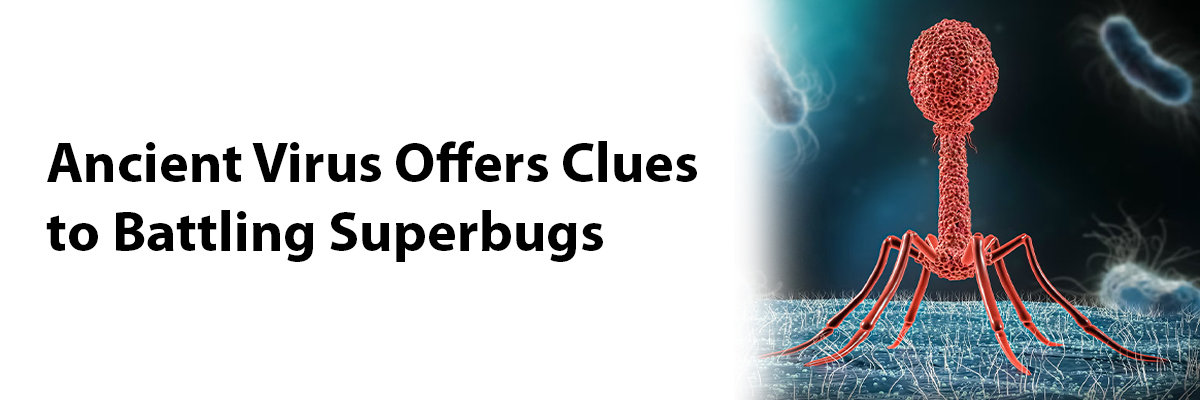
A recent study generated a detailed structural map of a bacteriophage, providing new insights into how these viruses could help combat drug-resistant bacteria.
Bacteriophages, or phages, are viruses that infect bacteria but are harmless to all multi-cellular life. They can selectively target and destroy specific bacteria, making them a promising alternative to antibiotics as antimicrobial resistance rises.
The team studied Bas63, a phage that infects E. coli, using advanced 3D imaging to understand how its complex tail structures function during infection. This research helps identify the most effective phages for therapy and explains differences in their behavior in the lab.
Phages are essential not only for human medicine but also for agriculture and industry, including controlling plant pathogens and biofilms in food processing and water systems. The study revealed rare structural features such as whisker-collar connections, hexamer proteins, and diverse tail fibers, which may also inspire artists and educators.
Structural analysis provided evolutionary insights, showing that phages share distant connections with herpes-viruses, tracing back billions of years before multicellular life. Bacteriophages are considered living fossils, offering a glimpse into ancient viral evolution.
This work builds on the group’s previous structural studies of potato pathogens, expanding understanding of phage biology and their potential applications in medicine, agriculture, and industry.
References:
1. Hodgkinson-Bean J, Ayala R, McJarrow-Keller K, Cassin L, Rutter GL, Crowe AJM, Wolf M, Bostina M. Cryo-EM structure of bacteriophage Bas63 reveals structural conservation and diversity in the Felixounavirus genus. Sci Adv. 2025;11(46):eadx0790. doi:10.1126/sciadv.adx0790.; https://www.sciencedaily.com/releases/2025/11/251117095635.htm
IJCP Editorial Team
Comprising seasoned professionals and experts from the medical field, the IJCP editorial team is dedicated to delivering timely and accurate content and thriving to provide attention-grabbing information for the readers. What sets them apart are their diverse expertise, spanning academia, research, and clinical practice, and their dedication to upholding the highest standards of quality and integrity. With a wealth of experience and a commitment to excellence, the IJCP editorial team strives to provide valuable perspectives, the latest trends, and in-depth analyses across various medical domains, all in a way that keeps you interested and engaged.
More FAQs by IJCP Editorial Team









Recent FAQs



Related FAQs











Medtalks is India's fastest growing Healthcare Learning and Patient Education Platform designed and developed to help doctors and other medical professionals to cater educational and training needs and to discover, discuss and learn the latest and best practices across 100+ medical specialties. Also find India Healthcare Latest Health News & Updates on the India Healthcare at Medtalks







Please login to comment on this article