
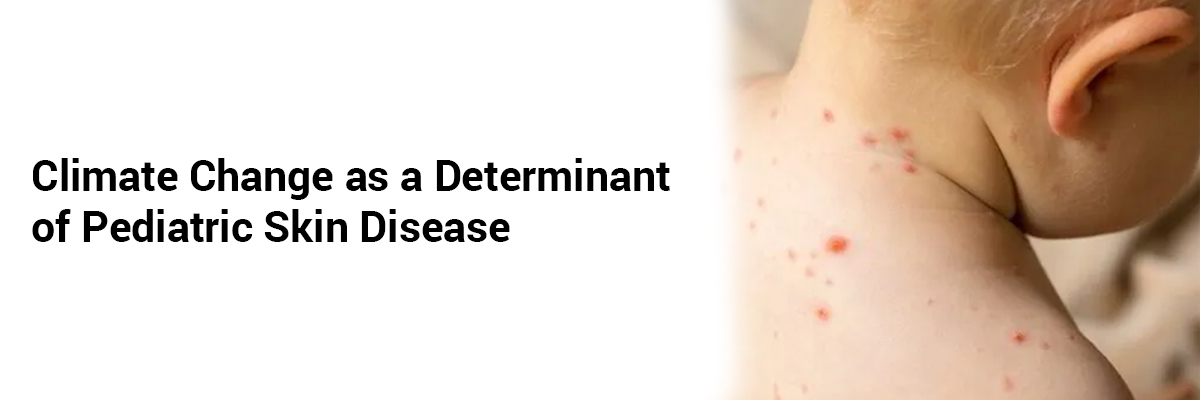

Climate Change as a Determinant of Pediatric Skin Disease
Climate change poses distinct and escalating risks to pediatric skin health. Children are uniquely vulnerable because of immature skin barrier function, evolving immune responses, and dependence on caregivers for protection and care. Under stable environmental conditions, pediatric skin maintains homeostasis through an intact barrier, balanced microbiome, and regulated immune activity. However, climate-related environmental changes increasingly disrupt these protective mechanisms.
Rising temperatures, worsening air pollution, increased ultraviolet (UV) radiation, and extreme weather events contribute to a growing burden of pediatric dermatologic disease. Evidence shows that these stressors exacerbate atopic dermatitis, infectious dermatoses, infestations, and heat-related skin disorders. Importantly, these effects are not evenly distributed. Children from marginalized communities, those living in high-risk geographic regions, and those with skin of color experience a disproportionate share of climate-related skin morbidity, reflecting broader structural and environmental inequities.
Despite mounting evidence, current clinical approaches to pediatric skin disease largely remain reactive and insufficiently adapted to environmental change. Conventional management strategies often overlook climate-related triggers, exposure patterns, and social determinants of health. As a result, opportunities for prevention and mitigation are frequently missed.
Emerging innovations offer promising pathways forward. Climate-resilient skincare formulations, teledermatology platforms, early-warning surveillance systems, and community-based interventions can enhance access to care and improve disease management, particularly in underserved settings. Preventive dermatology strategies that integrate environmental risk assessment and caregiver education may further reduce disease burden.
This editorial highlights critical gaps in the field, including the scarcity of pediatric-specific climate–dermatology research, limited representation of vulnerable populations in existing studies, and inadequate integration of dermatologic concerns into climate and health policy. Additionally, climate-focused education remains underrepresented in medical training, leaving clinicians ill-equipped to address emerging environmental threats to skin health.
Addressing these challenges will require sustained interdisciplinary collaboration across dermatology, pediatrics, public health, environmental science, and policy. Longitudinal research, equitable study design, climate-adaptive care frameworks, and policy integration are essential to safeguarding pediatric skin health. As climate change accelerates, protecting children’s skin must be recognized as a core component of broader climate resilience and health equity efforts.
Source: Cureus. 2025 Sep 1;17(9):e91397. doi: 10.7759/cureus.91397


Recent FAQs




Related FAQs










Medtalks is India's fastest growing Healthcare Learning and Patient Education Platform designed and developed to help doctors and other medical professionals to cater educational and training needs and to discover, discuss and learn the latest and best practices across 100+ medical specialties. Also find India Healthcare Latest Health News & Updates on the India Healthcare at Medtalks







Please login to comment on this article