
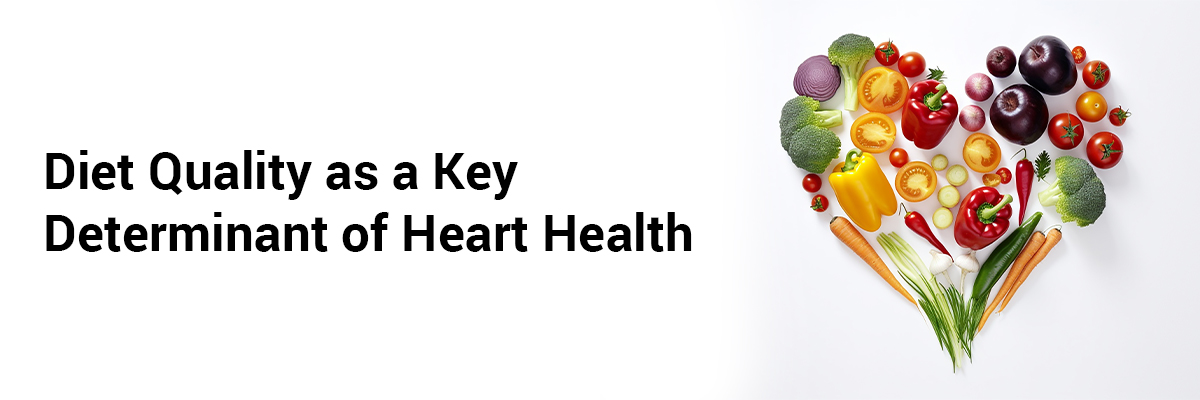

Diet Quality as a Key Determinant of Heart Health
The quality of food consumed is as important as following a low-carbohydrate or low-fat diet. A healthy low-carbohydrate or low-fat diet reduced the risk of developing coronary heart disease (CHD) by 15%. These findings from a study of nearly 200,000 people were presented at NUTRITION 2025, the annual meeting of the American Society for Nutrition, which recently concluded in Orlando.1
Zhiyuan Wu from the Harvard T.H. Chan School of Public Health and colleagues investigated how low-carbohydrate (LCD) and low-fat (LFD) dietary patterns, each emphasizing the quality of carbohydrates, fats, and proteins, are associated with the risk of coronary heart disease (CHD). Additionally, the study sought to validate these associations through plasma metabolomics analysis.
To find out the incidence of CHD, the study included 43,430 men from the Health Professionals Follow-Up Study (1986-2016), 64,164 women from the Nurses’ Health Study (1986-2018), and 92,189 women from the Nurses’ Health Study II (1991-2019). The study developed five low-carbohydrate diet (LCD) and three low-fat diet (LFD) indices, each focusing on different macronutrient sources and quality such as plant-based vs animal-based foods and whole grains vs refined carbohydrates.
Carbohydrates, proteins and fats from foods such as whole grains, fruits, vegetables, legumes and nuts were classified as high-quality nutrients, or healthy, whereas carbohydrates from potatoes and refined grains and saturated fats and proteins from animal-based foods were grouped as low-quality, or unhealthy.
Over 5,287,240 person-years of follow-up, 19,407 coronary heart disease (CHD) cases were recorded. Risk of CHD varied by diet quality: animal-based and unhealthy low-carbohydrate diets (LCDs) were associated with increased CHD risk, while vegetable-based and healthy LCDs were linked to lower risk. The adjusted hazard ratios (aHRs) were 1.02 for overall low-carbohydrate diet (LCD), 1.03 for animal-based LCD, 0.98 for vegetable-based LCD, 1.05 for unhealthy LCD, and 0.94 for healthy LCD.
Similarly, healthy low-fat diets (LFDs) were associated with reduced CHD risk, whereas unhealthy LFDs were linked to higher risk with overall HR of 0.97 and 1.04 for unhealthy LFD, and 0.94 for healthy LFD.
Linear dose-response associations were seen between diet scores and CHD, except for the vegetable LCD. The diet quality also had a significant influence on plasma lipids and other metabolites. “Multi-metabolite scores of LCD and LFD indices showed consistent associations with CHD risk”, noted the authors.
These findings show that study participants who followed a healthy low-carbohydrate or low-fat diet had a lower risk of developing coronary heart disease than those taking unhealthy foods saw an increased risk.
The key takeaway from this study is that improving food quality is key to promoting heart health regardless of whether one follows a low-carbohydrate or low-fat diet. Choosing more of whole, minimally processed, plant-based foods (whole grains, fruits, vegetables, nuts and legumes) while limiting refined carbohydrates, added sugars, and animal-based products (processed meats) can significantly lower the risk of coronary heart disease. Checking food labels should become a habit.
Reference
1. https://nutrition2025.eventscribe.net/index.asp?posterTarget=728431.


Recent FAQs




Related FAQs










Medtalks is India's fastest growing Healthcare Learning and Patient Education Platform designed and developed to help doctors and other medical professionals to cater educational and training needs and to discover, discuss and learn the latest and best practices across 100+ medical specialties. Also find India Healthcare Latest Health News & Updates on the India Healthcare at Medtalks







Please login to comment on this article