

 IJCP Editorial Team
Association of Early Pregnancy Blood Pressure Patterns with Later-Life Hypertension
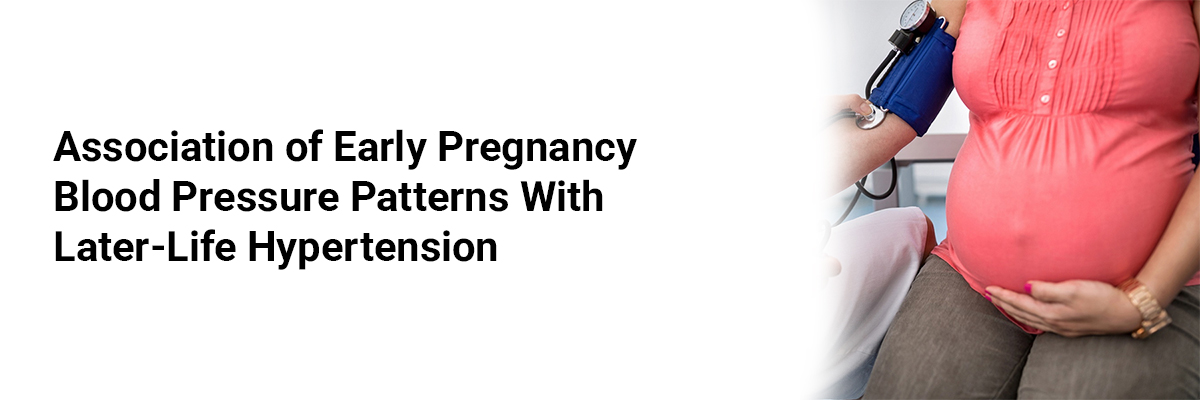
Early-pregnancy blood pressure (BP) patterns can help identify women at increased risk of developing incident hypertension up to 14 years after childbirth, suggests a new research published April 2, 2025 in the journal Hypertension.1
This prospective cohort study included 174,774 women who received antenatal care at the Kaiser Permanente Northern California from 2009 to 2019. None of them had hypertension, kidney, liver, or heart disease, or a history of previous preeclampsia. All women started prenatal care by 14 weeks of gestation and had either a live or stillborn singleton birth. Data on hypertensive disorders of pregnancy (HDP), serial outpatient BP measurements, diagnostic codes (ICD), and medication records were obtained from electronic health records from 2 months up to 14 years postpartum (2009–2023) to identify new cases of hypertension. Six risk groups of BP trajectory were identified based on BP levels and changes from 0 to 20 weeks of gestation.
The study found that BP trajectories were linked to a progressively higher risk of developing hypertension after pregnancy later in life across all HDP categories. Women with elevated-stable blood pressure patterns were at the highest risk. After adjusting for confounding variables, hazard ratios (HR) increased with higher BP trajectory groups, with the greatest risks observed among women with preeclampsia and gestational hypertension, compared to those without HDP.
Specifically, compared to the lowest BP trajectory group in the no HDP category (used as the reference group), HRs ranged from 2.91 to 27.31 for those with preeclampsia, 4.20 to 27.81 for those with gestational hypertension, and 2.92 to 10.96 for those without HDP.
Therefore, monitoring BP trajectories in early pregnancy can help in early identification of women at higher risk for developing future hypertension later in life. This study showed that even among women who did not develop HDP, those exhibiting higher-risk blood pressure patterns in early pregnancy were 11 times more likely to develop hypertension years later compared to those with lower-risk patterns. It is this group of women, in particular, who may benefit from more frequent and prolonged postpartum follow-up to detect and manage hypertension before complications arise. Implementation of lifestyle interventions or pharmacologic strategies can help reduce long-term cardiovascular risk.
Source: Hypertension. 2025 Apr 2. doi:10.1161/HYPERTENSIONAHA.125.24649.
IJCP Editorial Team
Comprising seasoned professionals and experts from the medical field, the IJCP editorial team is dedicated to delivering timely and accurate content and thriving to provide attention-grabbing information for the readers. What sets them apart are their diverse expertise, spanning academia, research, and clinical practice, and their dedication to upholding the highest standards of quality and integrity. With a wealth of experience and a commitment to excellence, the IJCP editorial team strives to provide valuable perspectives, the latest trends, and in-depth analyses across various medical domains, all in a way that keeps you interested and engaged.
More FAQs by IJCP Editorial Team








Recent FAQs


Related FAQs







Medtalks is India's fastest growing Healthcare Learning and Patient Education Platform designed and developed to help doctors and other medical professionals to cater educational and training needs and to discover, discuss and learn the latest and best practices across 100+ medical specialties. Also find India Healthcare Latest Health News & Updates on the India Healthcare at Medtalks







Please login to comment on this article