
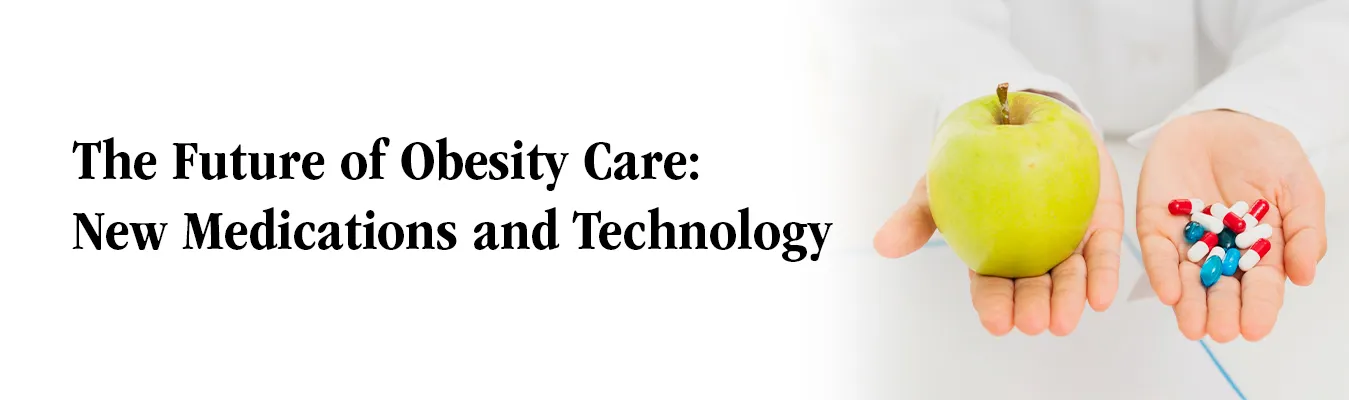

The Future of Obesity Care: New Medications and Technology
Managing obesity is changing. In the past, weight loss
advice often focused mainly on eating less and exercising more.1
Today, we doctors have more tools to help people manage their weight, including
new medicines, personalized eating plans, behavioral support, and digital
technologies.
The goal is not simply to lose weight quickly. It is
to improve health and find a plan that can be followed for the long term.
New-Generation Medications:
One of
the biggest developments in obesity care is the use of GLP-1 medicines.
GLP-1
therapies (glucagon-like peptide-1 receptor agonists) are a class of
medications that help regulate blood sugar and appetite. They were originally
used for managing type 2 diabetes, but are now also approved for treating
obesity and weight loss. 2
How do these medicines work?
These
medicines work on natural signals in the body that help control hunger and
fullness. They can make you feel full sooner, reduce appetite, and slow the
movement of food through the stomach.3
Common
side effects of GLP-1 medicines can include nausea, vomiting, constipation, and
diarrhoea. These symptoms are often mild and may improve over time, but
patients should discuss troublesome or persistent symptoms with their
healthcare professional.2
Now,
because these medicines may reduce hunger and the amount of food you eat, the
quality of your food becomes even more important. When taking a GLP-1 medicine,
you may feel less hungry or eat smaller portions. This makes it important to
choose foods that provide plenty of nutrients in the amount you eat. 3
Try to include:
·
Fruits
and vegetables such as leafy greens, apples, and tomatoes
·
Lean
protein such as fish, chicken, tofu, and beans
·
Whole
grains such as oats, quinoa, and farro
Two
nutrients deserve special attention: protein and fiber, They both help keep you
feeling full longer and stabilize blood sugar. Protein keeps your body from
losing muscle instead of fat. And fiber can help combat constipation that a
GLP-1 can cause. 3
However,
these medicines are not suitable for everyone. A doctor will consider your
health, other medicines, medical history, possible side effects, and other factors
before recommending them.
Importantly,
weight-loss medicines are not a
replacement for healthy eating or physical activity. They work best when
they are part of a broader weight-management plan.²,³
Always Remember, Weight-loss
medicines can be an additional tool — not the whole treatment.
Digital
Tools: Bringing Obesity Care Closer to Patients
Technology
is becoming an important part of weight management. Telehealth, mobile
health apps, and wearable devices can make it easier for people to access
obesity care, track their progress, and stay connected with their healthcare
team. These enhance the quality, efficiency and cost-effectiveness of weight
management interventions and long-term patient support. 4
Mobile
health apps and wearable devices can help people keep track of different
aspects of their daily routine. Depending on the device or app, you may be able
to monitor4:
- Body weight
- Physical activity
- Steps taken
- Food and eating habits
This
information can help patients understand their daily habits and discuss their
progress with their healthcare team.
In the
future, apps, wearable devices,
chatbots, and artificial intelligence (AI) may work together to provide
reminders, answer basic questions, offer encouragement, and provide support
based on an individual's needs. 4
Personalized
Nutrition: Moving Beyond “One Diet Fits All”
Another important development is the move towards
personalized nutrition.
For many years, weight management has focused mainly
on the idea of “calories in, calories out”—balancing the calories we eat with
the calories our body uses. While this remains an important part of weight
management, the same diet may not work equally well for everyone.5
People differ in many ways, including their body
composition, metabolism, genes, hormone levels, physical activity, sleep,
stress, and eating habits. These differences can affect how the body responds
to food and how easily a person loses or maintains weight.5
This is where personalized nutrition comes in.
What
is personalized nutrition?
Personalized nutrition means adapting eating advice to
an individual's health, lifestyle, food preferences, daily routine, and
nutritional needs, rather than following the same diet plan as everyone else. 5
A diet that fits your lifestyle is more likely to be
practical and easier to follow over time. Personalized nutrition may also help
people feel more involved in their treatment and motivated to make lasting
changes.5
The goal is not to find a “perfect diet” for everyone.
Instead, it is to find an eating pattern that provides the nutrients you need,
supports your health, and can realistically become part of your everyday life.
The
Future: A More Personalized Approach
The future of obesity care is likely to be integrated
and individualized. A patient may receive medication selected according to
their clinical needs, nutritional guidance adapted to their appetite and
treatment response, and digital monitoring that allows healthcare professionals
to follow progress over time.
A simple way to understand this approach is:

 Together, these approaches can help us move beyond
simply focusing on weight loss and towards better health, sustainable weight management,
and long-term care.
Together, these approaches can help us move beyond
simply focusing on weight loss and towards better health, sustainable weight management,
and long-term care.
References:
1.
National
Institute of Diabetes and Digestive and Kidney Diseases (NIDDK). Eating & physical activity
to lose or maintain weight. Bethesda (MD): National Institutes of Health.
Open
NIDDK page
2.
World
Health Organization (WHO). Obesity: GLP-1 therapies. Geneva: WHO; 2025.
Open
WHO GLP-1 information
3.
Cleveland
Clinic. GLP-1
diet guidance. Cleveland (OH): Cleveland Clinic.
Open
Cleveland Clinic page
4. Hinchliffe N, Capehorn MS, Bewick M, Feenie J. The Potential Role of Digital Health in Obesity Care. Adv Ther. 2022;39(10):4397-4412. doi:10.1007/s12325-022-02265-4
5.
Cozma-Petruț A, Gherghel M, Banc R, Badiu
Tișa I, Mîrza O, Coldea TE, Mudura E, Miere D, Filip L. Beyond
One-Size-Fits-All: Individually Tailored Dietary Interventions in Modern
Obesity Care. Nutrients. 2026; 18(16):2691. https://doi.org/10.3390/nu18162691
Recent FAQs



Related FAQs






Medtalks is India's fastest growing Healthcare Learning and Patient Education Platform designed and developed to help doctors and other medical professionals to cater educational and training needs and to discover, discuss and learn the latest and best practices across 100+ medical specialties. Also find India Healthcare Latest Health News & Updates on the India Healthcare at Medtalks







Please login to comment on this article