
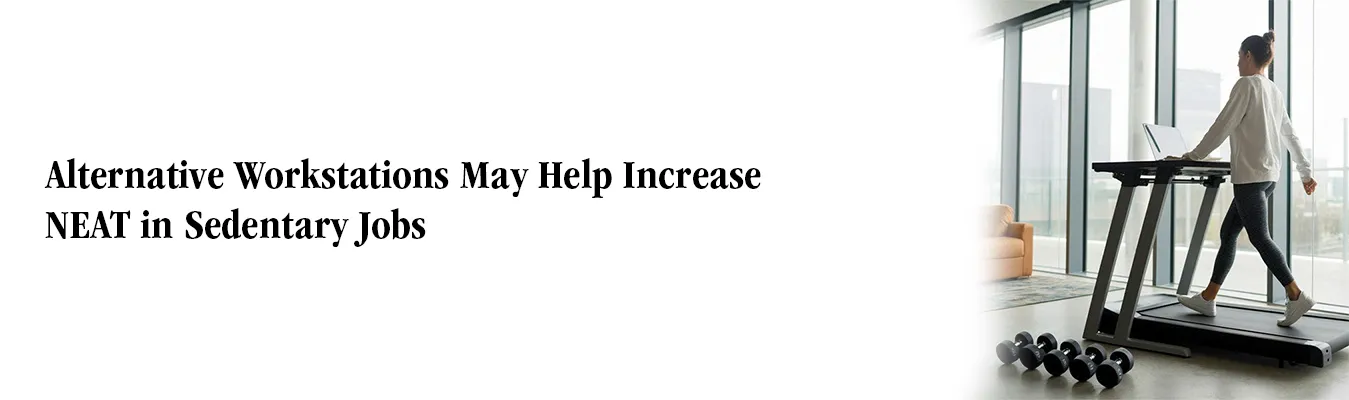

Alternative Workstations May Help Increase NEAT in Sedentary Jobs
Dr Sweety Agarwal, Consultant Endocrinologist, Apex Superspeciality Clinics and Cloudnine Hospitals, Gurgaon
Standing, walking, and seated-pedal workstations may increase energy expenditure during the workday, although evidence on their long-term effects remains limited.
The shift toward desk-based jobs has reduced physical activity and daily energy expenditure at work. This has increased interest in non-exercise activity thermogenesis (NEAT) as a way to add small amounts of movement during the working day. A narrative review examined alternative workstations, including standing desks, walking workstations, seated pedal devices, and gymnastic balls, as ways to reduce sitting time.
The review noted that structured exercise and an active lifestyle outside work remain important for preventing obesity. However, many people have limited time for exercise because of personal, household, and other daily responsibilities. Since work occupies a large part of the day, increasing movement during working hours may provide another way to raise daily energy expenditure. Standing, seated-pedal, and walking workstations were estimated to increase energy expenditure compared with standard seated work.
Based on an 8-hour workday, 22 working days per month, and 11 working months per year, the authors estimated an additional energy expenditure equivalent to about 1.1 kg, 9 kg, and 21.5 kg of fat per year for standing, seated-pedal, and walking workstations, respectively.
The authors noted that research on alternative workstations is still limited and fragmented. They concluded that these workstations may help increase movement and energy expenditure during sedentary work, but their use should also consider whether workers accept the equipment and whether it allows them to perform their work effectively.
(Reference: Rizzato A, Marcolin G, Paoli A. Non-exercise activity thermogenesis in the workplace: The office is on fire. Frontiers in Public Health. 2022 Oct 28;10:1024856..)
Recent FAQs





Related FAQs







Medtalks is India's fastest growing Healthcare Learning and Patient Education Platform designed and developed to help doctors and other medical professionals to cater educational and training needs and to discover, discuss and learn the latest and best practices across 100+ medical specialties. Also find India Healthcare Latest Health News & Updates on the India Healthcare at Medtalks







Please login to comment on this article