
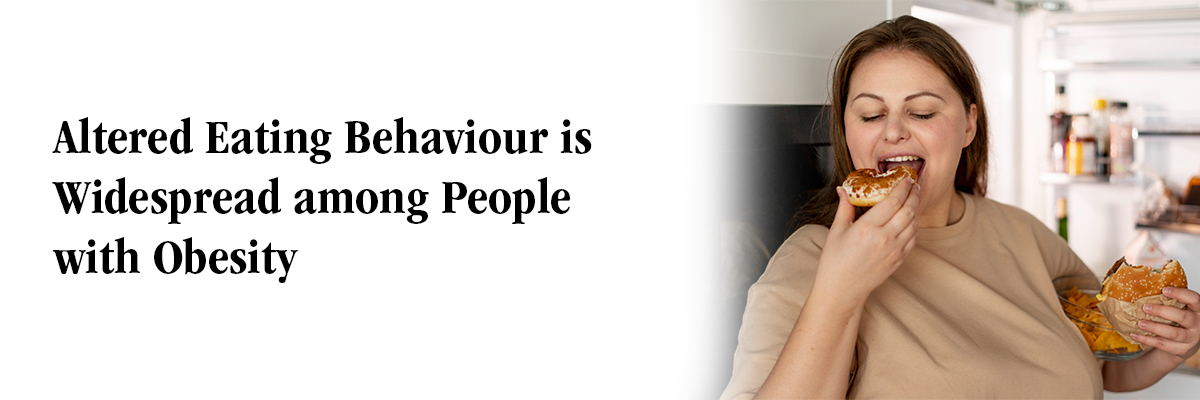

Altered Eating Behaviour is Widespread Among People with Obesity
Dr Ashok Kumar, Dept. of Endocrinology, Cedar Clinic, Panipat, Haryana, India
Altered eating behaviours are common in people with obesity and vary by age, sex, sleep, and smoking status—highlighting the need for behavioural assessment in treatment.
A study published in Nutrients has shed light on how disturbed eating behaviours commonly coexist with obesity, reinforcing the need for behavioural assessment in weight management. Researchers evaluated 127 adults with obesity who were seeking weight-loss care between May 2023 and April 2024. Participants completed the Eating Behaviours Assessment for Obesity (EBA-O), a brief, self-administered tool specifically designed to capture altered eating behaviours in this population.
The findings revealed a substantial burden of disordered eating patterns. One-third of participants reported sweet eating, nearly one in four showed hyperphagia, while smaller proportions displayed food addiction, binge eating, and night eating. Higher EBA-O scores were associated with higher body mass index, suggesting that behavioural disturbances may intensify with increasing obesity severity.
Men were more likely to report night eating and hyperphagia, and active smokers showed greater tendencies toward overeating. Night eating was linked to shorter sleep duration, while younger individuals were more prone to binge eating and hyperphagia. Interestingly, participants without diabetes exhibited higher scores for food addiction and binge eating than those with diabetes.
The study underscores that obesity is not merely a metabolic condition but also a behavioural one. By identifying specific eating patterns, clinicians can tailor treatment strategies that combine medical, nutritional, and psychological support, moving toward more personalized obesity care.
(Source: Oteri V, Contrafatto L, Santoro GM, Barca I, Tumminia A, Vinciguerra F, Frittitta L, Frasca F, Sciacca L, Baratta R. Clinical Assessment of Altered Eating Behaviors in People with Obesity Using the EBA-O Questionnaire. Nutrients. 2025 Mar 30;17(7):1209. )
Recent FAQs




Related FAQs







Medtalks is India's fastest growing Healthcare Learning and Patient Education Platform designed and developed to help doctors and other medical professionals to cater educational and training needs and to discover, discuss and learn the latest and best practices across 100+ medical specialties. Also find India Healthcare Latest Health News & Updates on the India Healthcare at Medtalks







Please login to comment on this article