

Published On: 04 Dec, 2025 12:57 PM | Updated On: 05 Dec, 2025 1:00 PM
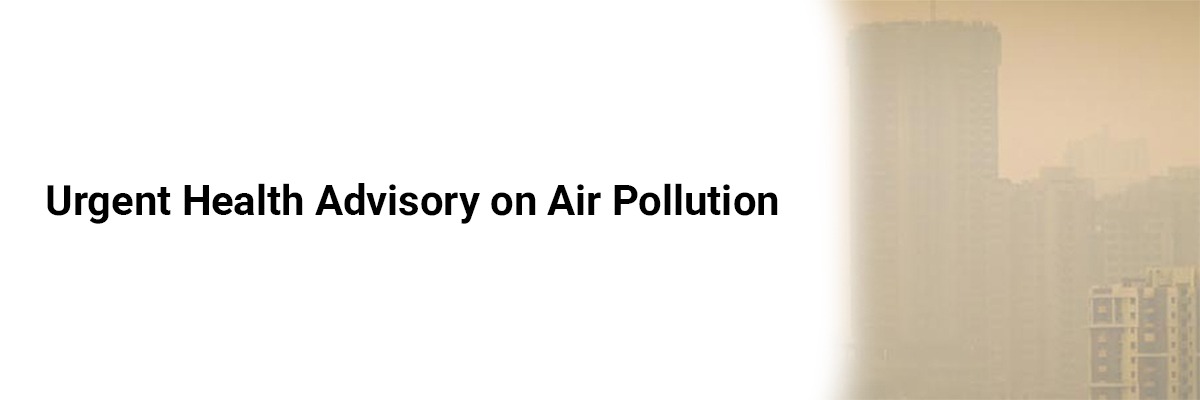
Urgent Health Advisory on Air Pollution
Issued by Padma Awardee Doctors Group
India is experiencing extremely poor air quality across several regions, particularly Delhi–NCR & Mumbai. Air pollution has become a significant public health emergency affecting all age groups, with a severe impact on children, pregnant women, senior citizens, and individuals with heart or lung disease. This advisory outlines practical steps for both households that can afford advanced protection and those that cannot.
Health Risks Associated with Air Pollution
- Worsening of cough, throat irritation, and eye burning
- Increased asthma attacks and breathing difficulties
- Higher risk of heart attacks, strokes, and arrhythmias
- Poor control of diabetes and hypertension
- Increased susceptibility to infections
- Adverse pregnancy outcomes, including preterm delivery
- Long-term lung damage in growing children
How to Protect Yourself
1. Primary Protection Measures
• Use air purifiers at home where possible, especially in bedrooms and living rooms.
• Wear N95 masks outdoors during periods of high air pollution.
• Avoid outdoor exercise, walking, or sports during peak pollution hours.
• Keep doors and windows closed during morning and evening pollution peaks, and ventilate briefly only when the air quality temporarily improves.
2. Practical, Low-Cost Alternatives
Indoor Measures Without Air Purifiers
- Wet-mop floors daily to reduce indoor dust levels.
- Avoid incense sticks, dhoop, scented candles, mosquito coils, and indoor smoking.
- Ensure ventilation while cooking, especially if using LPG, coal, or chulha.
- Use thick curtains or cloth barriers to reduce dust entry during peak pollution hours.
- Keep footwear outside to avoid bringing outdoor dust inside.
Mask Alternatives
- If an N95 mask is not available, use a triple-layer medical mask.
- As a last resort, use a clean cotton cloth tightly covering the nose and mouth.
- Replace or wash masks regularly to maintain effectiveness.
3. Protecting Vulnerable Groups
- Children should avoid outdoor play on high AQI days.
- Schools should suspend morning assemblies and outdoor sports during severe pollution periods.
- Pregnant women, elderly individuals, and those with chronic illnesses should limit time spent in traffic-heavy or highly polluted areas.
- Pneumonia and Flu Vaccines are advised
4. Guidance for Individuals with Asthma, COPD, or Heart Disease
- Continue all prescribed inhalers and medications.
- Keep rescue medication accessible at all times.
- Seek timely medical attention for persistent breathlessness, chest tightness, or wheezing.
Community-Level Actions to Reduce Pollution
1. Do Not Burn Waste
- Avoid burning leaves, garbage, plastic, or any household waste.
- Encourage neighbours, RWAs, shopkeepers, and local workers to adopt non-burning waste disposal practices.
2. Reduce Vehicle Emissions
- Carpool for work and school where possible.
- Use public transport when feasible.
- Switch off vehicle engines at long red lights to reduce idling emissions.
3. Reduce Household-Level Pollution
- Avoid using coal or wood for heating during winter.
- Minimize the use of firecrackers.
- Prefer LPG over chulha for cooking when possible.
4. Neighbourhood Actions
- Report uncovered construction sites to local authorities.
- Promote plantation of native trees in neighbourhoods, RWAs, and schools.
- Organize community clean-up drives to reduce accumulated dust.
Recommendations for Government
1. Recognize severe pollution episodes as a public health crisis.
2. Enforce strict controls on construction dust, waste burning, and illegal diesel generators.
3. Issue clear AQI-based advisories for schools and outdoor activities.
4. Deploy mobile health clinics during peak pollution episodes.
5. Strengthen public transport networks and last-mile connectivity.
6. Develop a coordinated multi-state clean-air strategy for North India.
7. Expand lung health screening services in government hospitals and primary care centres.
Conclusion
Air pollution affects all Indians across income groups and age categories. Clean air is a basic requirement for good health. Through a combination of personal protection, community responsibility, and coordinated government action, the health impact of the pollution crisis can be significantly reduced, and the well-being of future generations can be protected.
Signed: Air Marshal Dr Padma Bandopadhyay Dr (Lt Gen) B N Shahi Dr A
K Bhalla Dr A K Grover Dr Alaka Deshpande Dr Alka Kriplani Dr Ambrish Mithal Dr
Anil Kohli Dr Anoop Misra Dr Arvind Lal Dr Arvinder Singh Soin Dr Ashok Gupta Dr
Ashok Seth Dr Ashok Vaid Dr Atul Kumar Dr B K Rao Dr Balbir Singh Dr Balram
Bhargava Dr Chandrashekhar Meshram Dr D S Rana Dr Daljeet Singh Gambhir Dr
Digambar Behera Dr Deepak Sehgal Dr Devendra Triguna Dr Dinesh Bhargava Dr
Ganesh K Mani Dr Harsh Kumar Dr Harsh Mahajan Dr Himmatrao Bawaskar Dr J M Hans
Dr Jagdish Prasad Dr Jeewan S Titiyal Dr K K Naik Dr K K Sethi Dr Kamalkar
Tripathi Dr Kameshwar Prasad Dr Lalit Kumar Dr M Khalilullah Dr M V Padma
Srivastava Dr Mahesh Verma Dr Mahipal Sachdev Dr Malvika Sabharwal Dr Manjula
Anagani Dr Milind Kirtane Dr Mohsin Wali Dr N K Ganguly Dr N P Gupta Dr
Narendra Pandey Dr Naresh Trehan Dr Neelam Kler Dr Neerja Bhatla Dr Nikhil
Tandon Dr Nitish Naik Dr Nosher Shroff Dr P K Julka Dr P K Sethi Dr Pradeep
Chowbey Dr Praveen Chandra Dr Purshotam Lal Dr R K Grover Dr Ramakant Deshpande
Dr Raman Kapur Dr Raminder Grover Dr Randeep Guleria Dr Randhir Sud Dr Ravindra
Kolhe Dr S C Manchanda Dr Saroj Chooramani Dr S P Mandal Dr S P Yadav Dr
Sandeep Guleria Dr Sanjeev Bagai Dr Saumitra Rawat Dr Shashank Joshi Dr Shiv
Kumar Sarin Dr Sudhir Shah Dr T S Kler Dr Tejas Patel Dr Upendra Kaul Dr V
Mohan Lt Gen Dr Velu Nair Dr Yash Gulati
Recent FAQs


Related FAQs
.jpg)

.jpg)


Medtalks is India's fastest growing Healthcare Learning and Patient Education Platform designed and developed to help doctors and other medical professionals to cater educational and training needs and to discover, discuss and learn the latest and best practices across 100+ medical specialties. Also find India Healthcare Latest Health News & Updates on the India Healthcare at Medtalks







Please login to comment on this article