
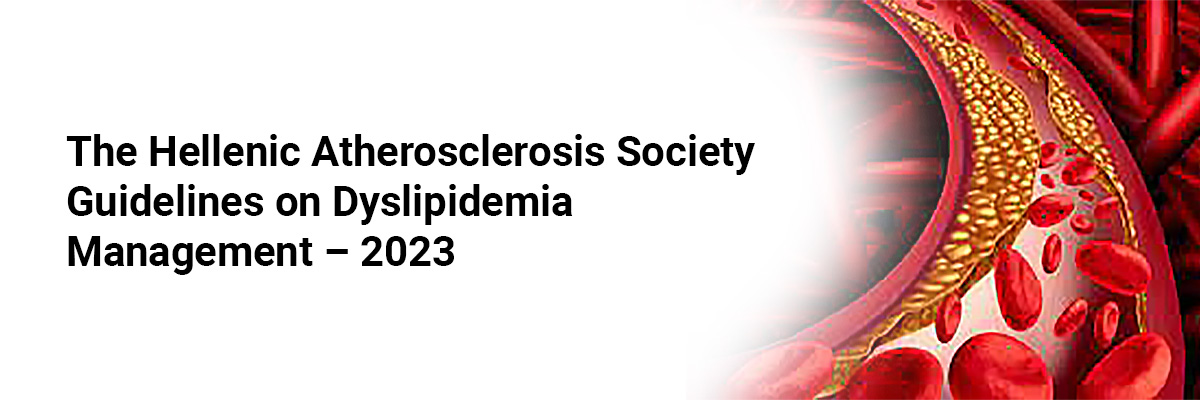

The Hellenic Atherosclerosis Society guidelines on dyslipidemia management – 2023
Lipoprotein(a) Assessment is recommended for measuring Lp(a) levels at least once during a person’s lifetime. Lp(a) testing should be considered for reclassifying patients with borderline estimated 10-year ASCVD risk.
Management of dyslipidemia in the elderly
- Lipid-lowering therapy should target LDL-C levels of: <55 mg/dL for very high-risk patients; <70 mg/dL for high-risk patients; and <100 mg/dL for moderate-risk patients (for individuals ≤75 years old).
- A reduction in LDL-C of more than 50% from baseline is advised for very high- and high-risk elderly patients aged ≤75 years.
- In elderly individuals over 75 years of age with very high or high risk, initiation of statin therapy should be considered (Class IIa).
- For elderly patients with renal impairment or those at risk of drug interactions, statin therapy should start at a low dose and be titrated as needed to achieve LDL-C targets.
Source: Katsiki N, Filippatos T, Vlachopoulos C, et al. Atheroscler Plus. 2024;55:74-92. Published 2024 Feb 17. doi:10.1016/j.athplu.2024.01.004


Recent FAQs





Related FAQs









Medtalks is India's fastest growing Healthcare Learning and Patient Education Platform designed and developed to help doctors and other medical professionals to cater educational and training needs and to discover, discuss and learn the latest and best practices across 100+ medical specialties. Also find India Healthcare Latest Health News & Updates on the India Healthcare at Medtalks







Please login to comment on this article