

Skin Changes Common among Adults with Excess Weight in Rural India
Dr Himanshu Sharma, Sr Consultant And Head, Department Of Endocrinology, Yashoda Medicity
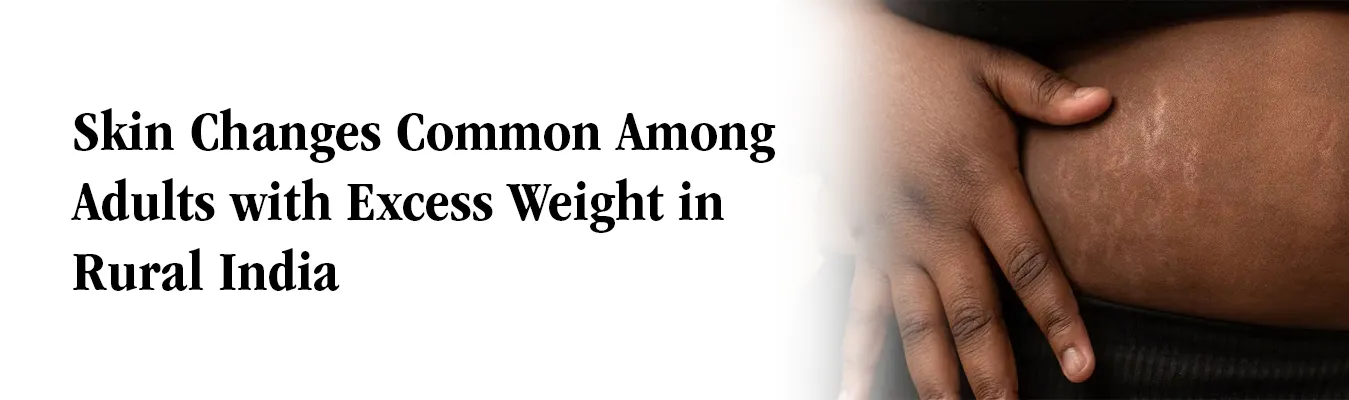
In a rural tertiary care setting, more than half of adults with overweight or obesity had striae, acanthosis nigricans, skin tags, fungal infections, or intertrigo.
According to World Health Organization estimates, over 890 million adults worldwide live with obesity and close to 2.5 billion with overweight, and global prevalence has more than doubled since 1990. The picture in India is similar. Data from the National Family Health Survey-5 (2019–2021) indicate that roughly a quarter of Indian adults are overweight or obese, with sharp increases in both cities and villages. Rural communities were once thought to be shielded by physically demanding work and traditional diets. That is changing as diets shift and occupational activity falls. Obesity prevalence in India is projected to triple between 2010 and 2040, with relatively larger increases expected among rural and older populations.
Excess body fat affects the skin in several ways. Adipose tissue promotes chronic low-grade inflammation through leptin, resistin, and tumor necrosis factor-alpha. It also weakens the skin barrier, disturbs the function of sebaceous and sweat glands, and alters lymphovascular flow. In skin folds, friction, localized excessive sweating, and constant occlusion make both infection and long-standing dermatitis more likely. An estimated 60 to 70% of people with obesity develop at least one skin complication over time. Even so, few studies have looked at these problems in rural Indian adults.
This hospital-based cross-sectional study included adults with a BMI of 23 kg/m² or higher, and those with conditions that could cause skin changes on their own were excluded. Researchers performed a detailed skin examination for each participant. The researchers then examined how the skin findings related to sex and to the duration of excess weight.
- The 127 participants had a mean age of 37.1 years and a mean BMI of 28.6 kg/m². The most frequent findings were:
● striae distensae (63.0%)
● acanthosis nigricans (62.2%)
● skin tags (57.5%)
● fungal infections (53.5%)
● intertrigo (52.0%)
Hirsutism was considerably more common in women than in men (36.1% vs 6.1%). Acanthosis nigricans was significantly associated with the duration of excess weight. The authors conclude that striae distensae, acanthosis nigricans, skin tags, fungal infections, and intertrigo were the most common skin conditions in this group. Because the duration of excess weight predicted acanthosis nigricans independently of BMI, age, and sex, they recommend early metabolic evaluation for these patients.
(Reference: Javed MW, Guruprasad KY, Samad MA, Saudagar MMA, Takalkar AA, Khan MF. Spectrum of Cutaneous Manifestations in Adults with Overweight and Obesity: A Cross-Sectional Study from Rural North Karnataka. Perspectives in Medical Research 2026; 14(1):52-58 DOI:10.47799/pimr.1401.26.24)
Recent FAQs





Related FAQs







Medtalks is India's fastest growing Healthcare Learning and Patient Education Platform designed and developed to help doctors and other medical professionals to cater educational and training needs and to discover, discuss and learn the latest and best practices across 100+ medical specialties. Also find India Healthcare Latest Health News & Updates on the India Healthcare at Medtalks







Please login to comment on this article