Immediate and appropriate first aid intervention reduces complications, minimizes infection risk, and can even prevent permanent disability.3 For instance, quick cleaning and dressing of cuts and abrasions prevent bacterial contamination and accelerate healing,3 while proper care for minor burns limits tissue damage.3 Antiseptics such as povidone-iodine (Betadine) further enhance outcomes by offering broad-spectrum antimicrobial protection with minimal irritation.4 In emergencies like road accidents, falls, or workplace injuries, prompt first aid can stabilize the patient, control bleeding, and buy valuable time until definitive medical care is available.1, 3
First-Aid Care in Different Scenarios1
Head Injury:
- Keep the injured person still and calm; do not move them unnecessarily.
- Check responsiveness, breathing, and bleeding.
- If bleeding occurs, apply gentle pressure with a sterile dressing, avoiding excessive movement of the head or neck.
- Seek immediate medical assistance to rule out concussion or internal injury.
Abdominal Injury:
- Lay the casualty on their back with knees slightly bent to reduce strain.
- Do not attempt to push back protruding organs; cover them with a clean, moist, sterile dressing.
- Avoid giving food or water, and ensure urgent transport to a hospital.
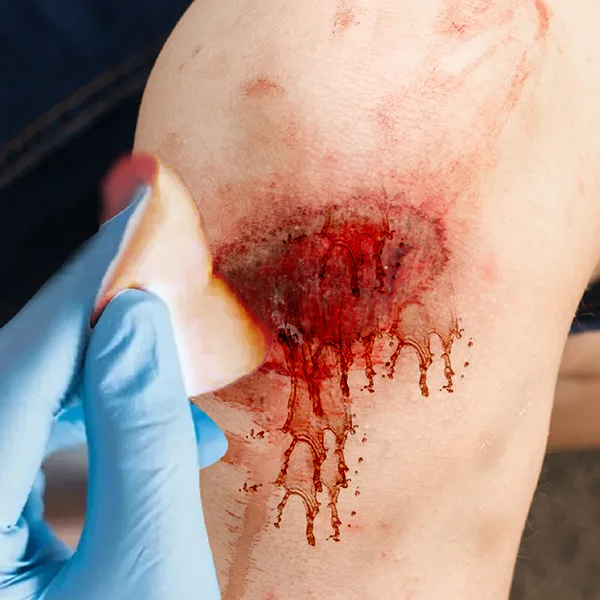
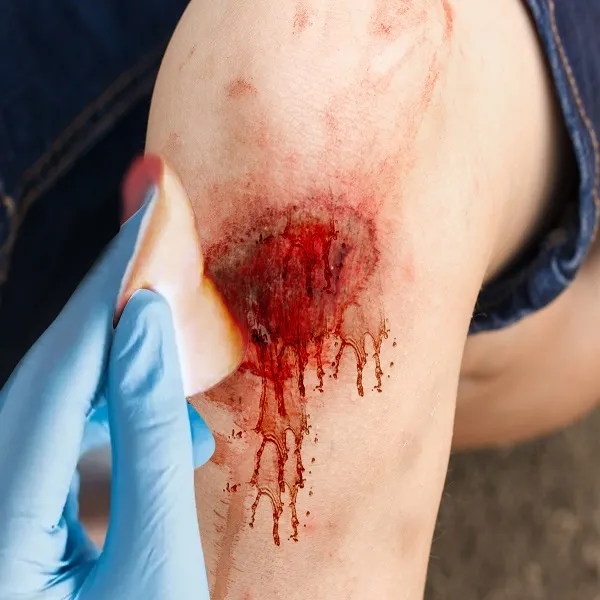
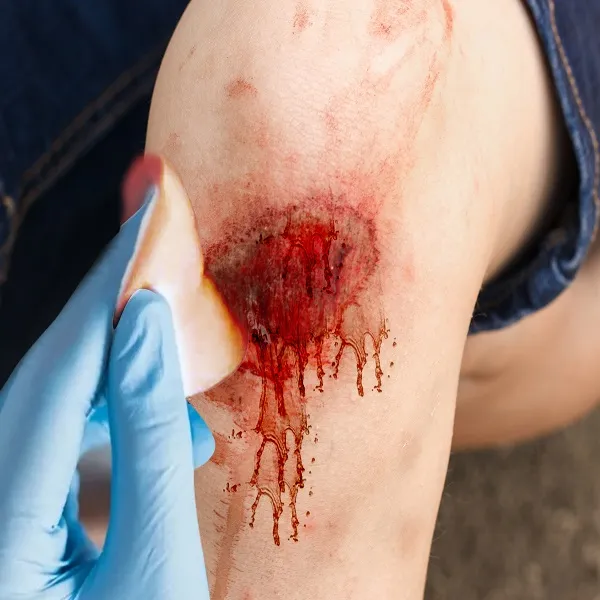
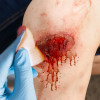
Accidental Injuries (Cuts, Abrasions, Burns, and Falls):
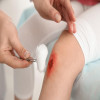
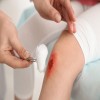
- Clean the wound gently with water to remove debris.
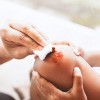
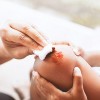
- Apply an antiseptic such as povidone-iodine (Betadine) to prevent infection.4
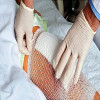
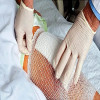
- Use sterile dressings or bandages to protect the wound and prevent contamination.3
- In case of bleeding, apply firm pressure until it stops.3
Crush Injury:
Crush injuries often result from heavy impact or entrapment, leading to severe tissue damage and internal bleeding.
1. Ensure safety at the scene before attempting rescue.
2. Once the victim is accessible, keep them still and calm, control visible bleeding with sterile dressings, and monitor breathing and consciousness.
3. Prompt medical intervention and fluid replacement are critical for survival.
Integrating Betadine into Daily First-Aid Care
Betadine (povidone-iodine) is an essential antiseptic agent widely used in first-aid management due to its broad-spectrum antimicrobial activity against bacteria, viruses, fungi, and protozoa. Its unique formulation allows for the gradual release of iodine from the povidone complex, providing sustained antimicrobial action while minimizing irritation and side effects to healthy tissues. This makes it a safe and effective choice for managing wounds of varying severity. Moreover, Betadine has a low risk of microbial resistance, ensuring long-term reliability for infection prevention.4
Integrating Betadine into daily first-aid care is crucial, as minor cuts, burns, abrasions, and accidental injuries are prone to contamination.6 Early application of Betadine helps reduce microbial load, prevent wound infection, and support skin healing, while also minimizing scarring.5 Its availability in various user-friendly forms—solutions, powder and ointment/cream5—makes it convenient for use in homes, schools, and workplaces.
Conclusion
Proper first-aid care can make a decisive difference between recovery and complication. From managing small cuts to life-threatening injuries, timely and appropriate interventions—supported by reliable antiseptics like Betadine—enhance outcomes, safeguard health, and strengthen community preparedness.
References
1. Indian Red Cross Society. First Aid Manual [Internet]. New Delhi: Indian Red Cross Society; [cited 2025 May 27]. Available from: https://ircsstoragedev.blob.core.windows.net/wordpresswebsite/2024/03/FA-manual.pdf
2. Clement I. Introduction to First Aid. In: Clement I, editor. Textbook on First Aid & Emergency Nursing [Internet]. 1st ed. New Delhi: Jaypee Brothers Medical Publishers; 2012 [cited 2025 May 27]. Available from: https://www.jaypeedigital.com/eReader/chapter/9789350259870/ch1
3. Shehri AM, Al Qahtani SM, Al Mutairi TF, Al Mutairi SS, Al Mutairi YM, Fiqi MI, Al Sobhi AA. Immediate response, lasting impact: a review of first aid as the first line of rescue. Int J Dev Res. 2024 Jul;14(07):66299-66304.
4. Bigliardi PL, Alsagoff SAL, El-Kafrawi HY, Pyon JK, Wa CC, Villa MA. Povidone iodine in wound healing: A review of current concepts and practices. Int J Surg. 2017;44:260–268. doi:10.1016/j.ijsu.2017.06.073
5. Babalska ZŁ, Korbecka-Paczkowska M, Karpiński TM. Wound antiseptics and European guidelines for antiseptic application in wound treatment. Pharmaceuticals. 2021 Dec 2;14(12):1253.
6. Care Hospitals. Betadine: Uses, Side Effects, Dosage, Precautions & More [Internet]. [cited 2025 May 27]. Available from: https://www.carehospitals.com/medicine-detail/betadine













Please login to comment on this article