
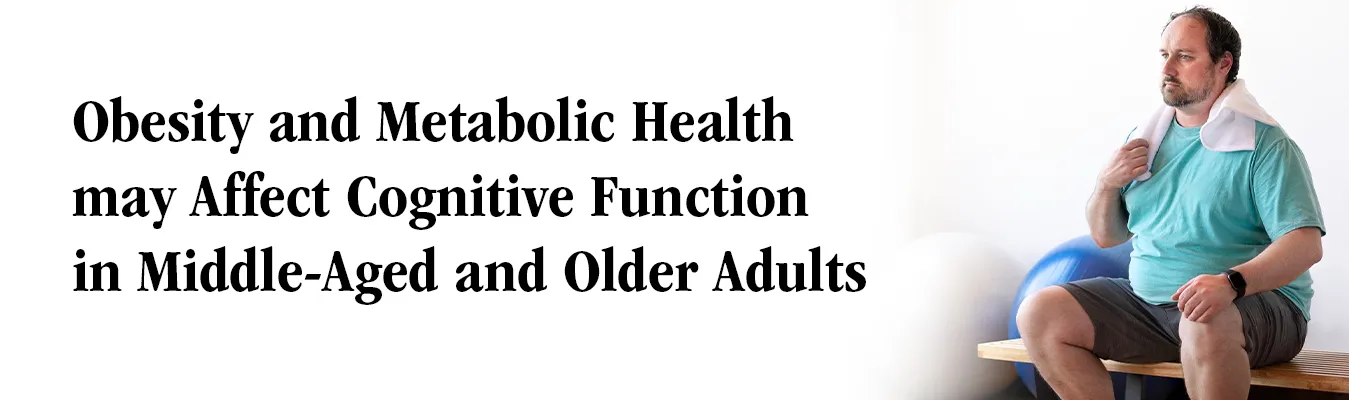

Obesity and Metabolic Health may Affect Cognitive Function in Middle-Aged and Older Adults
Dr Anshita Aggarwal, Associate Professor, Department of Endocrinology, ABVIMS and Dr RML Hospital, New Delhi
Metabolically unhealthy obesity and non-obesity were linked with a higher risk of mild cognitive impairment in middle-aged and older adults.
A study published in the Journal of Neurology examined whether different obesity and metabolic health profiles were linked to mild cognitive impairment (MCI). Researchers used data from the China Health and Retirement Longitudinal Study (CHARLS) (2011–2015) and a real-world cohort. The real-world cohort also used structural magnetic resonance imaging (MRI) to assess brain changes.
The analysis included 6,079 CHARLS participants and 522 real-world cohort participants. The researchers found that having more metabolic syndrome (MetS) components was linked with a higher risk of MCI in women younger than 60 years and those aged 60–70 years. In older men, low high-density lipoprotein (HDL) levels were associated with poorer cognitive function, while higher fasting glucose was also linked to poorer cognitive performance.
Metabolically unhealthy non-obesity (MUNO) and metabolically unhealthy obesity (MUO) were linked with a higher risk of MCI in both men and women. Metabolically healthy obesity (MHO) was also associated with a higher risk of MCI among men aged 60–70 years.
In the real-world cohort, the MHO, MUNO, and MUO groups showed different degrees of brain atrophy compared with healthy controls.
Overall, the findings suggest that both obesity and metabolic health may influence the risk of cognitive impairment. The MRI findings also showed differences in brain structure across different obesity–metabolic health groups.
(Reference: Zhai W, Zhao A, Zhang J. Association of mild cognitive impairment and obesity–metabolic status in middle-aged and elderly adults: a nationwide prospective cohort study. Journal of Neurology. 2026 Feb;273(2):110.)
Recent FAQs




Related FAQs







Medtalks is India's fastest growing Healthcare Learning and Patient Education Platform designed and developed to help doctors and other medical professionals to cater educational and training needs and to discover, discuss and learn the latest and best practices across 100+ medical specialties. Also find India Healthcare Latest Health News & Updates on the India Healthcare at Medtalks







Please login to comment on this article