

 IJCP Editorial Team
Mastering Ultrasound-Guided Percutaneous Central Venous Port Placement in Pediatric Surgery: Navigating the Learning Curve
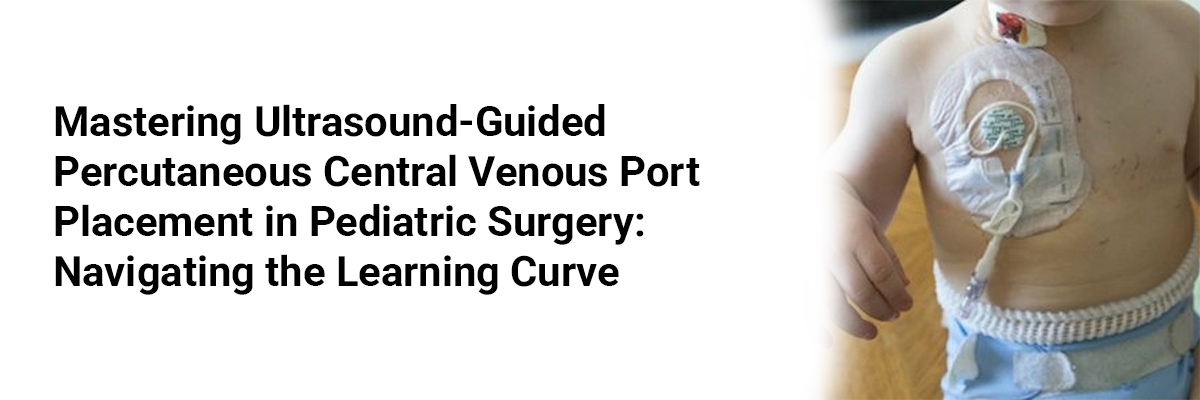
Ultrasound-guided percutaneous central venous port (CVP) placement offers a minimally invasive approach for pediatric patients, but like many surgical techniques, it has its own set of challenges and potential complications, both in the short and long term. For beginner pediatric surgeons, the learning curve is particularly significant, influencing factors such as operative time and the rate of complications.
A recent study examined the learning curve, progress, outcomes, and complications associated with ultrasound-guided percutaneous CVP placement in children performed by a single beginner pediatric surgeon. The study's findings revealed two distinct stages in the learning curve: the initial 15 cases (Stage 1) and the subsequent cases (Stage 2). A clear correlation emerged between the number of cases performed and operative time, with significantly longer times observed during the first stage. Although surgical complications were more frequent in the early phase (26.7%), the difference in complication rates between the two stages was not statistically significant. Notably, a change in the surgeon's position—from the patient's right side to the head—led to a significant reduction in operative time, underscoring the impact of operator positioning on surgical outcomes.
This study highlights that ultrasound-guided percutaneous CVP placement is a safe and effective procedure. It allows a beginner pediatric surgeon to surmount the learning curve after just 15 cases and has a relatively low complication rate compared to other pediatric surgeries. Moreover, the study emphasizes the importance of proper operator positioning in achieving optimal surgical outcomes.
Source: Jeon HJ, Ihn K, Ho IG. Learning curve of ultrasound-guided percutaneous central venous port placement in children. BMC Pediatr. 2024;24:507.
IJCP Editorial Team
Comprising seasoned professionals and experts from the medical field, the IJCP editorial team is dedicated to delivering timely and accurate content and thriving to provide attention-grabbing information for the readers. What sets them apart are their diverse expertise, spanning academia, research, and clinical practice, and their dedication to upholding the highest standards of quality and integrity. With a wealth of experience and a commitment to excellence, the IJCP editorial team strives to provide valuable perspectives, the latest trends, and in-depth analyses across various medical domains, all in a way that keeps you interested and engaged.
More FAQs by IJCP Editorial Team








Recent FAQs



Related FAQs







Medtalks is India's fastest growing Healthcare Learning and Patient Education Platform designed and developed to help doctors and other medical professionals to cater educational and training needs and to discover, discuss and learn the latest and best practices across 100+ medical specialties. Also find India Healthcare Latest Health News & Updates on the India Healthcare at Medtalks







Please login to comment on this article