
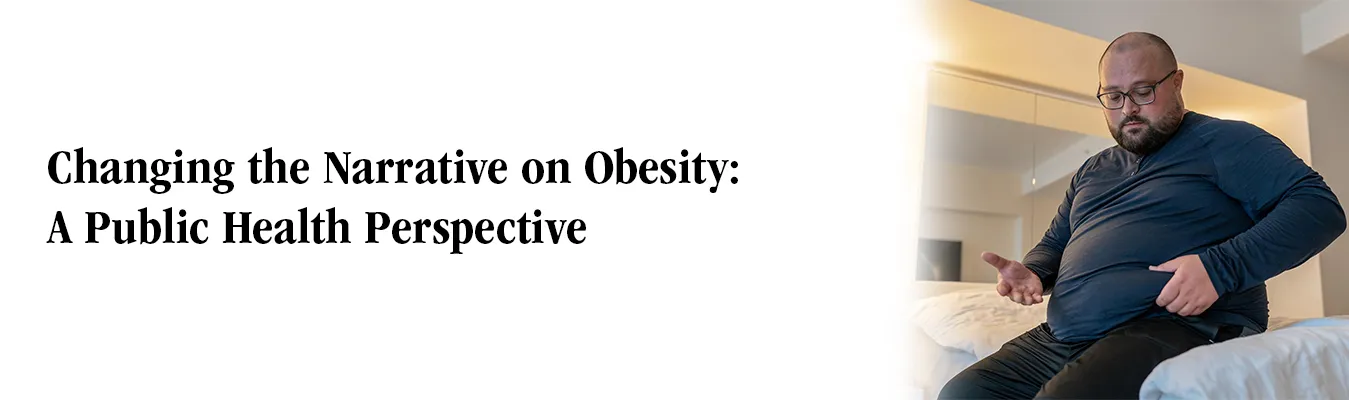
Changing the Narrative on Obesity: A Public Health Perspective
Dr. Saurabh Arora, Consultant Endocrinologist, Fortis Hospital, Mall Road, Ludhiana
Sustainable obesity control requires balancing advances in clinical care with stronger action on the environmental and policy factors that drive the epidemic.
Obesity is increasingly recognized as a chronic disease requiring long-term management, and recent advances in treatment have transformed care for many individuals. However, as public attention shifts toward newer therapies, particularly glucagon-like peptide-1 (GLP-1) receptor agonists, there is growing concern that discussions on obesity are becoming disproportionately centered on treatment rather than prevention.
Emerging evidence suggests that the way obesity is framed influences public and political support for preventive action. When obesity is presented primarily as an individual's medical condition, attention tends to focus on personal treatment. In contrast, framing obesity as a consequence of unhealthy food environments and broader societal influences generates greater support for public health measures aimed at preventing obesity before it develops.
The factors driving the obesity epidemic extend well beyond individual behavior. Food pricing policies, widespread availability of inexpensive ultra-processed foods, aggressive marketing, and limited access to healthier alternatives collectively shape dietary patterns and population health. Addressing these upstream determinants through evidence-based policies—including healthier food environments, fiscal measures such as sugar-sweetened beverage taxes, and responsible food marketing—has the potential to produce lasting health benefits, much as comprehensive public health policies transformed tobacco control.
Changing the narrative on obesity does not diminish the importance of clinical care. Rather, it broadens the conversation by recognizing that effective control of obesity requires both high-quality treatment for affected individuals and sustained policy efforts to address the conditions that fuel the epidemic. A balanced approach that integrates clinical management with population-level prevention is likely to deliver the greatest and most equitable gains in public health.
(Reference: Hagenaars LL, Ennis G, Hendlin YH. Harms of framing obesity as a disease of individuals. JAMA Health Forum. 2026;7(5):e260968.)
Recent FAQs




Related FAQs







Medtalks is India's fastest growing Healthcare Learning and Patient Education Platform designed and developed to help doctors and other medical professionals to cater educational and training needs and to discover, discuss and learn the latest and best practices across 100+ medical specialties. Also find India Healthcare Latest Health News & Updates on the India Healthcare at Medtalks







Please login to comment on this article