
IJCP Editorial Team
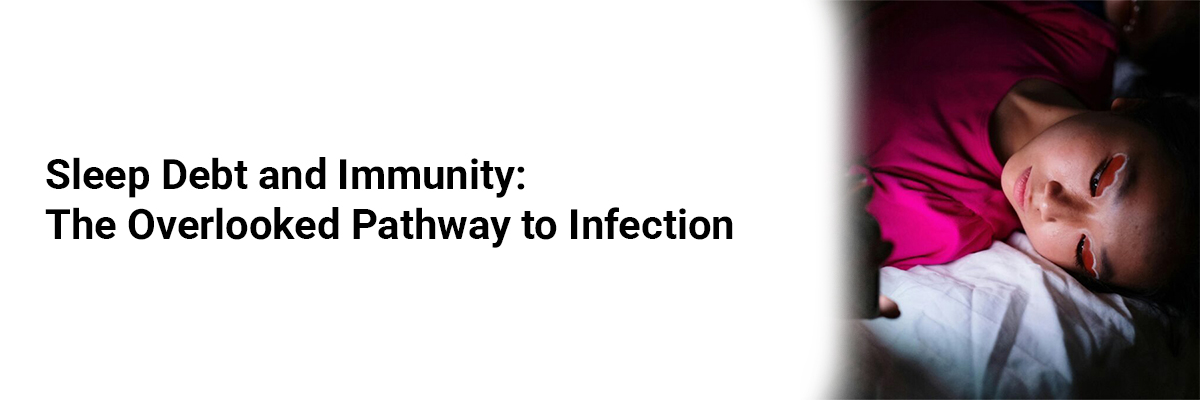
Shift work, night shifts in particular, increase the risk of several common infections such as common cold in nurses, suggests a study, which analysed self-reported data from Norwegian nurses published early this week in in the journal Chronobiology International.1
This study examined the correlation of sleep duration, sleep debt, and shift work characteristics with self-reported infections among 1335 Norwegian nurses from the Survey of Shift work, Sleep and Health (SUSSH) study. Their mean age was 41.9 years and the majority (90.4%) of them were female. Data was obtained from the Survey of Shift work, Sleep and Health (SUSSH) study. They self-reported sleep patterns, shift work schedules, and frequency of infections (such as common cold, pneumonia/bronchitis, sinusitis, gastrointestinal infection, and urinary tract infection) over the past three months.
Analysis showed that sleep debt, the gap between sleep need and actual sleep duration, was associated with at least a three-fold increase in the risk of several infections in a dose-dependent manner after adjusting for demographic factors. Specifically, sleep debt ranging from one to 120 minutes increased the risk of common cold (adjusted odds ratio (aOR) 1.33), pneumonia/bronchitis (aOR 2.29), sinusitis (aOR 2.08), and gastrointestinal infection (aOR 1.45), compared to no sleep debt. Sleep debt exceeding 2 hours nearly doubled the odds of common cold (aOR 2.32), pneumonia/bronchitis (aOR 3.88), sinusitis (aOR 2.58), and gastrointestinal infections (aOR 2.45).
Those who worked the night shift were also at an increased risk of common cold (aOR 1.28), particularly with 1-20 night shifts (aOR 1.49). However, sleep duration and quick returns (short intervals between consecutive shifts) were not linked to any infection risk.
These findings highlight the role of sleep in shift workers, particularly in healthcare settings. The authors propose several strategies to reduce sleep debt such as maintaining consistent sleep schedules, limiting consecutive night shifts, taking days off after last night shift, and enhancing awareness about sleep hygiene. Sleep is crucial for a healthy immune system. Maintaining adequate sleep may help reduce infection risk; however, further research is needed to establish a definitive cause-and-effect relationship.
Reference: Chronobiol Int. 2025 Mar 9:1-10. doi: 10.1080/07420528.2025.2455147.
Comprising seasoned professionals and experts from the medical field, the IJCP editorial team is dedicated to delivering timely and accurate content and thriving to provide attention-grabbing information for the readers. What sets them apart are their diverse expertise, spanning academia, research, and clinical practice, and their dedication to upholding the highest standards of quality and integrity. With a wealth of experience and a commitment to excellence, the IJCP editorial team strives to provide valuable perspectives, the latest trends, and in-depth analyses across various medical domains, all in a way that keeps you interested and engaged.
Please login to comment on this article