
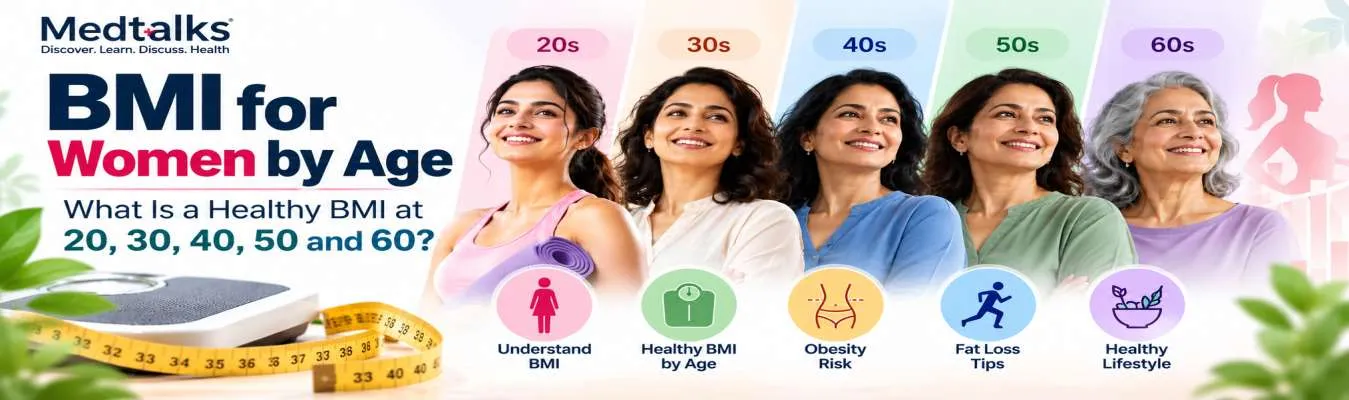

BMI for Women by Age: What Is a Healthy BMI at 20, 30, 40, 50 and 60?
What is a healthy
BMI for women at 20, 30, 40, 50 or 60? For adult women, the
standard BMI categories are generally the same across these age groups.
However, body composition, muscle mass, fat distribution, hormonal changes and
overall health can change considerably with age. Therefore, BMI should be used
as a screening tool rather than a complete measure of health.
What Is BMI?
Body Mass Index (BMI) is a simple calculation that compares
body weight with height. It is calculated using:
BMI = Weight in kilograms ÷ Height in metres²
For adults aged 20 years and older, the commonly used BMI
categories are:
|
BMI |
Category |
|
Below 18.5 |
Underweight |
|
18.5–24.9 |
Healthy weight |
|
25.0–29.9 |
Overweight |
|
30.0 or higher |
Obesity |
These categories are used for adults regardless of age or
sex.
BMI for Women by Age: Does the Healthy Range Change?
A common question is whether a woman should have a different
BMI at 20 compared with 40 or 60. The standard adult BMI range does not
change solely because of age.
Therefore, a BMI between 18.5 and 24.9 is generally
classified as the healthy-weight range for adult women at 20, 30, 40, 50 and
60.
However, this does not mean that the same BMI represents
exactly the same body composition or health profile at every age.
Healthy BMI for Women in Their 20s
During the 20s, BMI can provide a useful baseline for
monitoring weight. A BMI of 18.5–24.9 falls within the standard healthy-weight
category.
Women should also focus on maintaining muscle mass, eating a
balanced diet and staying physically active rather than pursuing an
unnecessarily low BMI.
Healthy BMI for Women in Their 30s
In the 30s, changes in activity levels, lifestyle, pregnancy
and other factors may affect body weight. A BMI between 18.5 and 24.9 remains
within the standard healthy range.
Instead of focusing only on the number on the weighing
scale, consider physical activity, waist circumference, nutrition and overall
metabolic health.
Healthy BMI for Women in Their 40s
Women in their 40s may experience changes in body
composition and fat distribution. Maintaining muscle through resistance
training and regular physical activity can become increasingly important.
A BMI of 18.5–24.9 remains the standard healthy-weight
category, but BMI alone cannot show where body fat is stored or how much muscle
a person has.
Healthy BMI for Women in Their 50s
Around the 50s, menopause-related changes can influence body
composition and fat distribution. A woman may therefore notice changes in waist
circumference or body fat even when her BMI changes very little.
For this reason, BMI should be considered alongside other
health measurements rather than used as the only indicator of healthy weight.
Healthy BMI for Women in Their 60s
For women aged 60 and above, maintaining strength, mobility
and adequate nutrition becomes particularly important. Losing weight is not
always the primary goal if it also results in significant muscle loss.
A BMI in the standard healthy range can be reassuring, but a
healthcare professional may consider BMI together with muscle mass, waist
circumference, blood pressure, blood glucose, cholesterol and medical history.
Why BMI Alone May Not Tell the Whole Story
BMI is useful because it is simple and inexpensive, but it
does not directly measure body fat. It also cannot show where fat is
stored or distinguish between muscle and fat.
For example, two women can have the same BMI but very
different amounts of muscle and body fat.
This is particularly relevant as women age. Changes in body
composition can occur even when body weight remains relatively stable.
Healthcare professionals may therefore consider additional
measurements such as waist circumference, blood pressure, blood glucose,
cholesterol and physical activity levels when assessing overall health.
BMI and Obesity Risk in Women
A BMI of 30 or above falls within the obesity category for
adults under standard BMI classifications. Obesity
is associated with an increased risk of several chronic health
conditions, including type 2 diabetes and cardiovascular disease.
However, BMI is a screening measure—not a diagnosis by
itself. A healthcare professional can interpret BMI together with other
individual health factors.
Can Fat Loss Improve BMI?
Yes. For a person whose BMI is above the healthy range,
gradual fat loss may reduce BMI. However, healthy fat loss should focus
on sustainable lifestyle habits rather than rapid weight reduction.
A combination of nutritious food, adequate protein, regular
physical activity, strength training and sufficient sleep can support healthy
weight management.
For practical exercise strategies, read https://www.medtalks.in/articles/weight-loss-exercises-best-workouts-to-burn-fat-improve-bmi-and-prevent-obesity
Women looking for sustainable lifestyle strategies can also
explore: https://www.medtalks.in/articles/top-weight-loss-tips-for-women-a-complete-guide-to-healthy-weight-management
.
Frequently Asked Questions
What is a healthy BMI for a 20-year-old woman?
For an adult aged 20, a BMI of 18.5–24.9 is generally
classified as healthy weight under standard adult BMI categories.
Does a 40-year-old woman need a higher BMI?
There is no standard adult BMI rule that automatically
assigns a higher healthy BMI because a woman is 40. BMI categories remain the
same for adults, although individual health and body composition may change
with age.
What is a healthy BMI for a 50-year-old woman?
The standard healthy BMI category remains 18.5–24.9.
However, waist circumference, muscle mass and metabolic health may also be
important.
Is BMI different for women after 60?
The standard adult BMI categories do not change simply
because a woman is over 60. However, BMI should be interpreted in the context
of muscle mass, nutrition, physical function and overall health.
Is BMI enough to determine whether a woman is healthy?
No. BMI is a screening tool. It should be considered along
with other health indicators and individual circumstances.
The Bottom Line
BMI for women by age does not have separate standard
healthy ranges for 20, 30, 40, 50 and 60. For adults, a BMI of 18.5–24.9
is generally classified as healthy weight, while 25–29.9 is overweight and 30
or above is obesity.
However, healthy weight is about more than a number. As
women age, changes in muscle mass, fat distribution, hormones and metabolic
health can affect overall wellbeing. Use BMI as one useful starting point and
discuss your individual health goals with a qualified healthcare professional.
Medtalks encourages
women to focus on sustainable healthy habits, appropriate physical activity and
long-term health rather than chasing a specific number on the weighing scale.

Recent FAQs


Related FAQs

Medtalks is India's fastest growing Healthcare Learning and Patient Education Platform designed and developed to help doctors and other medical professionals to cater educational and training needs and to discover, discuss and learn the latest and best practices across 100+ medical specialties. Also find India Healthcare Latest Health News & Updates on the India Healthcare at Medtalks







Please login to comment on this article