
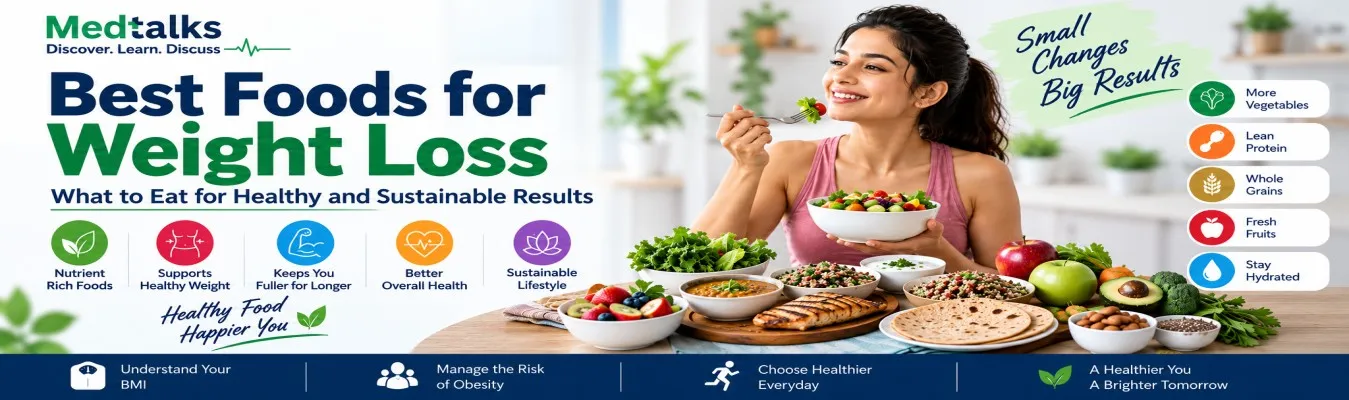

Best Foods for Weight Loss: What to Eat for Healthy and Sustainable Results
Choosing the right foods can make healthy weight management
easier, but there is no single food that automatically burns body fat.
Sustainable weight loss depends on your overall eating pattern, portion sizes,
physical activity, sleep, and individual health needs.
For people trying to manage excess weight or obesity,
the most useful approach is to prioritize nutrient-dense foods that provide
protein, fiber, vitamins, minerals, and healthy fats without excessive
calories. According to the CDC, healthy eating patterns emphasize vegetables,
fruits, protein foods, whole grains, and healthy fats while limiting added
sugars, highly processed foods, and excess saturated fat.
At Medtalks,
we explain the science behind healthy eating so you can make practical choices
rather than depending on restrictive diets or short-term trends.
What Are the Best Foods for Weight Loss?
The best choices are generally foods that provide plenty of
nutrients and help you feel satisfied. A balanced plate can include vegetables,
a protein source, whole grains or other high-fiber carbohydrates, and a
moderate amount of healthy fat.
1. Vegetables
Non-starchy vegetables are an excellent foundation for a
weight-conscious eating plan. They provide fiber, vitamins, minerals, and water
while generally being lower in calories.
Try including:
- Spinach
and other leafy greens
- Broccoli
- Cauliflower
- Cabbage
- Carrots
- Tomatoes
- Cucumber
- Bell
peppers
- Beans
and other vegetables
Adding vegetables to meals can increase food volume without
adding as many calories as many highly processed alternatives. The CDC notes
that fruits and vegetables can help people feel full and may support healthy
weight management.
2. Whole Fruits
Whole fruits can satisfy a sweet craving while providing
fiber and important nutrients.
Good options include apples, guava, oranges, berries, pears,
papaya, and other seasonal fruits.
Choose whole fruit more often than juice. Whole fruits
contain fiber that helps with fullness, whereas many juices provide less fiber
and can make it easier to consume excess calories.
3. Protein-Rich Foods
Protein is important for maintaining muscle and supporting
fullness during a calorie-controlled eating plan.
Depending on your dietary preferences, useful sources
include:
- Eggs
- Fish
- Skinless
poultry
- Lentils
- Chickpeas
- Beans
- Tofu
- Unsweetened
yogurt or curd
- Nuts
and seeds
Protein can come from both plant and animal sources. A
varied diet can help meet nutritional needs while supporting a healthier eating
pattern.
4. Whole Grains
Carbohydrates do not need to be completely eliminated to
manage body weight. Instead, choose minimally processed, fiber-rich
carbohydrate sources more often.
Examples include:
- Oats
- Brown
rice
- Whole-wheat
products
- Millets
- Quinoa
- Barley
WHO recommends obtaining carbohydrates primarily from whole
grains, vegetables, fruits, and pulses as part of a balanced diet.
5. Pulses and Legumes
Lentils, chickpeas, kidney beans, black beans, and other
pulses provide a combination of protein and fiber.
They can be particularly useful in vegetarian meal plans
because they can improve satiety while providing important nutrients.
Try adding dal, chana, rajma, sprouts, or beans to regular
meals instead of relying heavily on refined or highly processed foods.
6. Nuts and Seeds
Almonds, walnuts, peanuts, chia seeds, flaxseeds, and
pumpkin seeds contain healthy fats, protein, fiber, and micronutrients.
However, they are energy-dense, so portion size matters. A
small serving can be nutritious, while eating large quantities can
substantially increase calorie intake.
7. Low-Sugar Dairy and Alternatives
Plain curd, unsweetened yogurt, and other suitable dairy
products can provide protein and important nutrients.
Choose options without excessive added sugar. Greek-style
yogurt can also be a convenient protein-rich choice.
For people who avoid dairy, fortified alternatives may be
appropriate depending on individual nutritional requirements.
Foods to Limit When Trying to Lose Weight
Healthy eating isn't simply about adding nutritious foods;
it is also about reducing foods that make it easy to consume excess calories.
Sugary Drinks
Soft drinks, sweetened beverages, energy drinks, and
sugar-heavy coffees can add calories without providing much satiety.
Water, unsweetened beverages, or other lower-calorie options
can be preferable for everyday hydration.
Highly Processed Snacks
Chips, packaged sweets, pastries, cookies, and many
ready-to-eat foods can contain substantial amounts of added sugar, sodium,
unhealthy fats, or calories.
You do not necessarily have to eliminate every favorite
food. Instead, make nutrient-dense foods the foundation of your diet and
consume highly processed options less frequently.
Deep-Fried Foods
Fried foods can be considerably more calorie-dense than
foods prepared by steaming, baking, grilling, or similar methods.
For everyday meals, cooking methods that use less added fat
can make portion and calorie management easier.
Excess Added Sugar
Frequent consumption of sweets, desserts, sweetened cereals,
and sugary drinks can increase total energy intake. Reducing these foods can be
a practical step toward healthier eating.
How Should You Build a Weight-Loss Plate?
A simple meal-building approach is to start with vegetables,
add a protein source, include a sensible portion of high-fiber carbohydrates,
and use healthy fats in moderation.
For example:
Lunch: Vegetable salad + dal + brown rice + plain
curd
Dinner: Mixed vegetables + grilled fish/tofu +
whole-wheat roti
Snack: Whole fruit + a small portion of nuts
The exact portions should depend on your age, activity
level, health status, dietary needs, and goals.
Does BMI Matter When Choosing a Diet?
BMI
can be useful for screening weight status in adults, but it does not tell
the complete story about an individual's health. It does not directly measure
body fat or distinguish between muscle and fat.
For someone with a higher BMI or obesity, a healthcare
professional may consider additional factors such as waist circumference, blood
pressure, blood glucose, cholesterol, medications, medical history, and
lifestyle before recommending a weight-management strategy.
Therefore, avoid choosing an extreme diet simply because a
BMI result is above the healthy range.
Can These Foods Cure Obesity?
No single food can cure obesity. Obesity is a complex
chronic health condition influenced by biological, genetic, environmental,
behavioral, and other factors.
A nutritious eating pattern can support obesity
management, but some people may also require structured lifestyle
intervention, behavioral support, medication, or other medical treatment.
If you have persistent weight gain or difficulty reducing
excess weight despite consistent lifestyle changes, speak with a qualified
healthcare professional.
Simple Tips for Better Results
Healthy eating becomes easier when it fits into your daily
routine.
- Plan
meals before you become extremely hungry.
- Keep
nutritious snacks readily available.
- Eat
slowly and pay attention to fullness.
- Drink
water regularly.
- Prioritize
protein and fiber.
- Choose
whole foods more often.
- Limit
sugary beverages.
- Reduce
prolonged sitting.
- Combine
healthy eating with regular physical activity.
- Focus
on sustainable habits rather than rapid results.
The CDC also recommends paying attention to portion sizes
and planning meals to make healthier choices easier to maintain.
Frequently Asked Questions
Which foods are best for weight loss?
Vegetables, whole fruits, legumes, whole grains,
protein-rich foods, and moderate amounts of nuts and seeds are useful
components of a balanced weight-management diet.
What should I eat to stay full for longer?
Meals containing protein and fiber—such as lentils with
vegetables, eggs with whole grains, or yogurt with fruit—can help promote
satiety.
Should I stop eating carbohydrates to lose weight?
No. Carbohydrates can be part of a healthy diet. Prioritize
minimally processed sources such as whole grains, vegetables, fruits, and
pulses rather than eliminating carbohydrates completely.
Are fruits good for people trying to lose weight?
Yes. Whole fruits provide fiber, vitamins, minerals, and
naturally occurring sugars. Whole fruit is generally preferable to fruit juice
when trying to improve fullness and overall diet quality.
Can diet alone manage obesity?
Diet is an important component, but successful management
may also involve physical activity, sleep, behavioral changes, and medical care
when appropriate.
How does BMI relate to weight management?
BMI is a screening measure that can help classify weight
status in adults. However, it should be interpreted alongside other health
indicators rather than used as the sole measure of health.
Final Takeaway
The best
foods for weight loss are not exotic ingredients or so-called
fat-burning foods. They are nutritious, satisfying foods that can become part
of a sustainable eating pattern.
Build meals around vegetables, whole fruits, protein-rich
foods, pulses, whole grains, and healthy fats while limiting sugary drinks and
highly processed, calorie-dense foods. Combined with regular movement, adequate
sleep, and appropriate medical guidance, these habits can support healthier
body weight and better metabolic health.
Medtalks is
committed to providing evidence-based health information that helps readers
understand nutrition, BMI, obesity, and sustainable weight management. Your
ideal diet should be personalized to your health, lifestyle, and nutritional
needs rather than based on a one-size-fits-all trend.

Recent FAQs
Related FAQs




Medtalks is India's fastest growing Healthcare Learning and Patient Education Platform designed and developed to help doctors and other medical professionals to cater educational and training needs and to discover, discuss and learn the latest and best practices across 100+ medical specialties. Also find India Healthcare Latest Health News & Updates on the India Healthcare at Medtalks







Please login to comment on this article