
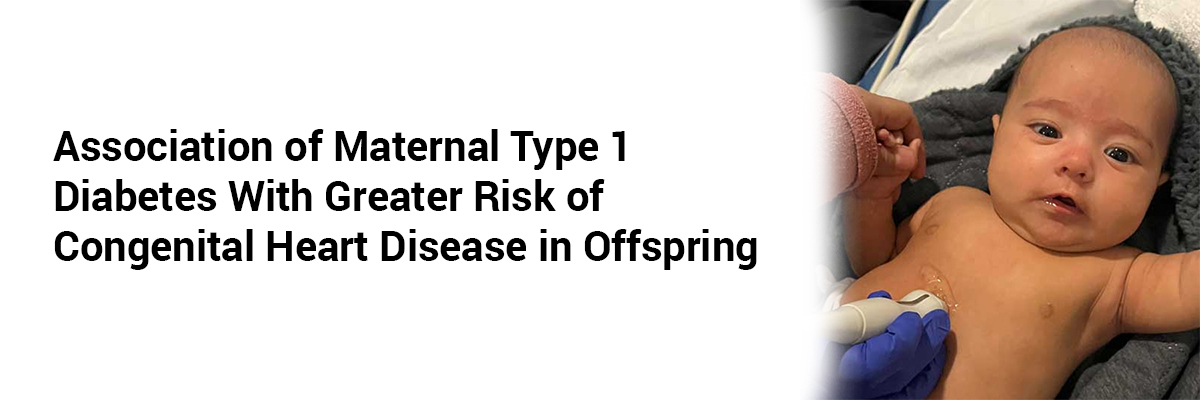

Association of Maternal Type 1 Diabetes with Greater Risk of Congenital Heart Disease in Offspring
A new study from Finland has suggested type 1 diabetes in mothers increases the risk for nearly all types of congenital heart diseases (CHDs) in their offspring.1
Learn about diabetes, its causes, symptoms, and effective management by Dr. Sanjay Kalra
This study, published Jan. 2, 2024 in JAMA Network Open, aimed to examine the relationship between maternal diabetes, overweight or obesity, and CHDs in their offspring. The nationwide, population-based register study involved a birth cohort of 620,751 children born between 2006 and 2016 in Finland and their mothers in the age group 20-40 years. The data analysis took place from January 2022 to November 2023.
Maternal diabetes status was also evaluated, including type 1 diabetes (T1D), type 2 or other diabetes, gestational diabetes, or no diabetes. Normal maternal prepregnancy BMI ranged between 18.5 and 24.9 kg/m2. The odds ratios (ORs) for isolated CHDs in children were calculated. The CHDs were further examined based on their anatomical origin and were accordingly divided into nine subgroups.
The number of children found to have an isolated CHD was 10,254 (1.7%). Results further showed that mothers with type 1 diabetes were at least 3 times more likely to have a child with any CHD with odds ratio (OR) of 3.77. When specific subgroups were evaluated, the risk was found to be greatest for transposition of great arteries with OR of 7.39. The risk was also increased for left ventricular outflow tract obstruction (OR 4.85), right ventricular outflow tract obstruction (OR 4.00), isolated atrial septal defect (OR 5.03), isolated ventricular septal defects (OR 3.50) and other septal defects (OR 3.28).
Children born to mothers in the overweight category (BMI 25.0-29.9) were at a higher risk of left ventricular outflow tract obstruction (OR 1.28). However, their risk of ventricular septal defects was low (OR 0.92).
On the other hand, the risk of complex defects was more than doubled (OR 2.70) among offspring of mothers with obesity (BMI ≥30) compared to mothers who had a normal BMI. They also had a higher probability of having right outflow tract obstruction (OR 1.31)
This study highlights the potential impact of maternal type 1 diabetes, overweight and obesity on the risk of different types of CHD in offspring. While type 1 diabetes was associated with greater risk of any type of CHD, obesity and overweight were associated with a decreased risk of ventricular septal defects and an increased risk only for complex defects and outflow tract obstruction. These findings suggest that type 1 diabetes and overweight/obesity may have different underlying causes for their teratogenic effects. “Thus, primary prevention of maternal overweight and obesity and careful treatment of pre-gestational diabetes may hold the opportunity to reduce the burden of disease”, concluded the researchers.
Reference
1. Riitta Turunen, et al. Maternal diabetes and overweight and congenital heart defects in offspring. JAMA Netw Open. 2024 Jan 2;7(1):e2350579. doi: 10.1001/jamanetworkopen.2023.50579.


Recent FAQs




Related FAQs




Medtalks is India's fastest growing Healthcare Learning and Patient Education Platform designed and developed to help doctors and other medical professionals to cater educational and training needs and to discover, discuss and learn the latest and best practices across 100+ medical specialties. Also find India Healthcare Latest Health News & Updates on the India Healthcare at Medtalks







Please login to comment on this article