

 IJCP Editorial Team
Transient Neonatal Diabetes: Successful Insulin Cessation with SAP Support
Abstract
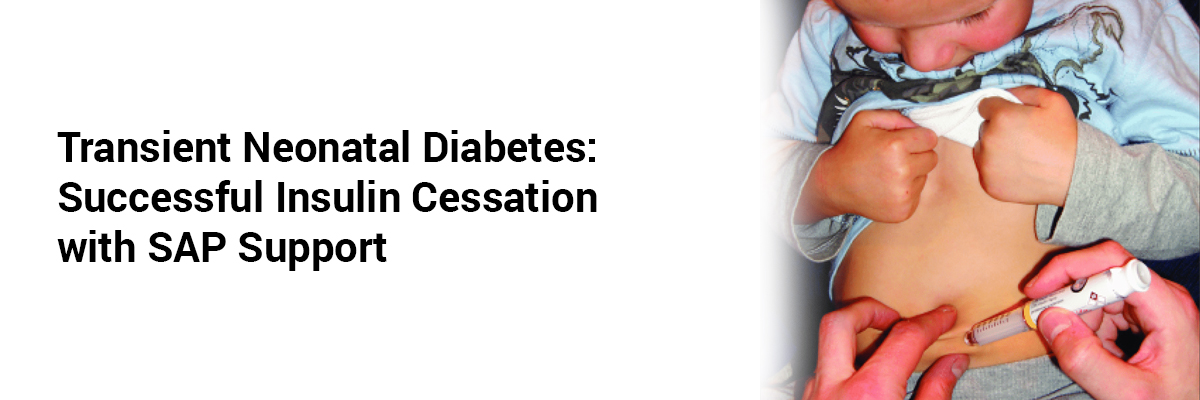
Sensor-augmented pump (SAP) therapy is increasingly used to manage neonatal diabetes mellitus (NDM), offering continuous insulin delivery with real-time glucose monitoring to minimize glycemic fluctuations. We report a case of successful SAP therapy in a neonate with 6q24-related transient NDM, in whom SAP facilitated safe glycemic control and guided the discontinuation of insulin therapy.
Case Presentation
A male infant, small for gestational age, developed hyperglycemia at 4 days of life. He was diagnosed with neonatal diabetes mellitus at the referring hospital, where continuous intravenous insulin infusion was initiated. At 29 days of age, he was transferred to our facility for advanced management.
SAP therapy was commenced at 39 days of life. The system provided stable glycemic control and effectively prevented hypoglycemia—one of the key challenges in neonatal insulin therapy. Gradual improvement in blood glucose levels was observed over the subsequent days.
To evaluate endogenous insulin secretion and exclude pump-related issues, insulin infusion via SAP was withheld prior to discharge. Notably, blood glucose levels remained stable without exogenous insulin. Based on these findings, insulin therapy was discontinued, and the infant was discharged at 58 days of life.
Post-discharge genetic testing revealed hypomethylation of one allele at chromosome 6q24, confirming 6q24-related transient NDM. Although this subtype is known to resolve spontaneously, current guidelines do not specify evidence-based criteria for insulin discontinuation.
Retrospective continuous glucose monitoring (CGM) analysis showed progressive improvement in glycemic variability, particularly a reduction in the standard deviation (SD) of glucose values. These SD trends coincided with clinical readiness for insulin cessation.
Discussion
This case highlights the utility of SAP therapy in achieving tight glycemic control while minimizing hypoglycemia in neonatal diabetes. Moreover, it suggests that CGM-derived SD values may serve as a practical biomarker to guide insulin tapering and discontinuation in transient forms of NDM.
Given the rarity of 6q24-related NDM, collaborative multicenter studies are needed to further evaluate SD thresholds and develop standardized criteria for safely discontinuing insulin during SAP therapy.
Conclusion
SAP therapy played a crucial role in stabilizing glycemia and guiding the safe termination of insulin therapy in this infant with transient NDM. CGM SD values may offer a promising index for insulin withdrawal, though further validation is warranted.
IJCP Editorial Team
Comprising seasoned professionals and experts from the medical field, the IJCP editorial team is dedicated to delivering timely and accurate content and thriving to provide attention-grabbing information for the readers. What sets them apart are their diverse expertise, spanning academia, research, and clinical practice, and their dedication to upholding the highest standards of quality and integrity. With a wealth of experience and a commitment to excellence, the IJCP editorial team strives to provide valuable perspectives, the latest trends, and in-depth analyses across various medical domains, all in a way that keeps you interested and engaged.
More FAQs by IJCP Editorial Team








Recent FAQs



Related FAQs






Medtalks is India's fastest growing Healthcare Learning and Patient Education Platform designed and developed to help doctors and other medical professionals to cater educational and training needs and to discover, discuss and learn the latest and best practices across 100+ medical specialties. Also find India Healthcare Latest Health News & Updates on the India Healthcare at Medtalks







Please login to comment on this article