

 IJCP Editorial Team
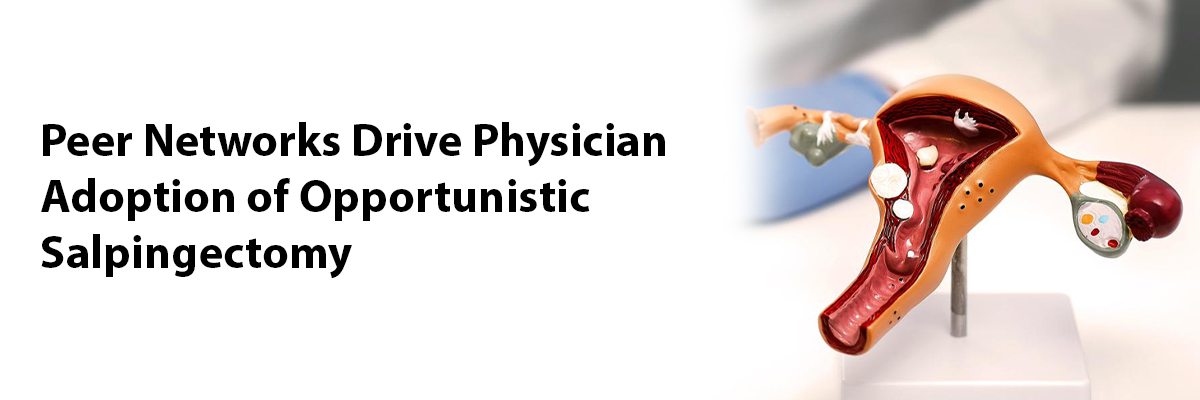
Peer Networks Drive Physician Adoption of Opportunistic Salpingectomy
A new national
analysis reveals that physician peer networks play a significant role in how quickly clinicians
adopt opportunistic salpingectomy—a preventive strategy recommended to reduce
ovarian cancer risk during hysterectomy.
Following
professional society recommendations to counsel patients on opportunistic
salpingectomy, overall uptake has risen in recent years. However, adoption
varies widely across physicians. This study aimed to understand whether peer
influence helps explain these differences.
Study Overview
Using Blue Cross Blue Shield Axis claims data across the United States, researchers
examined women aged 18–49 who underwent inpatient hysterectomy from 2019 to
2022. Opportunistic salpingectomy was defined as bilateral fallopian tube
removal without oophorectomy.
Physician peer
relationships were established based on shared patient care in 2017–2018.
Investigators then measured whether a physician’s exposure to peers with higher
salpingectomy utilization influenced their own practice patterns in later
years.
Key Findings
• Among3373 hysterectomy patients, 55.5% received opportunistic
salpingectomy.
• Physicians exposed to peers with high baseline salpingectomy rates were far
more likely to perform the procedure themselves.
– Salpingectomy rates were highest when peer physicians were in the top
quartile (64.5%)
or second quartile (59.6%), compared with 44.0% in the lowest quartile
(P<.001).
• After adjusting for clinical and demographic variables, peer influence
remained strong:
– Highest-quartile peer exposure: OR 1.99 (95% CI 1.46–2.71)
– Second-highest quartile: OR 1.64 (95% CI 1.21–2.22)
Conclusion
Physicians are significantly influenced by their professional networks when
adopting new preventive surgical practices. Those who share patients with
colleagues who frequently perform opportunistic salpingectomy are nearly twice
as likely to incorporate the technique into their own hysterectomy practice.
These findings
highlight the potential of peer-driven strategies, such as targeted education
within physician networks, to accelerate the uptake of opportunistic
salpingectomy and strengthen ovarian cancer prevention efforts.
IJCP Editorial Team
Comprising seasoned professionals and experts from the medical field, the IJCP editorial team is dedicated to delivering timely and accurate content and thriving to provide attention-grabbing information for the readers. What sets them apart are their diverse expertise, spanning academia, research, and clinical practice, and their dedication to upholding the highest standards of quality and integrity. With a wealth of experience and a commitment to excellence, the IJCP editorial team strives to provide valuable perspectives, the latest trends, and in-depth analyses across various medical domains, all in a way that keeps you interested and engaged.
More FAQs by IJCP Editorial Team









Recent FAQs

Related FAQs







Medtalks is India's fastest growing Healthcare Learning and Patient Education Platform designed and developed to help doctors and other medical professionals to cater educational and training needs and to discover, discuss and learn the latest and best practices across 100+ medical specialties. Also find India Healthcare Latest Health News & Updates on the India Healthcare at Medtalks







Please login to comment on this article