

 IJCP Editorial Team
Nuchal Translucency as a Predictor of Congenital Heart Defects in Early Pregnancy
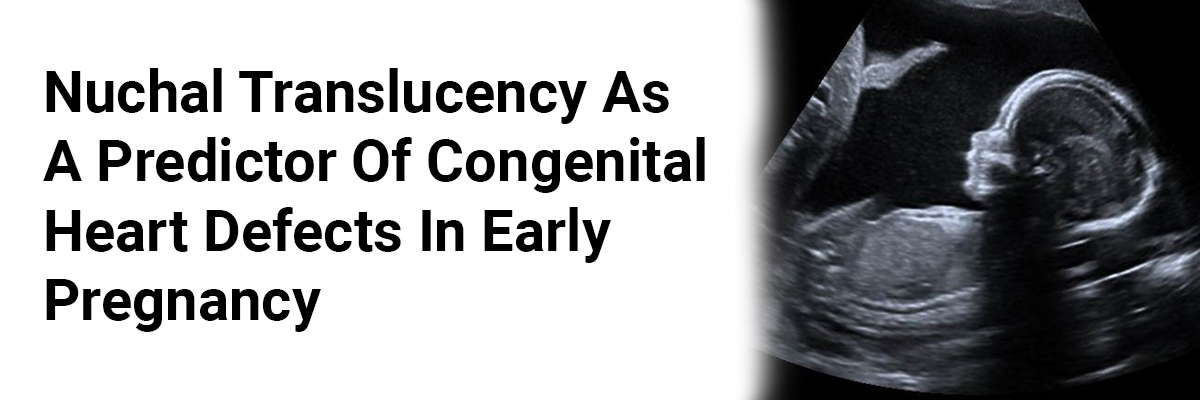
A recent observational study by Rema V Nair and colleagues evaluated the accuracy of nuchal translucency (NT) in detecting congenital heart defects (CHDs) at 11 to 13+6 weeks of gestation. The study included 150 singleton pregnancies. Participants varied in age, with 14% ≤20 years, 20% between 21–25 years, 34.6% between 26–30 years, 20% between 31–35 years, and 11.3% over 35 years. It was observed that 45.3% were primigravida, and 54.6% were multigravida.
NT measurement showed high predictive value, with a sensitivity of 100%, specificity of 93.9%, and a negative predictive value of 100%. The study concluded that increased NT thickness is a key factor for identifying fetuses requiring specialized echocardiography.
When abnormal ductus venosus doppler flow is observed with increased NT, the risk of CHD is higher, making it essential to rule out CHD as early as possible. Accurate NT assessment facilitates the timely identification and management of CHDs, improving prenatal care outcomes.
Reference:
Nair RV, Jameela Ponmalar AR, Ramya VA, Kavitha CM. Fetal nuchal translucency–a screening tool in predicting congenital cardiac abnormalities. Age.;20:21-5.
https://journal.barpetaogs.co.in/pdf/112234.pdf
IJCP Editorial Team
Comprising seasoned professionals and experts from the medical field, the IJCP editorial team is dedicated to delivering timely and accurate content and thriving to provide attention-grabbing information for the readers. What sets them apart are their diverse expertise, spanning academia, research, and clinical practice, and their dedication to upholding the highest standards of quality and integrity. With a wealth of experience and a commitment to excellence, the IJCP editorial team strives to provide valuable perspectives, the latest trends, and in-depth analyses across various medical domains, all in a way that keeps you interested and engaged.
More FAQs by IJCP Editorial Team









Recent FAQs

Related FAQs







Medtalks is India's fastest growing Healthcare Learning and Patient Education Platform designed and developed to help doctors and other medical professionals to cater educational and training needs and to discover, discuss and learn the latest and best practices across 100+ medical specialties. Also find India Healthcare Latest Health News & Updates on the India Healthcare at Medtalks







Please login to comment on this article