

 IJCP Editorial Team
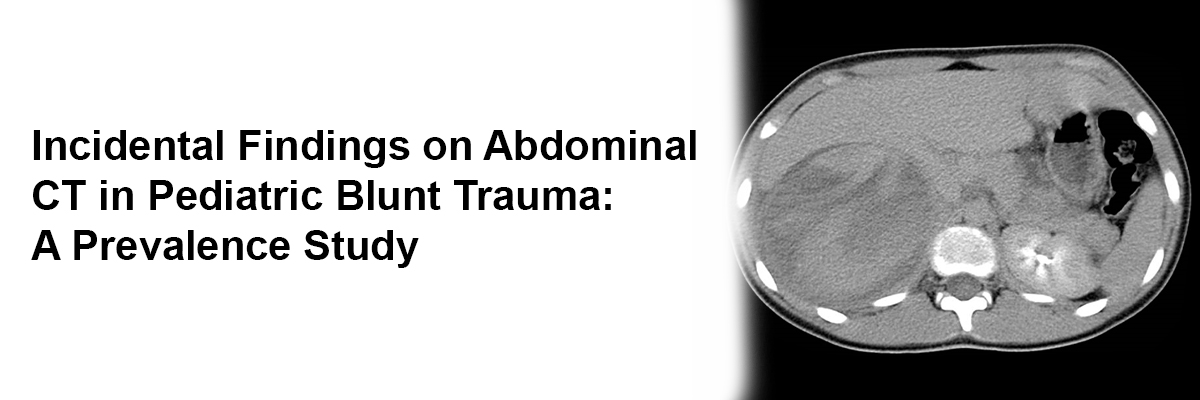
Incidental Findings on Abdominal CT in Pediatric Blunt Trauma: A Prevalence Study
Approximately 40% of children who undergo CT scans following blunt abdominal trauma have incidental findings, with ~4% requiring immediate evaluation and management and 5.4% needing follow-up within 4 weeks, according to a recent study published in Annals of Emergency Medicine.1
Irma T Ugalde, from the Department of Pediatrics, Section of Emergency Medicine, University of Chicago Pritzker School of Medicine, Chicago and colleagues conducted this secondary analysis of a multicenter prospective cohort study to determine the prevalence and types of incidental findings on abdominal/pelvic CT scans in children (<18 years) with blunt trauma. The participants underwent CT imaging following blunt trauma across six pediatric emergency departments (EDs) in the United States. Radiology reports were reviewed to identify nontraumatic findings, which were then assessed and categorized into five based on their clinical urgency: Urgent (requiring immediate treatment), requiring outpatient follow-up within 4 weeks, routine follow-up needed, potential need for follow-up and no follow-up needed.
Among the 7581 children enrolled in the study, 2,500 (33%) underwent abdominal/pelvic CT. The average patient age was 10.1 years, with the majority (58%) being boys.
A total of 1,552 incidental findings were detected in 988 children (39.5%). The average age of children with incidental findings was 10.6 years; 59% were boys. Among the incidental findings, 55 (3.5%) were urgent, while 84 (5.4%) needed outpatient follow-up within 4 weeks. However, the majority of the incidental findings were less urgent: 552 (36%) were classified as routine, 574 (37%) had a potential need for follow-up, and 287 (18%) required no further evaluation. Notably, 72% of the findings involved three organ systems: the gastrointestinal tract, bones, and kidneys. Among 709 children with intraperitoneal fluid identified on CT scan, 19.2% had no identifiable intra-abdominal injuries.
This study shows that while incidental findings were common, most did not require immediate evaluation. It further highlights the need for judicious use of CT scans, and the fact that clinicians must be prepared to interpret the incidental findings and address them without causing undue alarm. There is also a need for clear guidelines regarding management of incidental findings.
Reference
1. Irma T Ugalde, et al. Incidental findings on computed tomography in children with blunt abdominal trauma. Ann Emerg Med. 2025 Jan 22:S0196-0644(24)01271-X. doi: 10.1016/j.annemergmed.2024.12.012.
IJCP Editorial Team
Comprising seasoned professionals and experts from the medical field, the IJCP editorial team is dedicated to delivering timely and accurate content and thriving to provide attention-grabbing information for the readers. What sets them apart are their diverse expertise, spanning academia, research, and clinical practice, and their dedication to upholding the highest standards of quality and integrity. With a wealth of experience and a commitment to excellence, the IJCP editorial team strives to provide valuable perspectives, the latest trends, and in-depth analyses across various medical domains, all in a way that keeps you interested and engaged.
More FAQs by IJCP Editorial Team








Recent FAQs



Related FAQs








Medtalks is India's fastest growing Healthcare Learning and Patient Education Platform designed and developed to help doctors and other medical professionals to cater educational and training needs and to discover, discuss and learn the latest and best practices across 100+ medical specialties. Also find India Healthcare Latest Health News & Updates on the India Healthcare at Medtalks







Please login to comment on this article