

 IJCP Editorial Team
Fertility Prognosis in Adenomyosis: The Role of Pelvic Adhesions Post-HIFU
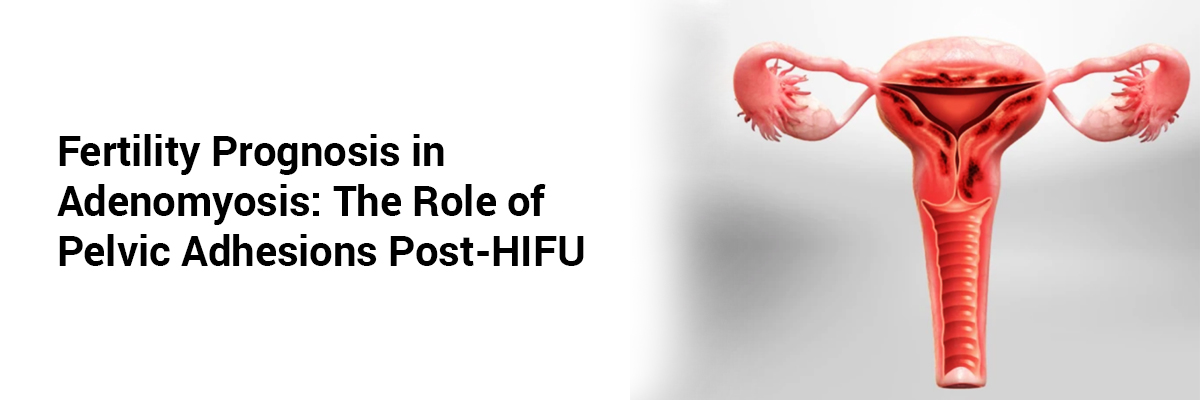
Severe pelvic adhesions significantly reduce pregnancy rates following high-intensity focused ultrasound (HIFU) ablation for adenomyosis, as per findings of a new study published in The International Journal of Gynecology & Obstetrics.1
Researchers undertook this study to investigate the impact of pelvic adhesions on reproductive outcomes in 396 women with adenomyosis who underwent HIFU ablation, of whom 148 had fertility requirements. Pelvic adhesions were assessed with magnetic resonance imaging (MRI), and reproductive outcomes were evaluated post-procedure.
Out of the 148 women, 118 (79.8%), mean age 35.3 years, were followed up for a median duration of 92 months. Thirty-five women (29.7%) achieved successful pregnancy, including 28 spontaneous conceptions and seven via in vitro fertilization (IVF) and embryo transfer. Pelvic adhesions were observed in 60.2% of cases.
Women who became pregnant had lower pain scores (6 vs 7 on numeric rating scale), smaller uterine volumes (160.74 vs 207.57 cm3), and a lower incidence of pelvic adhesions (40.00% vs. 68.67%) compared with those who did not. The pregnancy rates differed according to the severity of pelvic adhesions: 44.7% in women without adhesions, 25.0% in those with mild adhesions, and 16.3% in women with severe adhesions. Severe pelvic adhesions were identified as independent adverse risk factor for achieving pregnancy after HIFU with odds ratio (OR) of 0.28.
This study highlights the negative impact of severe pelvic adhesions on pregnancy rates after HIFU for adenomyosis. Hence, careful pre-treatment assessment of adhesions is essential for the fertility of women as it provides valuable guidance for patient counselling, and clinical decision-making.
Reference
1. Lin JF, et al. Effect of pelvic adhesions on reproductive outcomes following high-intensity focused ultrasound in patients with adenomyosis. Int J Gynaecol Obstet. 2025 Oct;171(1):438-445. doi: 10.1002/ijgo.70194.
IJCP Editorial Team
Comprising seasoned professionals and experts from the medical field, the IJCP editorial team is dedicated to delivering timely and accurate content and thriving to provide attention-grabbing information for the readers. What sets them apart are their diverse expertise, spanning academia, research, and clinical practice, and their dedication to upholding the highest standards of quality and integrity. With a wealth of experience and a commitment to excellence, the IJCP editorial team strives to provide valuable perspectives, the latest trends, and in-depth analyses across various medical domains, all in a way that keeps you interested and engaged.
More FAQs by IJCP Editorial Team







Recent FAQs

Related FAQs






Medtalks is India's fastest growing Healthcare Learning and Patient Education Platform designed and developed to help doctors and other medical professionals to cater educational and training needs and to discover, discuss and learn the latest and best practices across 100+ medical specialties. Also find India Healthcare Latest Health News & Updates on the India Healthcare at Medtalks







Please login to comment on this article