

 IJCP Editorial Team
Burden and Predictors of Severe RSV Disease among Otherwise Healthy Children
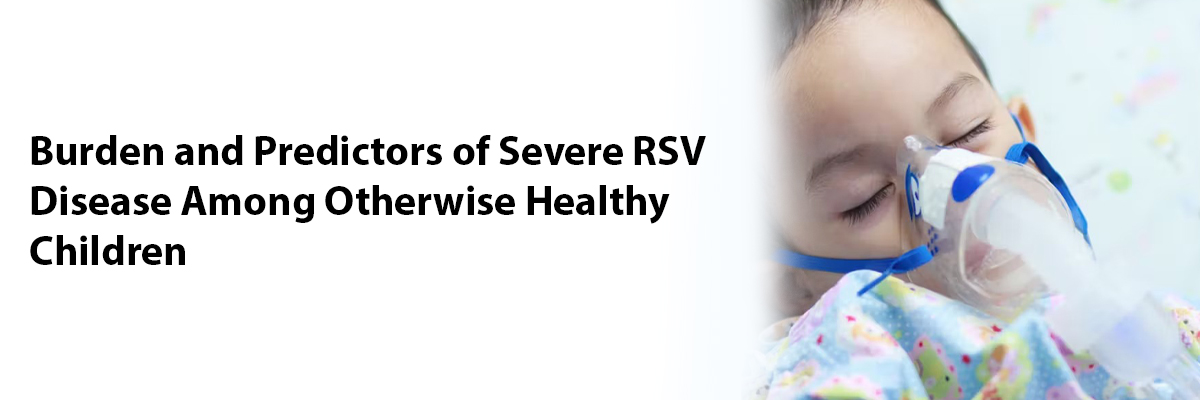
Infants under 3 months with severe respiratory syncytial virus (RSV) infections are less commonly linked to comorbidities compared to older children, according to findings of a Swedish study published Sept. 9 in The Lancet Regional Health: Europe.1
Giulia Dallagiacoma, M.D., from the Karolinska Institutet in Stockholm, and colleagues conducted this study to investigate the risk factors for RSV-associated severe disease outcomes in children aged 0 to 18. For this they analysed all births in Sweden between 2001 and 2022. The demographic and clinical data was obtained from national registers. RSV-associated death, Intensive Care Unit (ICU) admission, and prolonged hospitalization for 7 days or more, were selected as the study outcomes.
A total of 2,354,302 children were included in the study. Of these, 38,919 (1.7%) had an RSV diagnosis; 11.9% of these children experienced severe disease outcomes. Forty-one percent of children, mean age 1.9 months, admitted to the intensive care unit (ICU) had an underlying comorbid condition.
Overall, children born during winter were nearly 3 times more likely to require ICU admission or die with an adjusted hazard ratio (aHR) of 2.96. Those with comorbid conditions were more than four times at greater risk of ICU admission or death (aHR >4). Other factors showing strong association with ICU admission or mortality were small for gestational age (aHR 3.91), multiple birth (aHR 3.43), having siblings 0–3 years (aHR 2.92).
Among children with RSV infection, similar though attenuated associations were observed. Of note, children younger than 3 months with severe infection had fewer comorbidities (40.3%) compared to older children (71.6%).
This study has identified several predictors of ICU admission or death in children with RSV infection. These risk factors, other than comorbidities, such as small for gestational age, multiple births, and young siblings are not covered under the RSV immunization strategies. Hence, immunization programs should target not just children with underlying conditions, but also otherwise healthy infants at high risk during the first 3 months of life as shown in this study.
Reference
1. Dallagiacoma G, et al. Risk factors for severe outcomes of respiratory syncytial virus infection in children: a nationwide cohort study in Sweden. Lancet Reg Health Eur. 2025 Sept 9.; 101447.
IJCP Editorial Team
Comprising seasoned professionals and experts from the medical field, the IJCP editorial team is dedicated to delivering timely and accurate content and thriving to provide attention-grabbing information for the readers. What sets them apart are their diverse expertise, spanning academia, research, and clinical practice, and their dedication to upholding the highest standards of quality and integrity. With a wealth of experience and a commitment to excellence, the IJCP editorial team strives to provide valuable perspectives, the latest trends, and in-depth analyses across various medical domains, all in a way that keeps you interested and engaged.
More FAQs by IJCP Editorial Team




Recent FAQs

Related FAQs



Medtalks is India's fastest growing Healthcare Learning and Patient Education Platform designed and developed to help doctors and other medical professionals to cater educational and training needs and to discover, discuss and learn the latest and best practices across 100+ medical specialties. Also find India Healthcare Latest Health News & Updates on the India Healthcare at Medtalks







Please login to comment on this article