
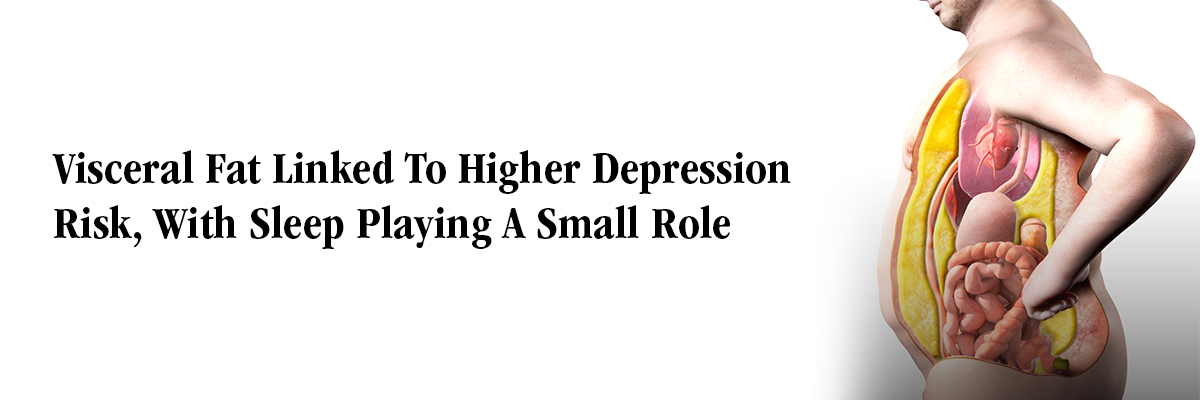
Visceral Fat Linked To Higher Depression Risk, With Sleep Playing A Small Role
Dr.A.Premkumar, DM, Director, DiaPlus Multispeciality Hospital
SalemHigher visceral fat is associated with increased depression risk, partly influenced by sleep duration.
Depression is a common mental health problem, and obesity is an important risk factor for it. While the link between mental health and obesity is well known, large studies that specifically examine visceral fat and its connection with depression are still limited. Understanding this link may help improve both physical and mental health outcomes.
A recent study published in BMC Psychiatry aimed to examine the relationship between depression and visceral fat and to explore whether sleep duration plays a role in this association.
Researchers analyzed data from 19,659 adults from the National Health and Nutrition Examination Survey. Depression was evaluated using the nine-item Patient Health Questionnaire (PHQ-9). Two measures, visceral adiposity index (VAI) and lipid accumulation product (LAP), were used. The role of sleep duration was also examined.
Results showed that higher values of VAI and LAP were associated with a greater likelihood of depression.
The findings suggest that VAI and LAP are associated with depression in adults. Sleep may have a limited role in this connection. These measures could help in identifying and managing individuals at risk.
(Reference: Huang Y, Zhao D, Yang Z, Wei C, Qiu X. The relationship between VAI, LAP, and depression and the mediation role of sleep duration-evidence from NHANES 2005-2020. BMC Psychiatry. 2025;25(1):228. doi:10.1186/s12888-025-06631-8)
Related FAQs








Medtalks is India's fastest growing Healthcare Learning and Patient Education Platform designed and developed to help doctors and other medical professionals to cater educational and training needs and to discover, discuss and learn the latest and best practices across 100+ medical specialties. Also find India Healthcare Latest Health News & Updates on the India Healthcare at Medtalks







Please login to comment on this article