
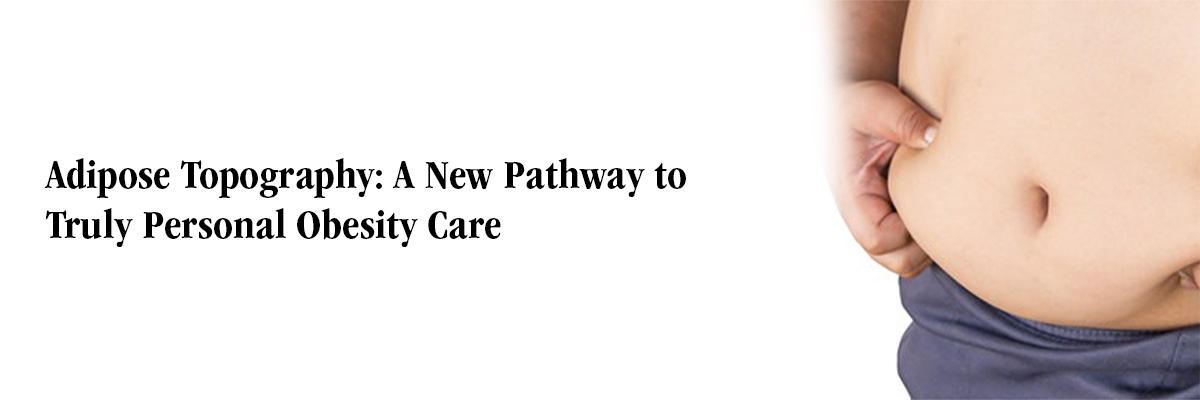

Adipose Topography: A New Pathway to Truly Personal Obesity Care
Dr Shehla Shaikh and Dr Sanjay Kalra
“Adipose topography integrates fat quantity and distribution to better predict metabolic impact.”
A recent study published in the Indian Journal of Endocrinology and Metabolism detailed the intricate nature of obesity, which is mostly diagnosed using body mass index (BMI), a measure that fails to capture its full complexity. While models such as the Edmonton Obesity Scoring System (EOSS) and the SECURED framework offer a comprehensive approach to obesity care, they may still not address all individual needs effectively.
The study advocates a new concept, "barophenotype," that encompasses all biophysical and social attributes that affect obesity's impact on health. This term combines "baro" (weight) and "phenotype" to advocate for a person-centered diagnosis of obesity.
The barophenotype framework can be structured as an ABCDE rubric, encompassing Adipose topography, Severity of obesity, Style of weight distribution, Swiftness of weight change, and Syndromic features.
Adipose topography refers to the nature and distribution of body fat and provides important clues for the proper diagnosis and treatment of obesity. Parameters such as BMI and waist circumference reflect obesity severity, but the fat distribution pattern offers deeper insight into metabolic risk and helps identify conditions such as lipodystrophy and Cushing's syndrome.
As the global prevalence of obesity rises, an approach that focuses on understanding the underlying causes—the "why" rather than only the "how"—is essential.
Thus, Barotype A—adipose topography—provides a clear view of both the pattern and cause of adiposity. It sharpens diagnosis and guides precise therapy selection, leading to more effective, personalized obesity management.
(Source: Kalra S, Das AK, Sahay R, Bantwal G, Kota S, Ghosh S, et al. Barophenotypic Characterization – The key to Person Centric Management of Obesity. Indian J Endocrinol Metab. 2021;25(4):295-8. doi:10.4103/ijem.ijem_285_21.; https://pmc.ncbi.nlm.nih.gov/articles/PMC8793949/#sec1-5)
Recent FAQs



Related FAQs







Medtalks is India's fastest growing Healthcare Learning and Patient Education Platform designed and developed to help doctors and other medical professionals to cater educational and training needs and to discover, discuss and learn the latest and best practices across 100+ medical specialties. Also find India Healthcare Latest Health News & Updates on the India Healthcare at Medtalks







Please login to comment on this article