

Published On: 15 Oct, 2024 5:26 PM | Updated On: 05 Oct, 2026 9:33 AM
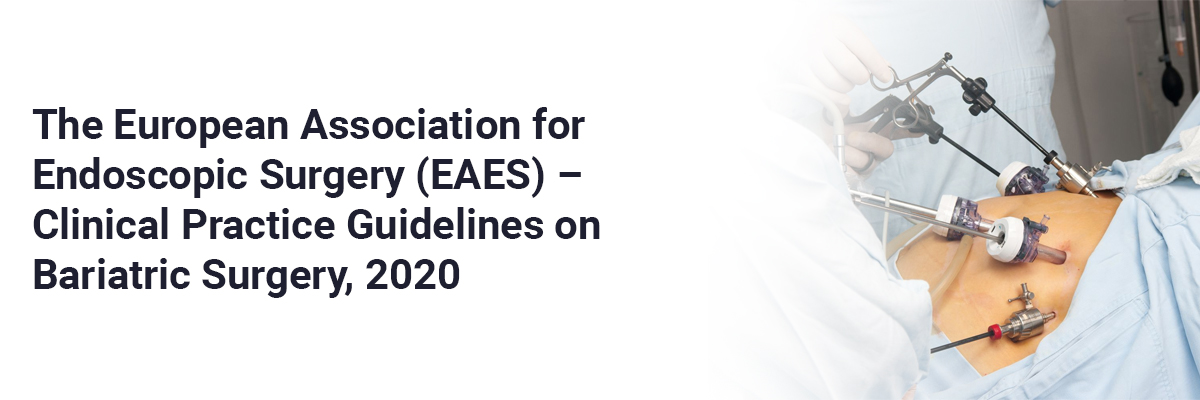
The European Association for Endoscopic Surgery (EAES) – Clinical Practice Guidelines on Bariatric Surgery, 2020
Indications for bariatric surgery:
- Laparoscopic bariatric surgery is strongly recommended for patients with a BMI of ≥40 kg/m².
- It is also advised for individuals with a BMI of 35-40 kg/m² – if they have comorbidities which could improve with weight loss.
- Laparoscopic bariatric/metabolic surgery should be considered for patients with a BMI of 30-35 kg/m² who have poorly controlled type 2 diabetes (T2D) and/or arterial hypertension despite optimal medical treatment.
Preoperative work-up:
- No clear recommendation for routine Helicobacter pylori eradication before bariatric surgery due to insufficient evidence (conditional support for either approach).
- Preoperative consultation with a dietitian is strongly recommended for patients undergoing bariatric surgery.
- Routine esophagogastroscopy prior to bariatric surgery can be considered but is conditionally recommended based on individual cases.
- Psychological evaluation before bariatric surgery is advised, though not mandatory. Previous diagnoses of binge eating or depression should not automatically disqualify patients from surgery.
Justifications:
- H. pylori: Meta-analysis of observational studies showed no significant differences in the risk of marginal ulcer or complications post-surgery between H. pylori-positive and negative patients. Due to limited and imprecise evidence, a conditional recommendation for either eradication or standard care is given.
- Dietitian Consultation: A meta-analysis of randomized controlled trials (RCTs) found that preoperative dietitian consultations led to improved weight loss outcomes, but evidence quality was low. Still, patient preference for holistic care and resource feasibility supports a strong recommendation.
- Esophagogastroscopy: Systematic reviews showed that surgical management changed in 7.8% of cases, and medical management changed in 27.5% after preoperative endoscopy. Despite low certainty in evidence, routine esophagogastroscopy is conditionally recommended, especially for symptomatic patients.
- Psychological Evaluation: While the evidence remains inconsistent, a preoperative mental health assessment is recommended to identify psychological disorders. Prior diagnoses like depression or binge eating should not be automatic contraindications for surgery, though patient mental health status should be carefully monitored.
Source: Di Lorenzo N, Antoniou SA, Batterham RL, et al. Surg Endosc. 2020;34(6):2332-2358. doi:10.1007/s00464-020-07555-y


Recent FAQs



Related FAQs









Medtalks is India's fastest growing Healthcare Learning and Patient Education Platform designed and developed to help doctors and other medical professionals to cater educational and training needs and to discover, discuss and learn the latest and best practices across 100+ medical specialties. Also find India Healthcare Latest Health News & Updates on the India Healthcare at Medtalks







Please login to comment on this article