
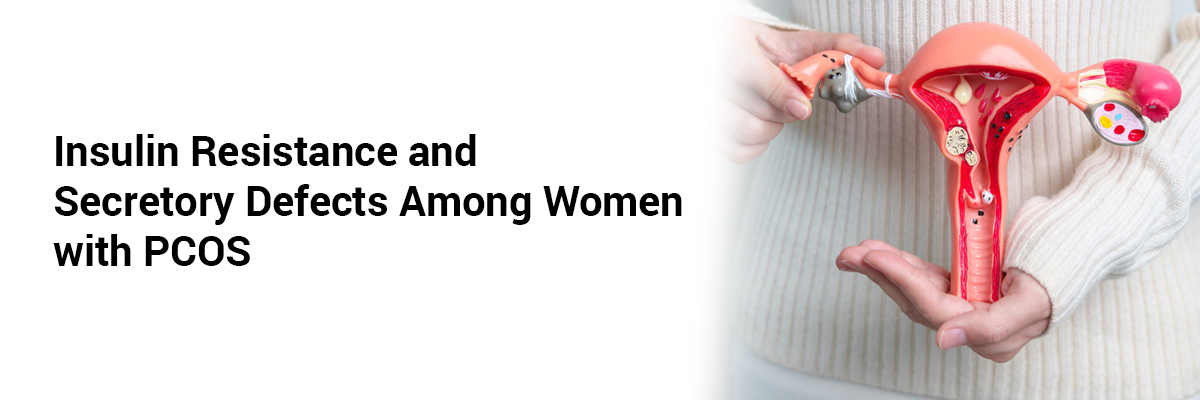

Insulin Resistance and Secretory Defects Among Women with PCOS
Polycystic Ovarian Syndrome (PCOS) is a complex condition with numerous health implications, including metabolic disturbances such as insulin resistance (IR). Women often face dual challenges of both insulin resistance and insulin secretory defects (ISD) in the context of PCOS. While insulin resistance is a well-established feature of PCOS, the role of impaired insulin secretion remains less understood.
A recent study that examined these metabolic impairments in a cohort of young adult to early middle-aged Bangalee women, ranging from normal weight to obese, with and without PCOS found elevated Homeostatic Model Assessment for Insulin Resistance (HOMA-IR) in 52% of PCOS women compared to 28% of those without the condition. This highlights that insulin resistance is a significant risk factor for PCOS in this population. Also, Body Mass Index (BMI) and hyperandrogenism (HA) appeared as independent correlates of insulin resistance, suggesting a strong connection between obesity, androgen excess, and metabolic dysfunction in Bangalee women with PCOS.
Beyond insulin resistance, the study also found that insulin secretion, measured by HOMA%B, was compromised in 48% of PCOS patients. In the PCOS group, hyperandrogenemia was significantly linked to reduced insulin secretion, while in non-PCOS women, 2-hour glycemia on an Oral Glucose Tolerance Test (OGTT) was an independent predictor of ISD. These results suggest that impaired insulin secretion may be an early driver of hyperglycemia and a key risk factor for the development of type 2 diabetes (T2DM) among Bangalee women, particularly those with PCOS.
This added burden of insulin secretory defects emphasizes the importance of comprehensive metabolic assessments in women. Early detection and management of insulin resistance and secretion abnormalities could prevent long-term complications, including T2DM. For Bangalee women with PCOS, handling the combined impact of obesity, hyperandrogenism, and insulin dysregulation may offer a more targeted approach to treatment and risk reduction.
Source: Nayeem J, et al. BMC Endocr Disord. 2024; 24: 207. https://doi.org/10.1186/s12902-024-01720-3

Recent FAQs




Related FAQs









Medtalks is India's fastest growing Healthcare Learning and Patient Education Platform designed and developed to help doctors and other medical professionals to cater educational and training needs and to discover, discuss and learn the latest and best practices across 100+ medical specialties. Also find India Healthcare Latest Health News & Updates on the India Healthcare at Medtalks







Please login to comment on this article