
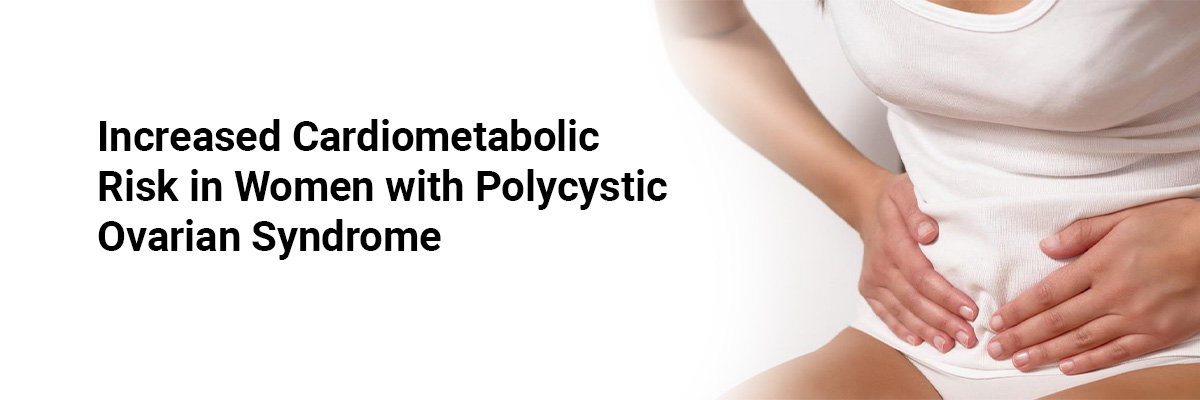

Increased Cardiometabolic Risk in Women with Polycystic Ovarian Syndrome
Polycystic Ovarian Syndrome (PCOS) is a common endocrine disorder affecting majority of women in their reproductive age. It is typified by varied symptoms such as hyperandrogenism, ovulatory dysfunction, and polycystic ovarian morphology. In addition to reproductive issues, PCOS is linked to significant long-term cardiometabolic risks, particularly leading to early subclinical cardiovascular atherosclerotic alterations including endothelial dysfunction, increased arterial stiffness, and coronary artery calcium levels. However, there is disagreement over the relationship between PCOS and clinical cardiovascular disease (CVD); some research indicates an increased risk, while other studies find no meaningful correlation.
A meta-analysis involving 166,683 participants found that women with PCOS had a higher risk of CVD events, including myocardial infarction, ischemic heart disease and stroke. Similar results were corroborated by four different studies that revealed that women with PCOS had a greater cardiovascular mortality than healthy controls. On the contrary, other studies have reported no significant link between PCOS and myocardial infarction or CVD events in midlife.
The greater risk of CVD events in PCOS patients was attributed to physiological changes including lower cardiac systolic flow velocity and increased left ventricular mass. Despite conflicting evidence, recent findings supported the view that PCOS is a significant risk factor for cardiovascular morbidity, with a meta-analysis showing that women with PCOS have a 68% higher risk of any CVD, a 150% higher risk of myocardial infarction, and a 71% higher risk of stroke compared to those without PCOS.
Thus, these studies highlight the need for a comprehensive approach to manage both reproductive and cardiometabolic health in women with PCOS to enhance the patient’s quality of life. While treatments such as metformin, GLP-1 receptor agonists (GLP-1RAs), dietary changes, hormonal contraceptives, and bariatric surgery are effective in addressing metabolic and reproductive symptoms, long-term management of PCOS warrants the need of personalized care.
Source: Pililis S, Lampsas S, Kountouri A, Pliouta L, Korakas E, Livadas S, Thymis J, Peppa M, Kalantaridou S, Oikonomou E, Ikonomidis I, Lambadiari V. The Cardiometabolic Risk in Women with Polycystic Ovarian Syndrome (PCOS): From Pathophysiology to Diagnosis and Treatment. Medicina (Kaunas). 2024 Oct 10;60(10):1656. doi: 10.3390/medicina60101656. PMID: 39459443; PMCID: PMC11509436.


Recent FAQs





Related FAQs









Medtalks is India's fastest growing Healthcare Learning and Patient Education Platform designed and developed to help doctors and other medical professionals to cater educational and training needs and to discover, discuss and learn the latest and best practices across 100+ medical specialties. Also find India Healthcare Latest Health News & Updates on the India Healthcare at Medtalks







Please login to comment on this article