
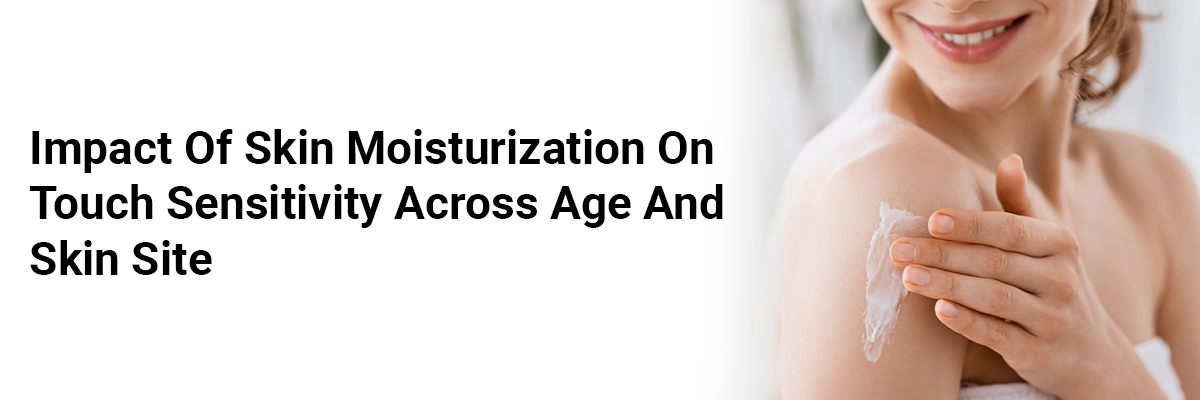

Impact of Skin Moisturization on Touch Sensitivity Across Age and Skin Site
The skin is a specialized sensory organ that protects the body and allows interaction with the environment. It contains receptors that differ in type and density depending on the region, such as glabrous (hairless) or hairy skin. Touch provides information about physical contact while also influencing emotional and social responses. With age, the skin undergoes visible changes, reduced regulatory functions such as sweating, and a decline in sensory abilities, though the extent varies between individuals. Growing awareness of skin health has increased interest in skin care to support overall well-being.
This study investigated age-related changes in touch perception and the effects of moisturization. Forty-four women were recruited, with 22 aged 20–28 years and 22 aged 65–75 years. One older participant was excluded due to sensory deficits, leaving 21 in the older group. Exclusion criteria included pregnancy, recent breastfeeding, neurological, psychiatric, or dermatological disorders, and peripheral neuropathy. Written informed consent was obtained, and ethical approval was granted.
Touch was tested on the finger, forearm, and cheek. Assessments included skin hydration, touch detection, spatial discrimination, tactile pleasantness with electrodermal activity, and self-reported skin care habits. Results showed that aging reduced hydration and touch sensitivity on the glabrous finger, while hairy skin was less affected. Moisturization improved hydration but did not significantly change touch measures. Older participants reported higher touch appreciation.
These findings indicate that maintaining hand hydration may help preserve touch function with age.
Reference:
1. Dione M, Watkins RH, Aimonetti JM, et al. Effects of skin moisturization on various aspects of touch showing differences with age and skin site. Sci Rep. 2023;13:17977. doi:10.1038/s41598-023-44895-w; https://www.nature.com/articles/s41598-023-44895-w#change-history


Recent FAQs



Related FAQs










Medtalks is India's fastest growing Healthcare Learning and Patient Education Platform designed and developed to help doctors and other medical professionals to cater educational and training needs and to discover, discuss and learn the latest and best practices across 100+ medical specialties. Also find India Healthcare Latest Health News & Updates on the India Healthcare at Medtalks







Please login to comment on this article