
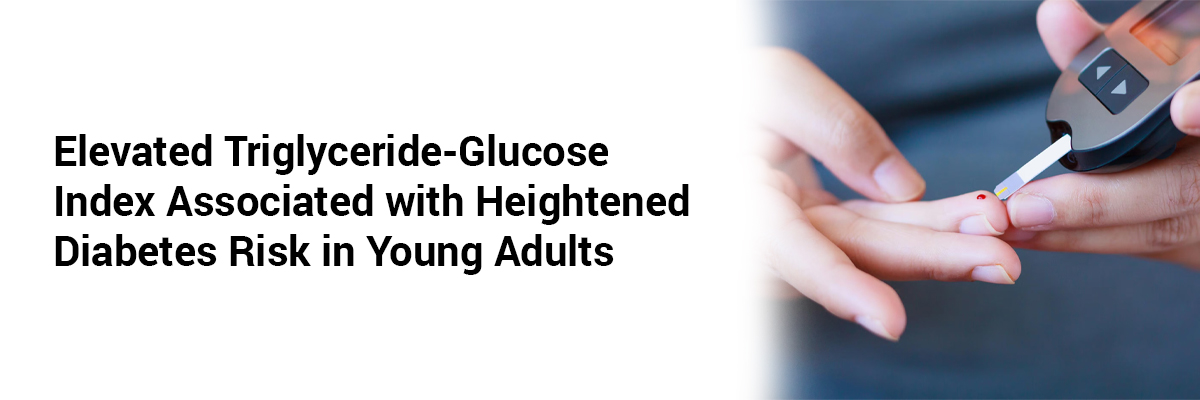

Elevated triglyceride-glucose index associated with heightened diabetes risk in young adults
Previous research depicted a positive link between the Triglyceride-Glucose (TyG) index and the future risk of diabetes. However, this relationship has been less studied in non-obese young adults.
The goal of a recent study was to explore the association between the TyG index and diabetes risk in non-obese young populations.
This was a retrospective cohort study involving 113,509 non-obese young adults from China and 9,549 from Japan, with an average age of 35.73 ± 6.38 years. Of the participants, 45.89% were males. The median follow-up period was 3.38 years. Cox proportional hazards regression models were used to delineate the link between the baseline TyG index and the risk of diabetes.
The findings revealed a non-linear relationship relationship between the TyG index and diabetes risk in non-obese young adults. The inflection point of the association was at 7.3. For TyG values above 7.3; the risk of diabetes increased significantly, while no significant trend was observed for values below this threshold. Sensitivity and subgroup analyses established the robustness of these findings.
The results highlighted a positive, non-linear association between the TyG index and diabetes risk in non-obese young adults. Hence, lowering triglycerides or fasting glucose levels to reduce the TyG index below 7.3 could significantly decrease the risk of diabetes in this population.
Source: Han J, Dai W, Chen L, et al. Front Endocrinol (Lausanne). 2024;15:1427207. doi:10.3389/fendo.2024.1427207


Recent FAQs




Related FAQs









Medtalks is India's fastest growing Healthcare Learning and Patient Education Platform designed and developed to help doctors and other medical professionals to cater educational and training needs and to discover, discuss and learn the latest and best practices across 100+ medical specialties. Also find India Healthcare Latest Health News & Updates on the India Healthcare at Medtalks







Please login to comment on this article