
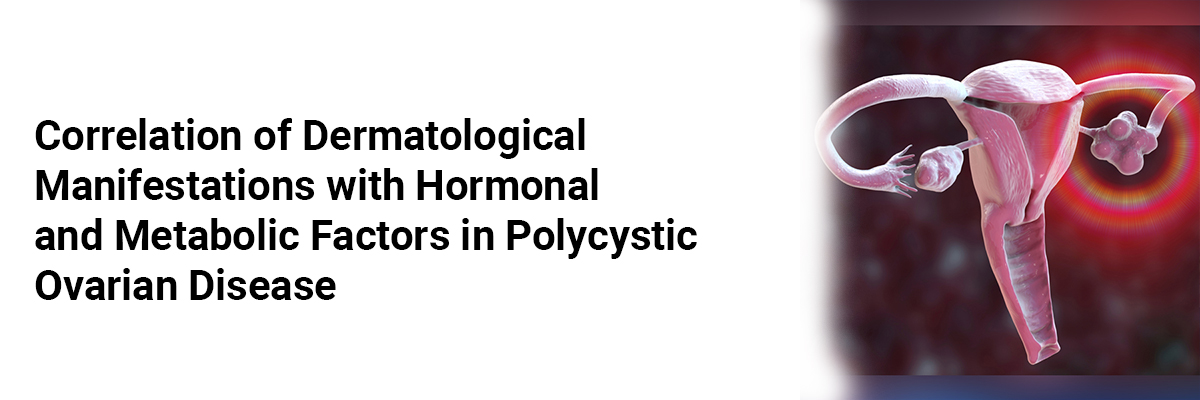

Correlation of Dermatological Manifestations with Hormonal and Metabolic Factors in Polycystic Ovarian Disease
Polycystic ovarian disease (PCOD) is typified by oligo/anovulation, the presence of polycystic ovaries visible on ultrasound, and various skin-related symptoms such as hirsutism, acne, acanthosis nigricans, androgentic alopecia, and signs of virilization.
The study aimed to investigate the relationship between dermatological manifestations and factors such as body mass index (BMI), blood glucose levels, and concentrations of hormones including free testosterone, dehydroepiandrosterone sulfate (DHEAS), follicle-stimulating hormone (FSH), and luteinizing hormone (LH) in PCOD patients.
This observational study included 102 non-pregnant female PCOD patients aged 12 to 45 years. Researchers obtained socio-demographic data, menstrual and medical histories, calculated BMI, and assessed skin manifestations. Participants underwent pelvic ultrasounds and tests for blood sugar and hormone levels.
The findings demonstrated:
- Majority of participants (59.80%) were in their 30s (mean age 26.27 years) and ultrasound results indicated polycystic ovaries in 79.41% of cases.
- The most common skin issues observed included acne (74.50%), acanthosis nigricans (50%), stretch marks (49.02%), hirsutism (40.19%), skin tags (36.27%), seborrheic dermatitis (32.35%), and androgenetic alopecia (30.39%).
- Elevated levels of free testosterone (34.31%), DHEAS (8.82%), and a significant ratio of LH to FSH (50%) were noted.
- Statistical analysis showed a significant association between acanthosis nigricans and elevated levels of free testosterone, DHEAS, fasting blood sugar, and increased BMI, while hirsutism was linked to higher DHEAS, free testosterone, and BMI.
Thus, the study concluded that significant correlations can be observed between acanthosis nigricans and levels of free testosterone, DHEAS, fasting blood sugar, and BMI, as well as between hirsutism and levels of DHEAS, free testosterone, and BMI.
Source: Sharma YK, Chauhan S, Singh P, Deo K. Correlation of Cutaneous Manifestations with Body Mass Index, Blood Glucose, and Hormonal Levels in Patients with Polycystic Ovarian Disease. Indian Dermatol Online J. 2020 May 10;11(3):378-381. doi: 10.4103/idoj.IDOJ_193_18. PMID: 32695697; PMCID: PMC7367582.


Recent FAQs

Related FAQs





Medtalks is India's fastest growing Healthcare Learning and Patient Education Platform designed and developed to help doctors and other medical professionals to cater educational and training needs and to discover, discuss and learn the latest and best practices across 100+ medical specialties. Also find India Healthcare Latest Health News & Updates on the India Healthcare at Medtalks







Please login to comment on this article