
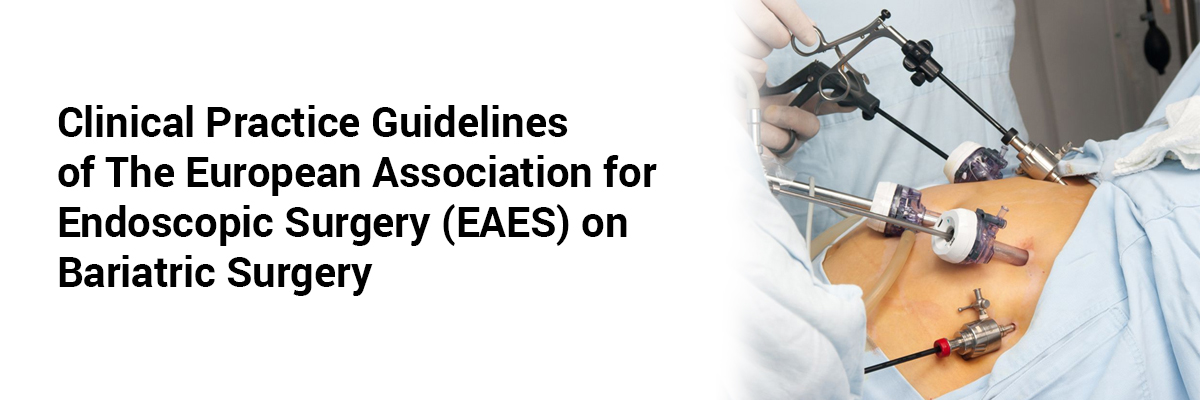

Clinical Practice Guidelines of The European Association for Endoscopic Surgery (EAES) on Bariatric Surgery
A multidisciplinary group of bariatric surgeons, obesity physicians, nutritional experts, psychologists, anesthetists, and a patient representative, along with a sponsorship from EAES, has updated the previous guidelines on bariatric surgery:
Indication for bariatric surgery
- Consider Laparoscopic bariatric surgery for patients with BMI ≥ 40 kg/m2 and for patients with BMI ≥ 35–40 kg/m2 but associated comorbidities that may improve with weight loss.
- Consider Laparoscopic bariatric/metabolic surgery for patients with ≥ BMI 30–35 kg/m2 and type 2 diabetes and/or arterial hypertension with poor control even after optimal medical therapy.
Preoperative workup
- No recommendation for either routine H. pylori eradication or before bariatric surgery.
- Consider preoperative dietitian consultation for patients undergoing bariatric surgery.
- Consider esophagogastroscopy as a routine diagnostic test before bariatric surgery
- consider Psychological evaluation before bariatric surgery
- A previous diagnosis of binge eating or depression is not an absolute contraindication to surgery
Perioperative management
- Consider screening for obstructive sleep apnea using the STOP-BANG criteria before bariatric surgery.
- Consider perioperative CPAP in patients with severe obstructive sleep apnea syndrome who are undergoing bariatric surgery.
- No recommendation for the dose and duration of pharmacological thromboprophylaxis in patients after bariatric surgery
- An inferior vena cava filter is not recommended for thromboprophylaxis in patients undergoing bariatric surgery.
- No recommendation for either an ERAS protocol or standard care.
- Consider perioperative multimodal analgesia with minimal opioid usage in patients undergoing bariatric surgery.
Source: Di Lorenzo N, et al. Surg Endosc. 2020 Jun;34(6):2332-2358. doi: 10.1007/s00464-020-07555-y.


Recent FAQs


Related FAQs








Medtalks is India's fastest growing Healthcare Learning and Patient Education Platform designed and developed to help doctors and other medical professionals to cater educational and training needs and to discover, discuss and learn the latest and best practices across 100+ medical specialties. Also find India Healthcare Latest Health News & Updates on the India Healthcare at Medtalks







Please login to comment on this article