
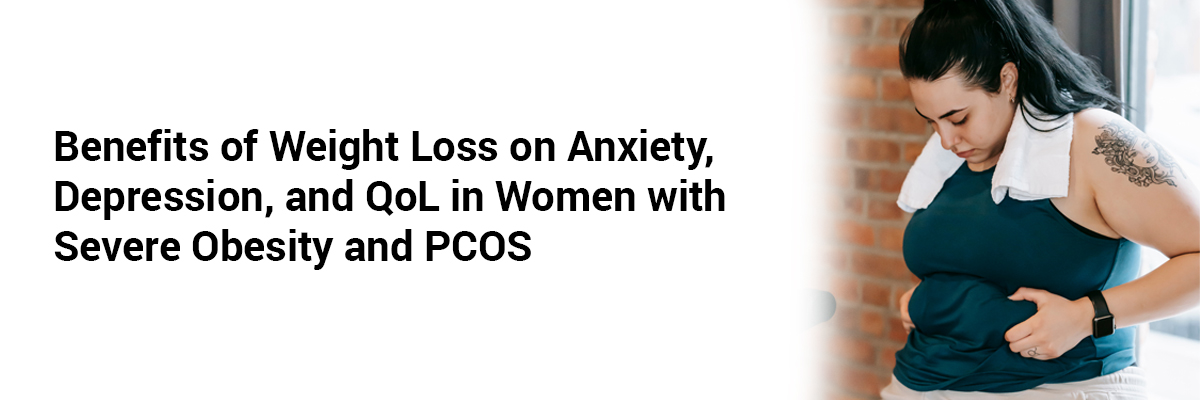

Benefits of weight loss on anxiety, depression, and QoL in women with severe obesity and PCOS
Polycystic ovary syndrome (PCOS) is a prevalent endocrine disorder in women, linked to higher rates of anxiety, depression, and a reduced health-related quality of life (HRQoL). PCOS is often associated with obesity, which can also contribute to anxiety, depression, and diminished HRQoL. The primary treatment for PCOS involves weight loss through lifestyle changes, which has been shown to alleviate various symptoms of the condition.
A new study aimed to examine anxiety, depression symptoms, and HRQoL in women with severe obesity (BMI ≥ 35), both with and without PCOS, and to assess the impact of a one-year structured weight loss intervention.
The study included 246 women with severe obesity (63 with PCOS and 183 without). The Comprehensive Psychopathological Rating Scale-Self Rating Scale for Affective Symptoms (CPRS-S-A) and the Short Form-36 (SF-36) were used to evaluate anxiety, depression symptoms, and HRQoL. Overall, 72 women completed a one-year weight loss program and were followed up for comparison with their baseline data.
At baseline, women with and without PCOS neither showed any differences in anxiety, depression symptoms, nor HRQoL. Clinically significant anxiety symptoms were found in 71.3% of women with PCOS and 65.6% of those without, while depression symptoms were observed in 56.4% of women with PCOS and 52.2% without. Significant weight loss led to improved physical HRQoL across the groups but reduced anxiety and depression symptoms only in those without PCOS. No differences were noted when comparing changes between the two groups.
From the findings, it was inferred that women with severe obesity experience high levels of anxiety and depression, regardless of their PCOS status. While weight loss improved anxiety and depression symptoms in women without PCOS, there were no significant differences in symptomatic changes between women with and without PCOS after the intervention.
Source: Kataoka J, Olsson M, Lindgren E, et al. Sci Rep. 2024;14(1):13495.

Recent FAQs




Related FAQs









Medtalks is India's fastest growing Healthcare Learning and Patient Education Platform designed and developed to help doctors and other medical professionals to cater educational and training needs and to discover, discuss and learn the latest and best practices across 100+ medical specialties. Also find India Healthcare Latest Health News & Updates on the India Healthcare at Medtalks







Please login to comment on this article