
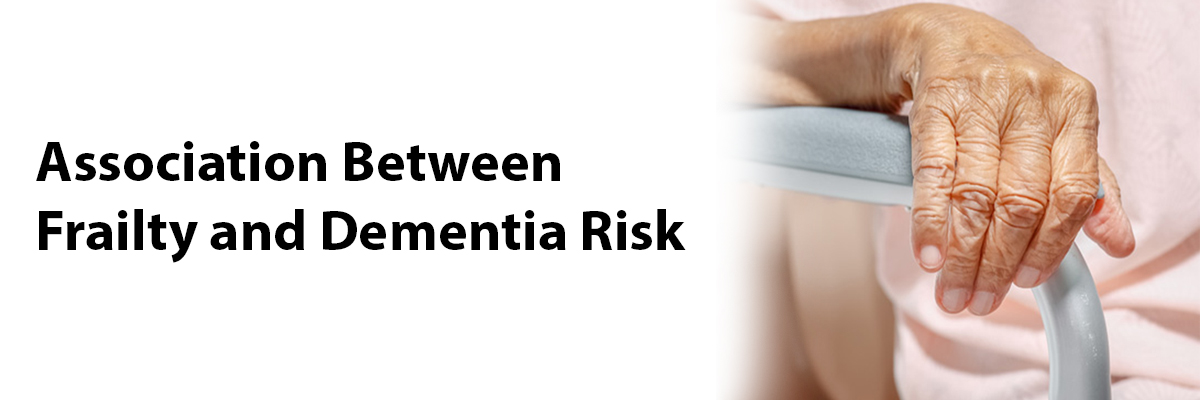

Association between Frailty and Dementia Risk
Physical frailty, defined by the presence of three or more of the following symptoms physical inactivity, weight loss, exhaustion, slow walking speed, and low grip strength, may play a role in the development of dementia, according to a study recently published in the journal Neurology.1,2
This study included participants without dementia and an average age of 57 years from the UK Biobank database between 2006 and 2010; 54.4% female. They were followed for an average duration of ~14 years.
Out of the total of 489,573 participants in the study, 8900 developed new-onset dementia during the course of the study. A total of 4.6% of the participants were considered frail defined by the presence of three or more of the frailty symptoms; 43.9% were categorized as pre-frailty presence of one or two symptoms and 51.5% had no symptoms of frailty. A total of 4.6% of those with frailty developed dementia versus 2.2% of those with pre-frailty and 1.3% without frailty.
The risk spiked by 182% among those with frailty with hazard ratio (HR) of 2.82. The likelihood of developing dementia was 50% higher among those with prefrailty, defined as the presence of one or two symptoms, with HR of 1.50. The risk was highest, nearly four times higher, among the frail individuals with high genetic risk compared with those with low genetic risk and nonfrailty with HR of 3.87 for high polygenic risk score and 8.45 for APOE-ε4 carriers.
The forward MR analysis suggested a potential causal link between physical frailty and dementia (OR 1.79), whereas the reverse MR analysis showed no evidence of a causal association (OR 1.00). Further analysis indicated that genetic factors, along with neurologic and immunometabolic functions, may underlie the association between physical frailty and dementia.
This study provides evidence suggesting that frailty may play a causative role in development of dementia, with genetics, neurologic and immunometabolic factors acting as potential mediators of this association. Or it may co-occur with the risk of dementia. The authors also note that “despite this new evidence, we can’t rule out the possibility that frailty is instead a marker of the early changes in the disease process.” Hence, it is important to identify and manage frailty to prevent onset of dementia.
References
1. Xiangying Suo, et al. Association of frailty with dementia and the mediating role of brain structure and immunometabolic signatures. Neurology. 2025 Oct 21;105(8):e214199. doi: 10.1212/WNL.0000000000214199.
2. AAN Press release. Available at: https://www.aan.com/PressRoom/Home/PressRelease/5284. Dated Sept. 17, 2025. Accessed on Sept. 20, 2025.


Recent FAQs




Related FAQs









Medtalks is India's fastest growing Healthcare Learning and Patient Education Platform designed and developed to help doctors and other medical professionals to cater educational and training needs and to discover, discuss and learn the latest and best practices across 100+ medical specialties. Also find India Healthcare Latest Health News & Updates on the India Healthcare at Medtalks







Please login to comment on this article