
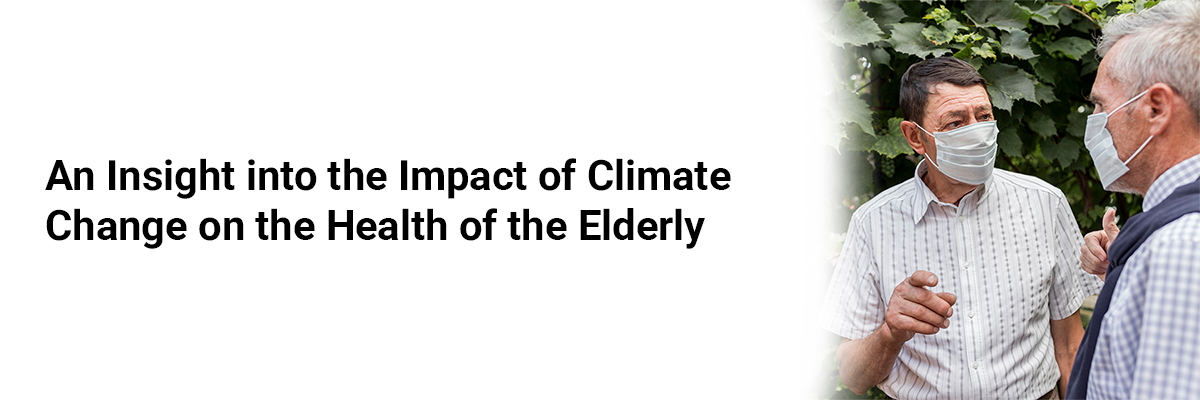

An Insight into the Impact of Climate Change on the Health of the Elderly
Climate change continues to pose a pressing threat to global health, with older adults identified as one of the most vulnerable groups. Despite growing evidence, there remains a lack of comprehensive understanding from institutions specializing in climate and health—knowledge essential for shaping effective environmental health policies.
Since the First World Climate Conference in 1979, climate change has been recognized as a major global concern. The 1994 UN Framework Convention defined it as human-induced alterations to the atmosphere, and subsequent assessments by the Intergovernmental Panel on Climate Change (IPCC) have warned that surpassing a 1.5°C rise in global temperature could have severe consequences. Rising carbon dioxide levels, extreme weather events, and temperature fluctuations continue to impact health directly—through heat stress, injury, and disease—and indirectly, via air pollution, vector-borne illnesses, and food insecurity.
The elderly, whose population is expected to reach 2 billion by 2050, are disproportionately affected due to physiological vulnerability, chronic illnesses, and limited adaptive capacity. However, healthcare systems, particularly nursing and geriatric care, are often ill-equipped to manage the health challenges posed by climate change. The International Council of Nurses has emphasized the need for enhanced professional training and preparedness.
A forthcoming scoping review aims to synthesize current evidence on how climate change influences the health of older adults, identify the most significant threats, and provide guidance for developing tailored care strategies. The findings are expected to inform both clinical practice and public health policies targeting climate resilience among the aging population.
Source:
Montoro-Ramírez EM, Parra-Anguita L, Álvarez-Nieto C, et al. Effects of climate change in the elderly’s health: a scoping review protocol. BMJ Open. 2022;12:e058063. doi:10.1136/bmjopen-2021-058063.


Recent FAQs



Related FAQs









Medtalks is India's fastest growing Healthcare Learning and Patient Education Platform designed and developed to help doctors and other medical professionals to cater educational and training needs and to discover, discuss and learn the latest and best practices across 100+ medical specialties. Also find India Healthcare Latest Health News & Updates on the India Healthcare at Medtalks







Please login to comment on this article