
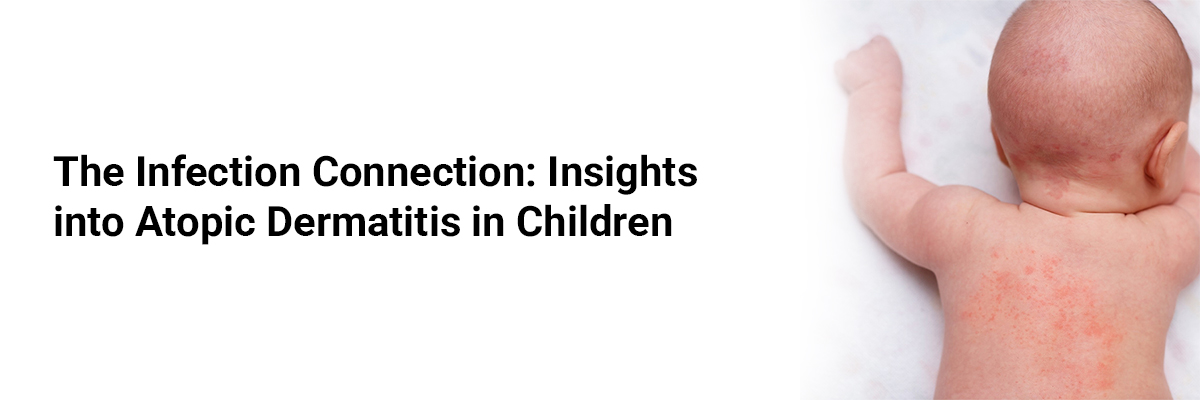

The Infection Connection: Insights into Atopic Dermatitis in Children
Atopic dermatitis (AD) is a chronic inflammatory skin condition that affects up to 2% - 42% of children worldwide. Characterized by dry, itchy, and eczematous skin, AD often extends beyond a simple dermatological concern—many children experience recurrent bacterial, viral, and fungal infections that worsen disease severity and quality of life. A review of current literature showed that the underlying cause lies in a disrupted skin barrier, diminished antimicrobial peptides, Th2-skewed immunity, and microbiome imbalance.1
Among bacterial infections, Staphylococcus aureus dominates, colonizing nearly 70% - 90% of AD lesions compared to about 39% in healthy skin. Its toxins amplify inflammation and lead to complications like impetigo and cellulitis. Co-infections with Streptococcus pyogenes may further mimic or exacerbate AD flares. Viral infections such as eczema herpeticum (caused by herpes simplex virus), molluscum contagiosum, and coxsackie eczema are common in pediatric AD. At the same time, fungal pathogens like Malassezia contribute to disease persistence, especially in severe cases.
Recent data indicate that AD extends beyond cutaneous involvement, with affected children demonstrating higher incidences of respiratory, otic, and urinary infections, reflecting systemic immune dysregulation. Preventive strategies primarily target restoration of the epidermal barrier through frequent use of emollients and moisturizers, which reduce S. aureus load and improve hydration. Adjunctive measures such as diluted sodium hypochlorite baths (0.005%) have shown modest benefits in decreasing disease severity.
Emerging microbiome-targeted therapies—such as topical probiotics (Lactobacillus plantarum, L. salivarius) and bacteriotherapy with commensal Staphylococcus epidermidis and S. hominis—demonstrate potential in limiting S. aureus colonization. Novel antimicrobial strategies, including endolysins and niclosamide formulations, offer pathogen-specific activity without disrupting commensal flora.
Anti-inflammatory agents such as topical corticosteroids, calcineurin inhibitors, dupilumab, and Janus kinase inhibitors effectively reduce inflammation, restore barrier integrity, and indirectly lower infection risk. Narrow-band UVB phototherapy also improves disease control by modulating immune responses and reducing microbial colonization.
In conclusion, infection susceptibility in pediatric AD is multifactorial, driven by structural, immunologic, and microbial factors. Integrated management focusing on barrier repair, microbiome modulation, and immune regulation is essential to mitigate infection risk and improve long-term outcomes in children with atopic dermatitis.
Reference:
1. Lomelí-Valdez R, Orozco-Covarrubias L, Sáez-de-Ocariz M. Skin and systemic infections in children with atopic dermatitis: review of the current evidence. Frontiers in Pediatrics. 2025 May 14;13:1513969.
Link: https://pmc.ncbi.nlm.nih.gov/articles/PMC12116442/


Recent FAQs





Related FAQs






Medtalks is India's fastest growing Healthcare Learning and Patient Education Platform designed and developed to help doctors and other medical professionals to cater educational and training needs and to discover, discuss and learn the latest and best practices across 100+ medical specialties. Also find India Healthcare Latest Health News & Updates on the India Healthcare at Medtalks







Please login to comment on this article