
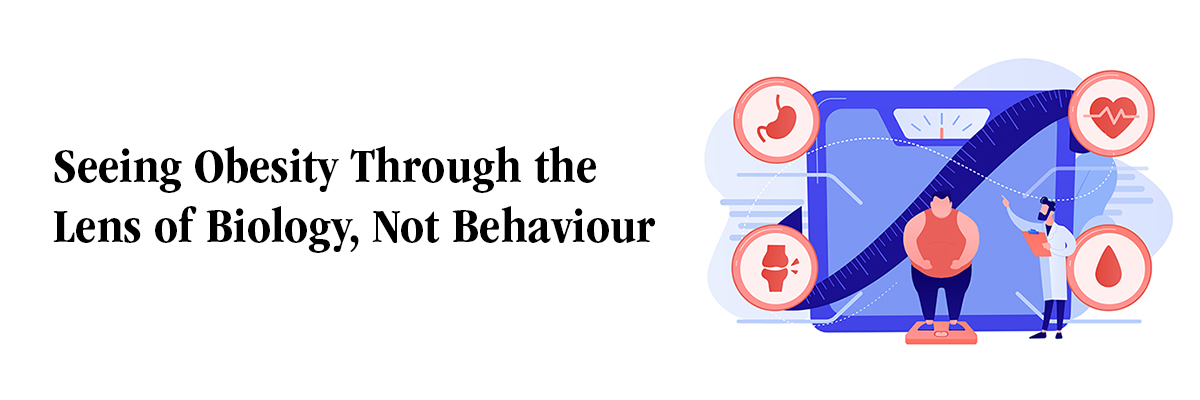

Seeing Obesity Through the Lens of Biology, Not Behaviour
Obesity reflects rewired neural and metabolic pathways, making it a biologically driven disease that requires supportive, long-term clinical care rather than judgement.
In day-to-day practice, the most important shift is recognising that obesity is rarely a matter of motivation — it is a biological state shaped by disrupted neural and hormonal circuits. Early in weight gain, hypothalamic inflammation and mechanical stress alter neuronal signalling, weakening leptin-mediated satiety and increasing the drive to store energy. Over time, cells in appetite-regulating regions lose their structural integrity and responsiveness, making hunger harder to control and weight harder to reduce despite effort.
Reward pathways amplify this challenge. High-calorie foods activate hedonic circuits more intensely, reinforcing eating behaviour and overriding physiological satiety cues. Meanwhile, expanding adipose tissue behaves as an inflammatory organ, releasing cytokines that impair insulin signalling and vascular function, accelerating metabolic disease risk. Dysbiosis in the gut further fuels inflammation and alters nutrient and appetite regulation, anchoring this cycle biologically rather than behaviourally.
When a patient struggles with weight, they are working against rewired neural pathways and inflammatory signalling — not simply habits. Care must reflect this physiology. Approach obesity as a chronic neuro-metabolic condition requiring sustained, supportive treatment, not judgement. Biology sets the challenge; clinical partnership helps patients navigate it.
(Source: Panchal NB, Vaghela VM. Advancements in obesity: unravelling pathophysiology, treatment strategies, and innovative approaches. Biosci Biotechnol Res Asia. 2025;22(1):37-53. doi:10.13005/bbra/3339. )
Recent FAQs

Related FAQs







Medtalks is India's fastest growing Healthcare Learning and Patient Education Platform designed and developed to help doctors and other medical professionals to cater educational and training needs and to discover, discuss and learn the latest and best practices across 100+ medical specialties. Also find India Healthcare Latest Health News & Updates on the India Healthcare at Medtalks







Please login to comment on this article