
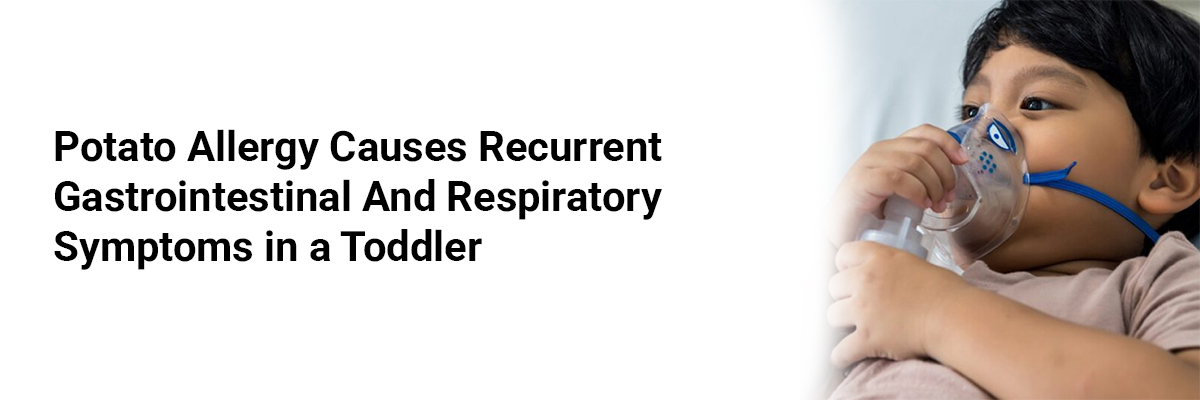

Potato Allergy Causes Recurrent Gastrointestinal and Respiratory Symptoms in a Toddler
A report describes the case of a two-year-old male who came to a pediatric clinic with a three-month history of intermittent vomiting, loose stools, and occasional wheezing.
Symptoms were episodic, resolving spontaneously after some days but recurring without identifiable triggers. The child's symptoms developed gradually, starting with mild irritability, reduced appetite, and loose stools. Over time, the child's symptoms got worse, with episodes of vomiting, diarrhea, and wheezing. During these episodes, he became tired, pale, and more irritable, which led his parents to seek medical care. He did not have a fever, rash, or stomach pain that would suggest an infection.
The child had a history of mild infantile eczema that improved with regular emollient use. The child had no previous food allergies or hospitalizations.
The father had a history of asthma, and the mother had seasonal allergies, but there was no known history of food allergies. A detailed dietary review showed that the child ate a balanced diet, including fruits, vegetables, grains, dairy, and meats.
Parents noted that shortly after consuming mashed potatoes, the child developed perioral rash, worsening wheezing, generalized irritability, and persistent arm scratching, causing excoriations, prompting the parents to seek evaluation in the emergency department for possible asthma or allergic reactions.
On examination, the patient was alert and weighed 10.3 kg. The patient had dry, red patches on his cheeks and arms consistent with eczema, with redness around the mouth. Mild wheezing was present in both lungs, and oxygen saturation was 98% on room air. The abdomen was soft, non-distended, with normal bowel sounds and no tenderness or organ enlargement.
Laboratory tests revealed an elevated eosinophil count of 9% with a normal total white blood cell count, suggesting a possible allergic condition. Total serum IgE was also raised at 250 kU/L, while stool analysis showed no pathogens, parasites, or occult blood, excluding infectious gastroenteritis.
Due to the recurrent symptoms and possible dietary link, the child was referred to a pediatric allergist for further evaluation and management. Initial management in primary care consisted of hydration, administration of antiemetic therapy, and dietary modifications to exclude lactose intolerance or viral gastroenteritis; however, these interventions provided only transient symptomatic relief. With progression of symptoms, a bronchodilator inhaler was prescribed for wheezing, yielding limited efficacy.
The allergist obtained a detailed history and performed skin prick testing (SPT) for common food allergens, and SPT demonstrated a significant reaction to potato extract, producing a 7 mm wheal. Serum-specific IgE testing for Sol t 1, the primary potato allergen, confirmed sensitization with elevated levels of 2.4 kU/L, establishing a diagnosis of potato allergy.
A strict potato-free diet was started, with temporary removal of related foods from the Solanaceae family, such as tomatoes, eggplants, and peppers, to prevent possible allergic reactions. Two weeks post-diet changes, the patients' vomiting, diarrhea, and wheezing stopped, and eczema improved. His appetite and energy returned, and he gained weight to 13.5 kg over six months. Follow-up allergy tests showed a slight drop in potato-specific IgE. No further reactions occurred, and the oral food challenge was delayed due to the severity of his initial symptoms. Parents were confident in managing the diet.
Reference:
Kitsos N, Kourentis L. A Case Report of Potato Allergy With Atypical Manifestations in a 2‐Year‐Old Child. Case Reports in Pediatrics. 2025;2025(1):2294523.
https://pmc.ncbi.nlm.nih.gov/articles/PMC12433726/


Recent FAQs



Related FAQs





Medtalks is India's fastest growing Healthcare Learning and Patient Education Platform designed and developed to help doctors and other medical professionals to cater educational and training needs and to discover, discuss and learn the latest and best practices across 100+ medical specialties. Also find India Healthcare Latest Health News & Updates on the India Healthcare at Medtalks







Please login to comment on this article