
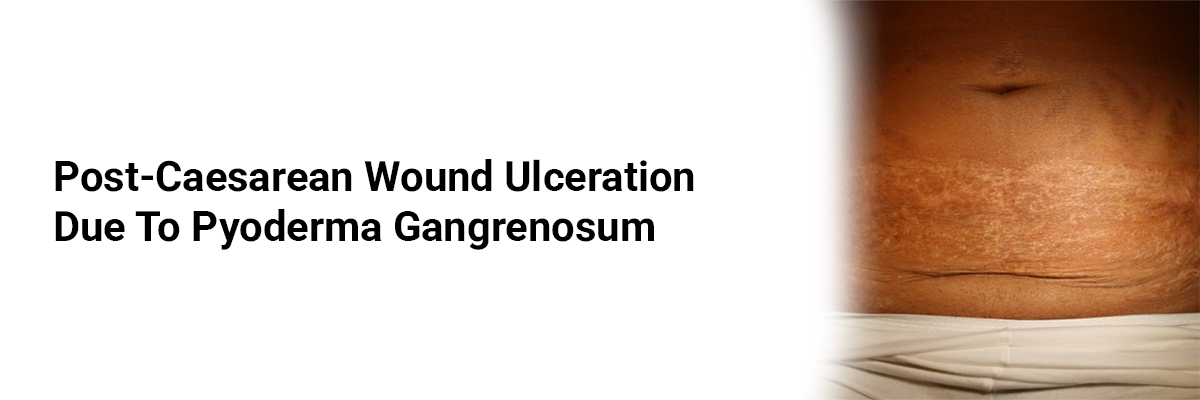

Post-Caesarean Wound Ulceration Due to Pyoderma Gangrenosum
A report describes the case of a 34-year-old female patient who underwent a caesarean section performed for preterm premature rupture of membranes and acute chorionic amniotic membrane inflammation. On the first postoperative day, the patient experienced a fever of 40°C. The patient was started on piperacillin, sulbactam, cefoperazone, doxycycline, and meropenem, but fever and wound problems continued. By the eighth day after surgery, the incision had become severely swollen and red, with painful, irregular ulcers, and her high fever persisted, leading to her transfer to the hospital for further care.
On admission, laboratory tests revealed leukocytosis (34.97 × 10⁹/L), neutrophilia (95%), raised neutrophil count (31.74 × 10⁹/L), increased calcitonin (2.92 ng/mL), and elevated C-reactive protein (268 mg/L). Physical examination showed a longitudinal abdominal wound measuring approximately 12 × 14 × 4 cm3, with complete wound dehiscence, blisters, necrotic yellow-white tissue, and liquefied adipose tissue. Bacterial, fungal, and syphilis testing were negative, and antibiotics were discontinued. Histopathology demonstrated dense neutrophilic infiltration, and triple immunofluorescence testing revealed neutrophil extracellular trap (NET) formation.
Using the Paracelsus score, the patient met three major criteria—progressive disease, absence of relevant differential diagnoses, and reddish-violaceous wound border—and additional minor and supportive criteria, including distinct ulcer shape, severe pain (>4 on Visual Analog Scale), histopathological evidence of inflammation, and undermined wound margins. The total score of 15 with NET formation supported a highly likely diagnosis of pyoderma gangrenosum (PG).
Treatment consisted of intravenous methylprednisolone (80 mg/day) and human immunoglobulin (200 mg/kg/day for 5 days) intravenously, alongside topical wound care with silver ion antibacterial gel and epidermal growth factor. By the second day, the fever normalized and wound progression halted, with a gradual reduction of inflammation and swelling. After 5 days, methylprednisolone was switched to oral prednisone (40 mg/day), and other therapies were discontinued. Necrotic tissue debridement was performed on day 7, and 15 days later, skin grafting was completed. The patient achieved complete wound healing over 15 months.
Reference:
Yang L, You Y, Li Z, Song Y, Jia X. Successful management of pyoderma gangrenosum after caesarean section: a case report. Journal of Obstetrics and Gynaecology. 2024 Dec 31;44(1):2289546.
https://www.tandfonline.com/doi/full/10.1080/01443615.2023.2289546

Recent FAQs


Related FAQs




Medtalks is India's fastest growing Healthcare Learning and Patient Education Platform designed and developed to help doctors and other medical professionals to cater educational and training needs and to discover, discuss and learn the latest and best practices across 100+ medical specialties. Also find India Healthcare Latest Health News & Updates on the India Healthcare at Medtalks







Please login to comment on this article