
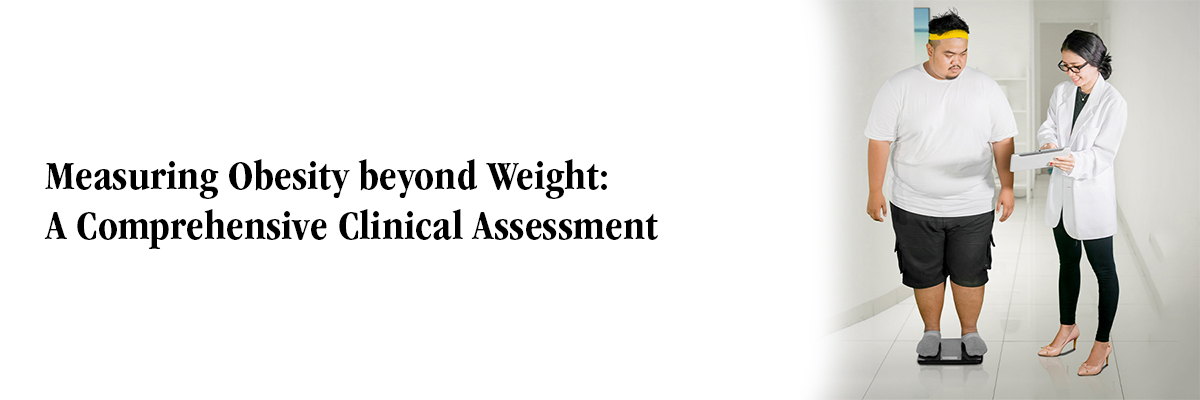

Measuring Obesity beyond Weight: A Comprehensive Clinical Assessment
Dr. Dina Shrestha, Consultant Endocrinologist, Norvic International Hospital and Medical College, Kathmandu, Nepal
Obesity is a serious non-communicable disease associated with multiple chronic conditions. Its assessment requires several clinical indicators, as no single measure can accurately capture all obesity-related risk factors.
Obesity is a growing public health problem and can lead to chronic diseases such as metabolic syndrome, diabetes mellitus, cardiovascular disease, hypertension, non-alcoholic fatty liver disease, cancers, depression, and stroke. Early diagnosis is crucial to lowering the risk of these complications.
Body mass index (BMI) is an accepted screening tool for identifying overweight and obesity and is calculated using weight and height. A high BMI is linked with increased risk of non-communicable diseases and mortality. However, individuals with the same BMI may differ in body fat distribution and skeletal muscle mass.
Waist circumference (WC) is used to measure central obesity and is strongly associated with metabolic complications. Hip circumference (HC) is measured at the widest part of the hips and is primarily used in combination with waist circumference to assess fat distribution. Waist–hip ratio (WHR) is a straightforward indicator of central obesity, calculated by dividing WC by HC. Elevated WHR is associated with increased cardiometabolic risk.
Additional anthropometric measures include wrist circumference and neck circumference, which have been associated with metabolic syndrome, visceral adiposity, and cardiometabolic risk in adults and children. These measures are low-cost and practical for clinical screening.
Body fat percentage can be assessed using bioelectrical impedance analysis (BIA), which estimates fat mass and fat-free mass and is considered more accurate than BMI for body composition assessment. Imaging techniques like magnetic resonance imaging (MRI), computed tomography (CT), and dual-energy X-ray absorptiometry (DEXA) provide precise measurements of total and regional fat mass.
As obesity prevalence continues to rise globally, combining these clinical measures is essential to improve risk stratification, personalize treatment, and move obesity care from simple categorization to meaningful clinical management.
(Source: Sruthi KG, John SM, David SM. Assessment of obesity in the Indian setting: A clinical review. Clinical Epidemiology and Global Health. 2023 Sep 1;23:101348.)
Recent FAQs





Related FAQs







Medtalks is India's fastest growing Healthcare Learning and Patient Education Platform designed and developed to help doctors and other medical professionals to cater educational and training needs and to discover, discuss and learn the latest and best practices across 100+ medical specialties. Also find India Healthcare Latest Health News & Updates on the India Healthcare at Medtalks







Please login to comment on this article