
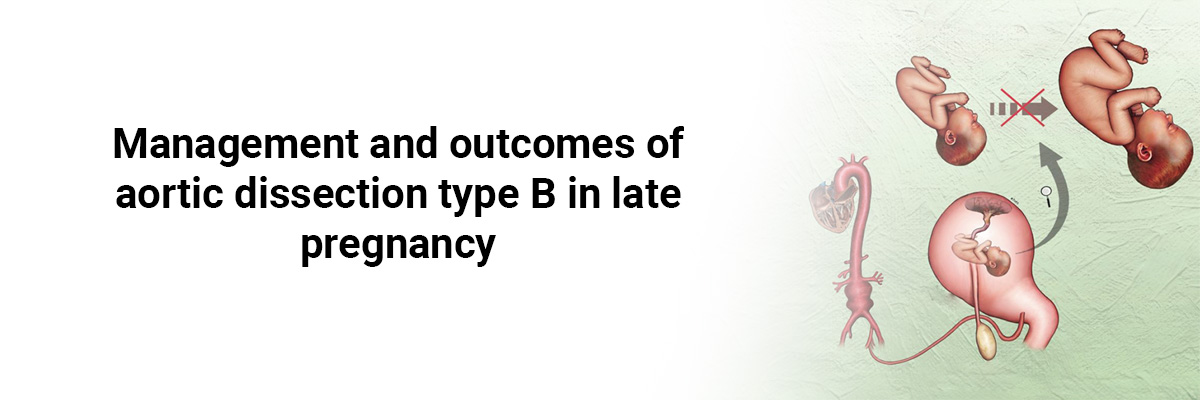

Management and outcomes of aortic dissection type B in late pregnancy
A recent study proposed an appropriate management strategy for managing pregnant women with complicated type B aortic dissection in the second or third trimesters by sharing their experiences. It mentioned-
- Diagnosis of five women with complicated type B aortic dissection by computed tomography angiography (CTA).
- The range of gestational weeks at admission was between 27 weeks + 3 days and 36 weeks + 6 days.
- The first patient, who was planned for a C-section followed by thoracic endovascular aortic repair (TEVAR), died of aortic dissection rupture during a C-section. However, her neonate was rescued successfully.
- The remaining four patients underwent TEVAR first and survived. Three of them underwent single-stage aortic repair and delivery, while one patient received a C-section 31 days after TEVAR. Three preterm live births occurred among these surviving mothers.
- Neonatal death occurred in one case with a gestational age of 29 weeks + 5 days who suffered fetal distress before surgery.
- No maternal or infant death occurred during the follow-up period of up to 3 months.
- No device-related or systemic complications occurred in the surviving mothers after discharge.
- Routine physical examinations of the four live births revealed no abnormalities.
In conclusion, pregnant women presenting with thoracic back pain and high suspicion of aortic dissection should undergo CTA promptly to prevent missed or delayed diagnosis. Maternal survival should be prioritized over fetal outcome once diagnosed. TEVAR can be safe and feasible for such patients. For women with complicated type B aortic dissection in late pregnancy, TEVAR followed by a C-section acts as a promising treatment strategy.
Wang Z, Yu X, Ding S, et al. Management and outcomes of aortic dissection type B in late pregnancy: A retrospective case series. BJOG: An International Journal of Obstetrics & Gynaecology. https://doi.org/10.1111/1471-0528.17923


Recent FAQs



Related FAQs






Medtalks is India's fastest growing Healthcare Learning and Patient Education Platform designed and developed to help doctors and other medical professionals to cater educational and training needs and to discover, discuss and learn the latest and best practices across 100+ medical specialties. Also find India Healthcare Latest Health News & Updates on the India Healthcare at Medtalks







Please login to comment on this article