
Fat Mass as a Key Predictor of Hypertension in Indigenous Tribe of Manipur
Dr Salam Ranabir, Department of Endocrinology, RIMS, Imphal, India
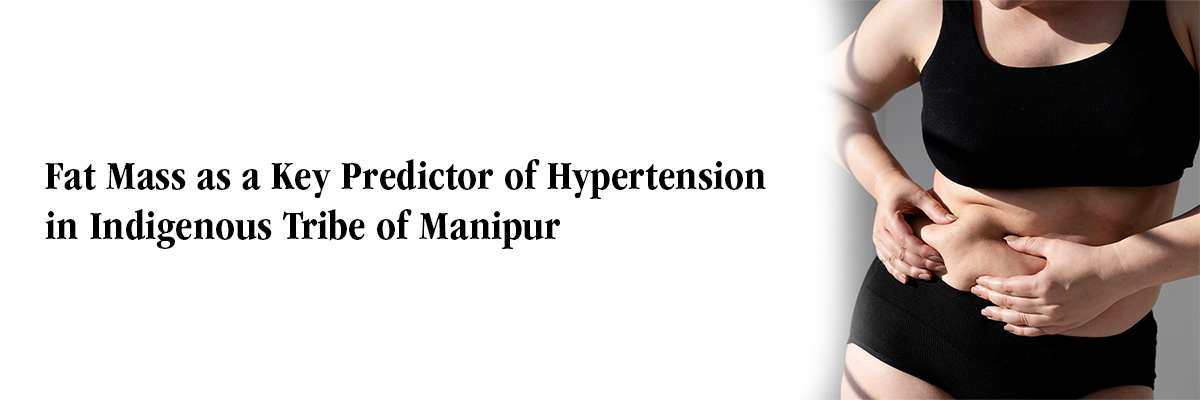
Fat mass is a strong predictor of hypertension among the Chiru tribe, while higher muscle and skeletal mass offer protective effects.
Optimal health is closely tied to a balanced body composition, which plays a crucial role in reducing the risk of chronic diseases, including hypertension. A recent study investigated body composition among 416 Chiru individuals in Manipur to understand how fat, muscle, skeletal, and residual mass influence the risk of hypertension.
The study found that women had higher fat mass, whereas men had greater muscle, skeletal, and residual mass, along with higher blood pressure. Multivariate analysis revealed that fat mass was a significant predictor of hypertension in both sexes, while higher muscle and skeletal mass appeared protective. Receiver operating characteristic (ROC) analysis confirmed fat mass as the most effective predictor, outperforming other body composition metrics.
Using the four-compartment model developed by Drinkwater and Ross, the study offered a nuanced understanding of body composition beyond traditional measures such as BMI and waist circumference. This method allowed precise assessment of fat, muscle, skeletal, and residual mass, capturing subtle variations that influence disease risk.
Given rising obesity and hypertension rates in India and globally, particularly among indigenous populations like the Chiru, these findings highlight the importance of targeted health monitoring. Focusing on body composition rather than weight alone can guide early interventions, dietary strategies, and exercise programs to reduce hypertension and improve long-term health outcomes.
(Source: Thanglen H. Assessment of Four Body Compartment Model and Risk Factors for Hypertension among the Chiru Tribe of Manipur. Indian Journal of Community Medicine. 2026:10-4103. )
Related FAQs


Medtalks is India's fastest growing Healthcare Learning and Patient Education Platform designed and developed to help doctors and other medical professionals to cater educational and training needs and to discover, discuss and learn the latest and best practices across 100+ medical specialties. Also find India Healthcare Latest Health News & Updates on the India Healthcare at Medtalks







Please login to comment on this article