
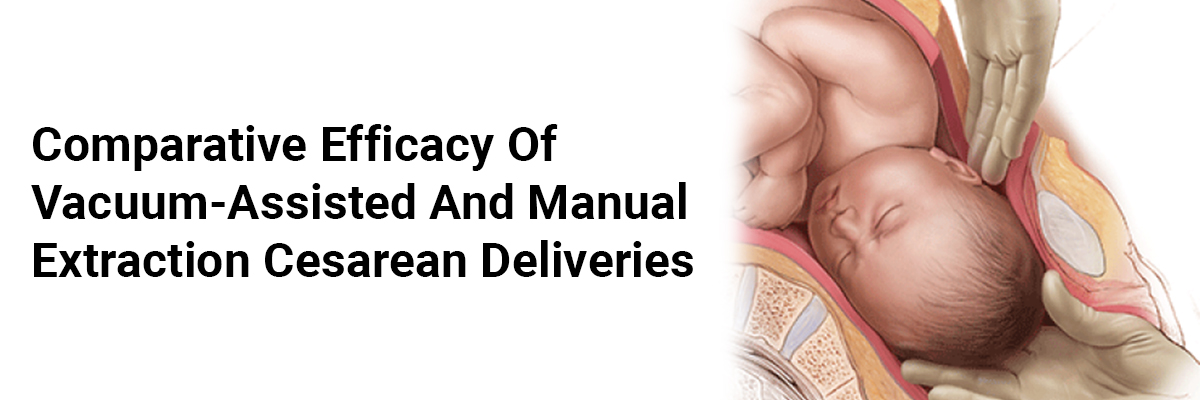

Comparative Efficacy of Vacuum-Assisted and Manual Extraction Cesarean Deliveries
The global escalation in cesarean section (C-section) rates continues to pose a significant challenge to maternal health care systems. Although caesarean delivery remains a critical life-saving intervention, its increasing frequency—often exceeding the World Health Organization’s recommended threshold of 10–15 percent—necessitates careful evaluation of surgical techniques that can optimize both maternal and neonatal outcomes. In this context, the method of fetal extraction during cesarean delivery has emerged as an area warranting renewed clinical scrutiny.
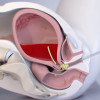
A prospective study by Agarwal, Solanki, and Sachau, published in the Indian Journal of Obstetrics and Gynecology Research (2023), provides valuable insight into this issue. Conducted at Green Cross Hospital, Lucknow, over a six-year period from 2012 to 2018, the study assessed 500 pregnant women undergoing planned cesarean sections, with 250 assigned to vacuum-assisted cesarean delivery (VACD) using a soft cup vacuum extractor and 250 to manual extraction techniques supplemented with fundal pressure. All procedures were elective, with no labor activity or amniotic fluid present at the time of surgery.
The analysis demonstrated that VACD yielded superior maternal outcomes compared with manual fetal extraction. Specifically, vacuum-assisted delivery was associated with significantly lower estimated blood loss, a reduced incidence of uterine incision extension, and less postoperative discomfort. These findings underscore the procedural efficiency and potential safety benefits of incorporating vacuum assistance in elective cesarean deliveries.
Importantly, neonatal outcomes—including Apgar scores, the requirement for resuscitation, and rates of neonatal intensive care unit (NICU) admission—did not differ significantly between the two groups. This suggests that vacuum assistance maintains neonatal safety while offering clear maternal advantages.
The implications of this study are clinically relevant. The incorporation of VACD in appropriate cases may enhance surgical safety, reduce intraoperative morbidity, and contribute to more favorable postpartum recovery profiles. Furthermore, minimizing uterine trauma and blood loss supports long-term uterine integrity, which is particularly significant for women anticipating future pregnancies.
As global obstetric practice shifts toward precision and patient-centered care, evidence such as that provided by Agarwal et al. underscores the importance of technique optimization within cesarean delivery. When judiciously applied, vacuum-assisted cesarean delivery represents a promising advancement toward balancing maternal safety with procedural efficacy in modern obstetric surgery.
Source: Agarwal M, Solanki S, Sachau S. Indian J Obstet Gynecol Res. 2023;10(4):415-420


Recent FAQs





Related FAQs






Medtalks is India's fastest growing Healthcare Learning and Patient Education Platform designed and developed to help doctors and other medical professionals to cater educational and training needs and to discover, discuss and learn the latest and best practices across 100+ medical specialties. Also find India Healthcare Latest Health News & Updates on the India Healthcare at Medtalks







Please login to comment on this article