
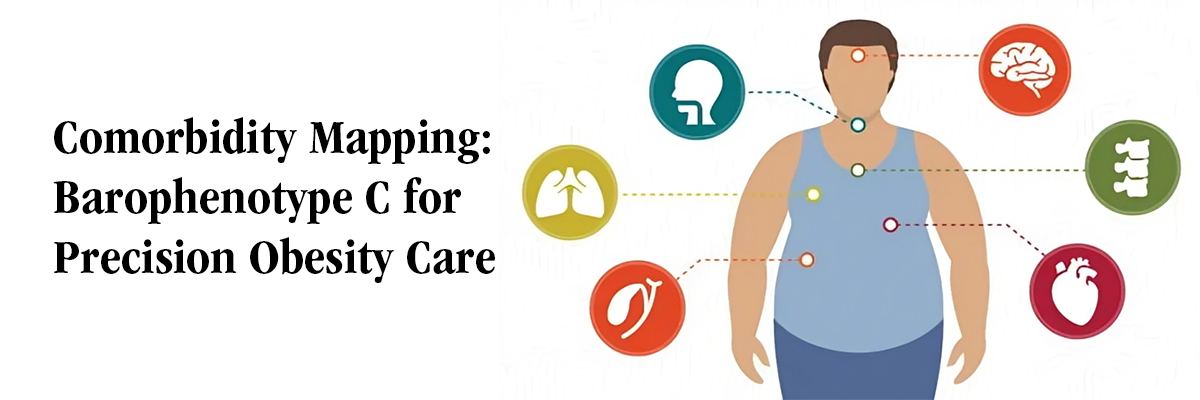
Comorbidity Mapping: Barophenotype C for Precision Obesity Care
Dr Hitesh Punyani, Director, Chaitanya Cardio Diabetes Centre, New Delhi, Sr. Consultant Medicine, Apollo Cradle Hospital
“The third aspect of barophenotypic characterization focuses on a newer barotype, Barophenotype C, which maps metabolic, medical, mechanical, and mood comorbidities. This provides clinicians with a clearer risk profile and supports safer, more personalized approaches to obesity care.”
Current tools used to diagnose and treat obesity provide only a partial picture of the disease, highlighting the need for newer frameworks that capture its full complexity.
Even broader models, such as the Edmonton Obesity Staging System or SECURED, may fall short in guiding fully personalized care. Just as diabetes care has benefited from concepts like the glucophenotype, obesity also requires a structured framework to describe its diverse presentations.
A similar concept, barophenotype, refers to the sum of all attributes, both biophysical and social, that shape the overall burden of obesity. Within the ABCDE approach, Barophenotype C highlights the importance of comorbidities, which play a central role in determining metabolic risk and tailoring treatment. Barophenotype C includes metabolic disorders like diabetes, PCOS, dyslipidemia, and fatty liver disease; medical conditions such as heart failure and sleep apnea; mechanical problems like osteoarthritis; and mood issues that affect behavior and long-term adherence. Assessing these four “M” domains helps clinicians evaluate organ damage, select safe therapies, and adapt lifestyle plans to individual limitations.
By integrating comorbidities into obesity assessment, Barophenotype C promotes a holistic, person-centered strategy. This comprehensive approach moves beyond viewing obesity as an energy imbalance and supports more effective, individualized management for the millions affected.
(Source: Kalra S, Das AK, Sahay R, Bantwal G, Kota S, Ghosh S, et al. Barophenotypic Characterization – The key to Person Centric Management of Obesity. Indian J Endocrinol Metab. 2021;25(4):295-8. doi:10.4103/ijem.ijem_285_21.; https://pmc.ncbi.nlm.nih.gov/articles/PMC8793949/#sec1-5)
Recent FAQs





Related FAQs







Medtalks is India's fastest growing Healthcare Learning and Patient Education Platform designed and developed to help doctors and other medical professionals to cater educational and training needs and to discover, discuss and learn the latest and best practices across 100+ medical specialties. Also find India Healthcare Latest Health News & Updates on the India Healthcare at Medtalks







Please login to comment on this article