
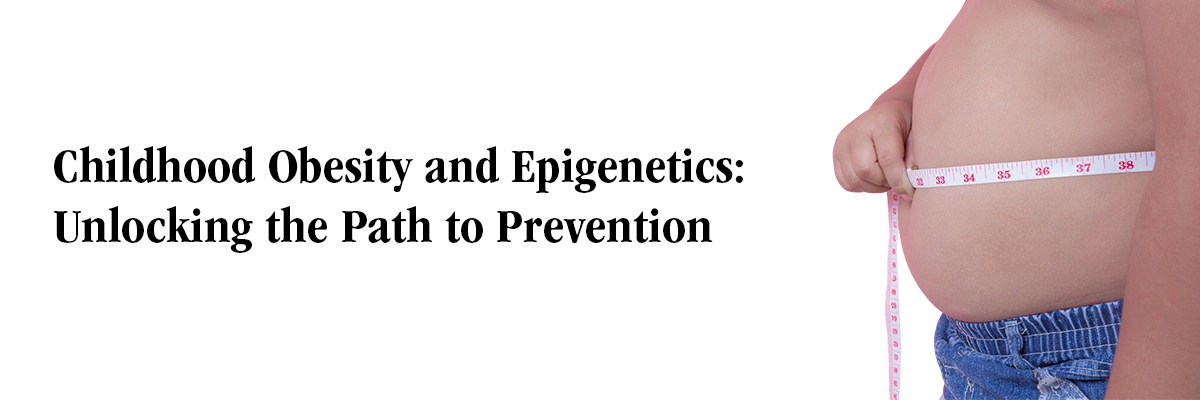
Childhood Obesity and Epigenetics: Unlocking the Path to Prevention
Dr Shivani Sidana, Bathinda
Childhood obesity is influenced by both genetics and environment, and epigenetic research offers promising avenues for early risk prediction and prevention.
Childhood obesity has emerged as a pressing global health challenge, significantly increasing the risk of lifelong metabolic and cardiovascular diseases. While genetics contribute to obesity susceptibility, environmental factors, lifestyle habits, and early-life exposures interact in complex ways that we are only beginning to understand. Recent advances in epigenetics—the study of heritable changes in gene expression without alterations in DNA sequence—offer promising insights into this puzzle.
Epigenome-wide association studies (EWAS) have identified key methylation sites linked to obesity and its comorbidities, paving the way for the development of methylation risk scores (MRS). These scores have the potential to predict individual risk and guide early interventions. However, translating these findings into clinical practice remains challenging due to population variability, environmental confounders, and technological limitations.
Research increasingly emphasizes the critical role of early-life factors, including maternal nutrition, paternal health, breastfeeding, and childhood environment, in shaping epigenetic patterns that influence obesity risk. Future studies integrating multi-omics data, longitudinal designs, and large, diverse cohorts will be essential to understand causality and enhance predictive accuracy.
Ultimately, a better grasp of epigenetic mechanisms may not only improve risk prediction but also inform preventive strategies, empowering families and clinicians to curb the childhood obesity epidemic before it manifests into lifelong health consequences.
(Source: Keller M, Vogel M, Garten A, Svensson SI, Rossi E, Kovacs P, Böttcher Y, Kiess W. Epigenetics of childhood obesity. Hormone Research in Paediatrics. 2025 Jan 14. )
Related FAQs








Medtalks is India's fastest growing Healthcare Learning and Patient Education Platform designed and developed to help doctors and other medical professionals to cater educational and training needs and to discover, discuss and learn the latest and best practices across 100+ medical specialties. Also find India Healthcare Latest Health News & Updates on the India Healthcare at Medtalks







Please login to comment on this article