
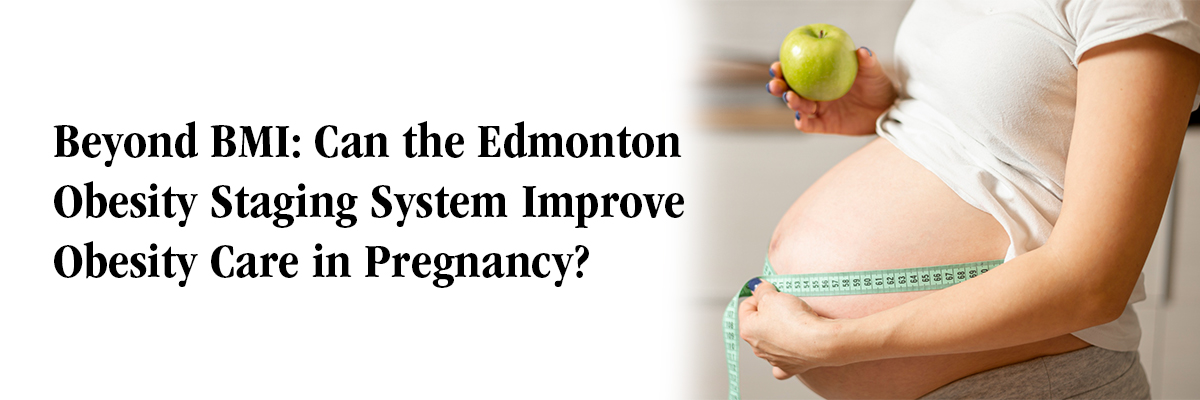

Beyond BMI: Can the Edmonton Obesity Staging System Improve Obesity Care in Pregnancy?
Dr Bharti Kalra, Consultant Gynecologist, Bharti Hospital, Karnal, India
EOSS offers a more holistic approach to
assessing obesity in pregnancy, but evidence remains insufficient to replace
BMI in routine care.
Emerging evidence suggests that body mass index (BMI) alone may not fully capture the health risks of obesity, particularly during pregnancy. A new scoping review published in Clinical Obesity examines whether the Edmonton Obesity Staging System (EOSS) could offer a more patient-centred approach to assessing obesity-related risk in pregnant individuals.
The EOSS
goes beyond body size, incorporating physical, metabolic, mental, and
functional health to stage obesity severity. While widely studied in adult and
paediatric populations, its use in pregnancy remains largely unexplored.
Reviewing the available literature, researchers identified only three cohort
studies that applied EOSS in pregnant populations, highlighting a significant
evidence gap.
Across
these studies, both higher BMI and advanced EOSS stages, particularly stages 3
and 4, were associated with increased risks of prenatal complications such as
preeclampsia, venous thromboembolism, wound complications, and caesarean
delivery. However, current data do not demonstrate a clear superiority of EOSS
over BMI in predicting outcomes.
The authors note that reliance on BMI alone may contribute to stigma and anxiety during pregnancy, underscoring the need for more nuanced assessment tools. While EOSS shows promise as a holistic and potentially less stigmatizing framework, the review concludes that more prospective research is needed before it can be integrated into routine prenatal care.
(Source: Nagpal TS, Cox JM, Salas XR, Adamo KB. Measuring and Managing Obesity in Pregnancy Using the Edmonton Obesity Staging System: A Scoping Review. Clinical Obesity. 2025 Aug 28:e70043.)
Recent FAQs



Related FAQs







Medtalks is India's fastest growing Healthcare Learning and Patient Education Platform designed and developed to help doctors and other medical professionals to cater educational and training needs and to discover, discuss and learn the latest and best practices across 100+ medical specialties. Also find India Healthcare Latest Health News & Updates on the India Healthcare at Medtalks







Please login to comment on this article