
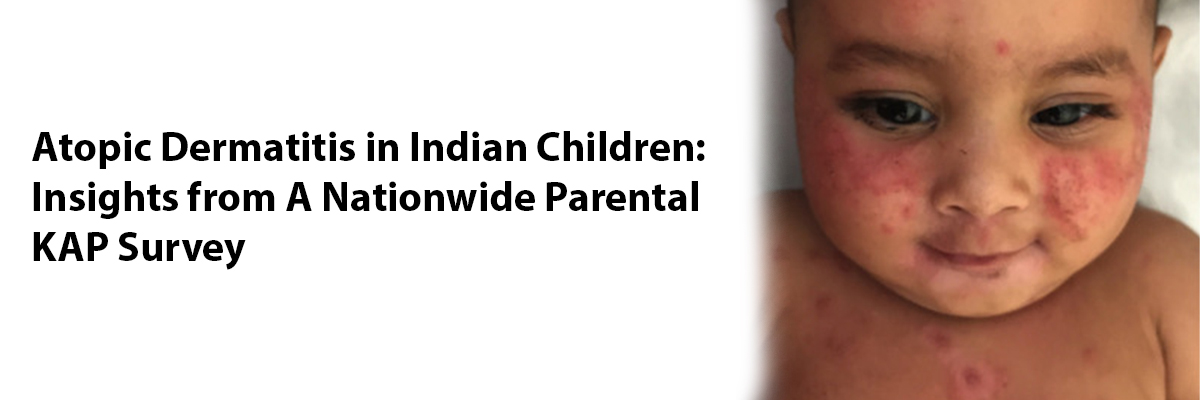

Atopic Dermatitis in Indian Children: Insights from a Nationwide Parental KAP Survey
Atopic dermatitis (AD) is among the most common pediatric sensitive skin disorders, yet parental awareness and preventive practices in India remain insufficiently understood. The present survey sought to evaluate the knowledge, attitudes, and practices (KAP) of parents of children under five years of age—an age group particularly vulnerable to sensitive skin conditions and early-onset atopic disease.
Pediatric sensitive skin encompasses a spectrum of disorders, including atopic dermatitis, allergic reactions, and other inflammatory dermatoses. These conditions often present with burning, itching, tingling, dryness, redness, or skin thickening and may overlap with eczema, contact dermatitis, xerosis, psoriasis, and rosacea-like eruptions. A central pathogenic factor across these conditions is impairment of the skin barrier, a hallmark of AD in young children. Genetic predisposition, environmental pollutants, and lifestyle-related factors may further amplify disease severity.
The prevalence of AD in children is estimated to range between 15% and 23%. A positive family history remains one of its strongest predictors, while sensitive skin itself reflects underlying immune-inflammatory activation, vascular hyper-reactivity, barrier dysfunction, and sensory nerve dysregulation. Among Indian children, one of the key contributors to rising AD incidence is the disruption of the skin’s protective architecture. Mutations in the FLG gene, which codes for filaggrin, weaken structural integrity, increasing susceptibility to allergens, irritants, and microbial penetration. This facilitates allergen sensitization and perpetuates the chronic inflammatory cycle characteristic of AD.
Early-life environmental exposures also significantly shape the development of atopic disorders. Clinically, AD manifests diffusely during infancy and evolves into a more localized pattern involving flexural areas as the child grows. Diagnosis is largely clinical, though allergological assessments may be warranted in select cases. Given the overlap with other pediatric dermatoses, careful differential diagnosis remains crucial.
In India, multiple systemic barriers continue to impede optimal pediatric AD management. These include limited awareness of disease mechanisms, misconceptions surrounding treatment modalities, insufficient understanding of therapeutic efficacy, restricted access to specialized care, and a notable paucity of epidemiological data. Strengthening parent–clinician partnerships is essential, as parents frequently lack clarity regarding the nature of the disease and available management pathways.
The current survey sheds light on persistent gaps in parental awareness—particularly concerning the role of moisturizers in reinforcing the skin barrier and preventing flare-ups. Although the observed AD prevalence among surveyed children aligns with published data, a substantial proportion of parents remain unfamiliar with early management strategies. Encouragingly, many expressed interest in learning how to delay or reduce AD onset in high-risk children, underscoring the receptiveness toward educational initiatives.
Collaborative efforts between clinicians, researchers, and policymakers will be imperative to advance AD care in India. As pediatric AD continues to impose a growing burden on families, prioritizing early education, barrier-focused skin care, and timely clinical intervention can significantly enhance outcomes and improve the quality of life for affected children.
Source: Cureus. 2025 Jul 30;17(7):e89048. doi: 10.7759/cureus.89048


Recent FAQs





Related FAQs







Medtalks is India's fastest growing Healthcare Learning and Patient Education Platform designed and developed to help doctors and other medical professionals to cater educational and training needs and to discover, discuss and learn the latest and best practices across 100+ medical specialties. Also find India Healthcare Latest Health News & Updates on the India Healthcare at Medtalks







Please login to comment on this article