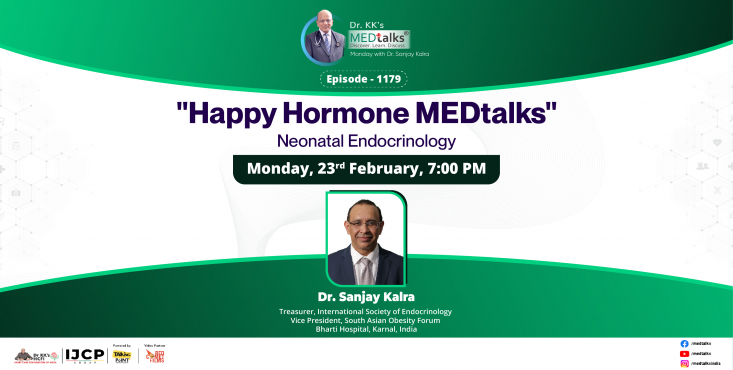
Saatvik Hormones

193 views
  Streamed on 20 Jul, 2026, 07:00 PM

ABOUT THIS SESSION

Hormones influence far more than metabolism and reproduction—they shape mood, energy, sleep, appetite, stress responses, and overall well-being. But in today’s fast-paced world, chronic stress, poor sleep, sedentary habits, and unhealthy lifestyles can disrupt this delicate hormonal balance. In this insightful conversation, Dr. Sanjay Kalra explores the concept of “Saatvik Hormones”—a holistic approach to understanding hormonal harmony and its connection with mind, body, and lifestyle. From the impact of stress and sleep to the role of nutrition, physical activity, and emotional well-being, the discussion offers practical perspectives on supporting hormonal health and achieving greater balance in everyday life. Tune in to learn more!

Q&A

Satvik refers to a state of balance, harmony, purity, and equanimity. In the Bhagavad Gita, it is described as the ideal middle path between Rajasic (excessive, hyperactive) and Tamasic (inactive, lazy).

No. There is no single hormone that can be called a Satvik hormone. Satvikta reflects the balanced functioning of all hormones through proper feedback mechanisms and optimal hormone secretion.

Hormones influence our cognition, emotions, behavior, happiness, and decision-making. When they remain within their normal physiological balance, they support Satvik qualities such as calmness, clear thinking, and emotional stability.

A hormone can be classified as Satvik, Rajasic, or Tamasic depending on its timing, quantity, and pattern of secretion. Satvik: Balanced secretion, Rajasic: Excessive or premature secretion and Tamasic: Deficient or delayed secretion

When Growth Hormone is present in the right balance, it supports healthy growth. Excess secretion can lead to gigantism or acromegaly, while deficiency may result in short stature (dwarfism). This shows that it is the balance of the hormone that determines whether it is Satvik, Rajasic, or Tamasic.

Normal thyroid hormone levels represent a Satvik state. Hyperthyroidism reflects a Rajasic state because of excessive hormone activity, while hypothyroidism represents a Tamasic state due to insufficient hormone production.

Balanced insulin levels support good metabolic health. Excess insulin may contribute to obesity and metabolic syndrome, whereas insulin deficiency can lead to Type 1 or pancreatic diabetes. Healthy lifestyle choices help maintain a Satvik balance of insulin.

Cortisol helps the body respond to stress appropriately. When present in the right amount not too much and not too little, it enables a person to handle challenges calmly and effectively, making it one of the closest examples of a hormone associated with Satvik qualities.

According to the speaker, the Testosterone-to-Cortisol ratio may best represent Satvikta. A higher ratio is associated with better performance, greater resilience, and improved stress management, allowing a person to respond effectively without becoming overwhelmed by stress.

The key message is that Satvik living including balanced food, right conduct, positive thoughts, knowledge, disciplined actions, and proper medical care helps maintain hormonal balance. Managing endocrine disorders with appropriate treatment and following a balanced lifestyle can promote long-term health and happiness.
FACULTY
Dr. Sanjay Kalra
Dr. Sanjay Kalra
Consultant & Head,Treasurer, International Society of Endocrinology (ISE), Vice President, South Asian Obesity Forum (SOF) Bharti Hospital, Karnal, Haryana, India
Logo

Medtalks is India's fastest growing Healthcare Learning and Patient Education Platform designed and developed to help doctors and other medical professionals to cater educational and training needs and to discover, discuss and learn the latest and best practices across 100+ medical specialties. Also find India Healthcare Latest Health News & Updates on the India Healthcare at Medtalks